
Nepal Flood Update 2026
By Royal Nepal Holidays On 31 Aug 2026
Quick Contact
By Royal Nepal Holidays On 31 Aug 2026
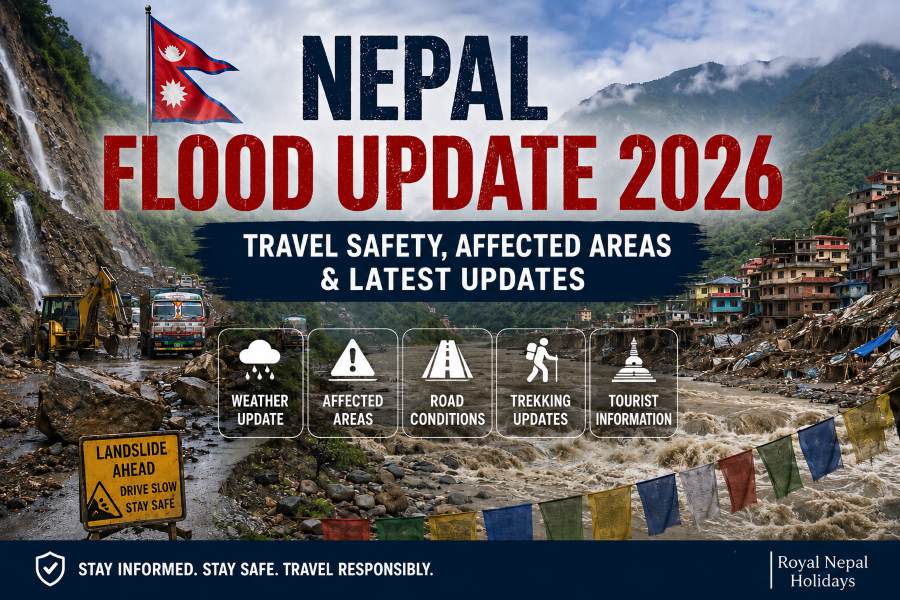
Nepal is currently responding to a major flood and landslide disaster following a catastrophic flash flood in the Himalayan region on August 26, 2026. The disaster has caused severe loss of life and extensive damage to roads, bridges, settlements and other infrastructure, particularly in areas along the Bhote Koshi and Trishuli river systems.
According to the latest reports available on August 31, Nepal has reported more than 900 deaths and more than 4,200 people missing, although figures continue to change as search and rescue teams reach difficult-to-access areas. Hundreds of foreign nationals are also reported among those missing or affected.
The situation is serious, but it is important for travelers to understand that the entire country of Nepal has not been equally affected. Flooding and landslides are concentrated in particular areas, while many major tourist destinations continue to operate with conditions dependent on weather and transportation access.
This page provides a practical Nepal flood update for travelers, including affected areas, transportation conditions, trekking considerations and advice for people planning to visit Nepal.
Important: Flood, landslide, road and weather conditions can change rapidly. Travelers should check the latest official information immediately before and during their journey.
The current disaster followed a devastating flash flood affecting the Bhote Koshi and Trishuli river systems in northern and central Nepal.
The event has caused extensive damage in several districts and along important transportation corridors. Search and rescue operations are continuing, with the Nepal Army, Nepal Police and other emergency personnel working in difficult terrain and weather conditions.
Reports indicate that the disaster was associated with a major glacial/rockfall event in the Himalayan region, which released a massive volume of water and debris downstream. The resulting flood swept through river valleys and damaged infrastructure in both Nepal and Tibet/China.
As rescue and recovery operations continue, official figures are being revised frequently. For this reason, travelers should avoid relying on older social-media posts or outdated news reports when making travel decisions.
The Department of Hydrology and Meteorology (DHM) continues to monitor rainfall, river levels and flood risks across Nepal. Its official systems provide weather, river and flood information, including real-time monitoring and warnings.
The worst impacts have been reported around the northern border and downstream river corridors.
Areas that have received significant attention following the disaster include:
The severity varies considerably from one location to another, and conditions can change as rivers rise or roads are cleared.
Rasuwa has been one of the most seriously affected districts. The Bhote Koshi corridor and areas near the Nepal–China border suffered major damage.
The disaster has also affected infrastructure connected with the Rasuwagadhi/Gyirong border area. Travelers planning journeys toward the Nepal–China border should obtain current information before traveling.
Nuwakot has been significantly affected by flooding along the Trishuli river system. Several communities and transportation routes have experienced severe disruption.
Because Nuwakot lies on important road corridors connecting Kathmandu with northern Nepal, travelers should pay particular attention to current road conditions.
Dhading has also experienced significant flood and landslide impacts. Sections of major highways can be vulnerable to landslides during periods of heavy rainfall.
Travelers traveling between Kathmandu and Pokhara or other destinations should check the condition of the route shortly before departure.
Parts of Gorkha have also been affected by flooding and landslides. Conditions vary depending on the specific location and road.
Trekkers and travelers visiting rural areas should check locally before proceeding.
Downstream areas including Chitwan and Nawalpur have also experienced impacts from the flooding.
Travelers visiting Chitwan National Park should check local conditions, river levels, road access and park operating information before traveling.
There is no simple yes or no answer because conditions differ significantly between regions.
Nepal is a large country extending from the lowland Terai to the high Himalayas. A flood affecting one river system does not automatically mean that every tourist destination in Nepal is inaccessible.
However, the current situation requires greater caution, flexibility and route-specific planning.
Travelers should:
The United States has updated its Nepal travel advisory to Level 2 – Exercise Increased Caution, citing natural-disaster risks among other considerations. Australia has also advised travelers to reconsider travel to specific areas affected by the disaster rather than applying the highest warning to the whole country.
Therefore, travelers should distinguish between traveling to Nepal generally and traveling through a particular flood-affected area.
Kathmandu is Nepal's main international gateway and the starting point for most tours and trekking journeys.
The current flood disaster does not mean that all of Kathmandu's tourist areas are closed. However, heavy monsoon rainfall can cause localized flooding, waterlogging, traffic disruption and temporary transportation problems.
Popular areas such as:
may have different conditions depending on rainfall and local circumstances.
Travelers staying in Kathmandu should continue to monitor weather conditions and allow extra time for transportation.
For sightseeing, flexible scheduling is recommended during periods of heavy rainfall.
Pokhara remains one of Nepal's most popular tourist destinations, but travelers should pay particular attention to transportation conditions during the monsoon.
The Kathmandu–Pokhara highway can experience landslides and temporary closures during heavy rainfall. Consequently, travelers should check the road situation before choosing a private vehicle or tourist bus.
Domestic flights between Kathmandu and Pokhara can provide an alternative to road travel when operating normally, although flights themselves can be delayed or cancelled because of poor weather.
The Department of Hydrology and Meteorology continues to monitor rainfall and weather conditions across Nepal, including Pokhara.
Chitwan is another major tourist destination that can be affected by monsoon rainfall and changing river levels.
Visitors planning a Chitwan National Park safari should check:
If heavy rainfall affects the region, some outdoor activities may be adjusted or temporarily postponed for safety.
Road travel is one of the most important issues for tourists visiting Nepal during the current monsoon period.
Floods and landslides can affect roads without much warning. A road that is open in the morning can potentially become blocked later in the day following heavy rainfall or a landslide.
Particular attention should be given to major tourist routes, including:
Travelers should avoid assuming that a road is open simply because it was operating the previous day.
For some journeys, a private vehicle offers flexibility because the itinerary can be adjusted according to road conditions.
However, a vehicle cannot bypass a completely blocked highway.
Domestic flights can be a useful alternative for destinations such as Pokhara when flights are operating, but travelers should remember that monsoon weather can also affect aviation schedules.
For this reason, a flexible itinerary is especially important during the monsoon.
The current flood situation does not mean that every trekking route in Nepal is closed.
However, access roads, trailheads and mountain weather can be affected by heavy rainfall and landslides.
Trekkers should obtain current information before beginning a trek.
The Everest region is geographically different from the areas directly affected by the Bhote Koshi and Trishuli flooding.
However, travelers heading to Everest Base Camp generally depend on flights to Lukla or connecting transportation, and monsoon weather can affect flight operations.
Before departure, trekkers should confirm:
The Annapurna region also experiences monsoon rainfall and landslide risks.
Road sections used to reach trekking trailheads can be affected even when the higher trekking routes themselves remain accessible.
Travelers should therefore check the condition of the specific access route before departure.
The Annapurna Circuit includes extensive mountain-road sections.
During monsoon, road conditions can change rapidly because of landslides, rainfall and river crossings.
Travelers should allow additional time and remain flexible with transportation.
Langtang deserves particular attention because access to the region begins through the wider Rasuwa/Nuwakot area.
Following the recent disaster, travelers should not assume normal access to Langtang simply because trekking conditions may otherwise be suitable.
Current road and local-area information should be confirmed before departure.
Manaslu also includes remote roads and trails where landslides can create transportation difficulties.
Trekkers should consult their local trekking agency, guide and relevant authorities before beginning the journey.
| Destination | Current Consideration | Traveler Advice |
|---|---|---|
| Kathmandu | Monitor heavy rainfall | Allow extra travel time |
| Pokhara | Road and weather conditions important | Check road/flight status |
| Chitwan | Monitor rainfall and river conditions | Confirm park activities |
| Nagarkot | Weather dependent | Expect reduced mountain visibility |
| Bandipur | Highway access important | Check road conditions |
| Lumbini | Generally route-dependent | Check transportation |
| Muktinath | Mountain weather and access | Confirm current route |
| Everest Region | Weather/flight dependent | Confirm Lukla operations |
| Langtang | Access through affected region | Obtain current local information |
| Rasuwa/Kerung | Seriously affected area | Avoid unless authorities confirm access |
This table should be treated as a general travel-planning guide, not a real-time declaration that any destination is open or closed.
The recent disaster is particularly relevant to travelers planning the Nepal–China/Tibet border route, because the Rasuwa–Kerung corridor has been directly affected.
Travelers planning Kailash Mansarovar Yatra should not rely on old itineraries or previously published border information.
Before confirming travel, they should verify:
For future Kailash Yatra departures, the route should be reviewed again immediately before the trip.
Not every traveler needs to automatically cancel a Nepal trip.
The right decision depends on:
The most important point is to make decisions based on your actual route rather than general headlines about Nepal.
If you are planning to visit Nepal during the monsoon or immediately after a major flood event, use this checklist.
Travelers visiting Nepal during the rainy season should be prepared for changing conditions.
Recommended items include:
For trekking, waterproof equipment becomes even more important.
At Royal Nepal Holidays, traveler safety is our first priority.
Our team continues to monitor weather conditions, transportation routes and local information when planning and operating trips in Nepal.
For travelers already booked with us, our team can review the itinerary according to current conditions and recommend changes when necessary.
Depending on the destination and situation, adjustments may include:
Our objective is not simply to keep an itinerary unchanged. The priority is to make sure travelers can experience Nepal as safely and comfortably as conditions allow.
If you are planning a trip to Nepal, we recommend contacting your tour operator before departure to confirm the latest transportation and destination conditions.
Nepal has been seriously affected in specific areas, but the situation is not uniform throughout the country. Travelers should assess their individual destination and route using current official information.
Rasuwa, Nuwakot, Dhading, Gorkha, Nawalpur, Chitwan, Tanahun and other downstream areas have been among the areas affected by the recent disaster. Conditions vary by location and continue to change.
Kathmandu can experience heavy monsoon rain, localized flooding and traffic disruption, but travelers should distinguish these conditions from the severe destruction reported in the worst-hit river corridors.
Travelers can consider Pokhara based on current conditions, but they should check road and flight status before traveling. Monsoon weather can affect both road and air transportation.
Road conditions vary. Floods and landslides can cause temporary closures, particularly on mountain and highway sections. Travelers should verify conditions immediately before departure.
Possibly, depending on current road conditions. Because the route can be affected by monsoon landslides, travelers should obtain a same-day update before departure.
Domestic flights operate according to weather and airport conditions, but monsoon weather can cause delays and cancellations. Travelers should confirm their flight before traveling to the airport.
The Everest region is not the same as the worst-hit flood corridors, but access to the trek depends on weather, flights and trail conditions. Travelers should obtain current information before departure.
Langtang requires particular attention because access passes through the wider Rasuwa/Nuwakot region. Current road and local conditions should be confirmed before starting the trek.
Not necessarily. The decision should depend on your destination, route, travel dates, weather and official advisories. If your itinerary passes through a severely affected area, postponement or rerouting may be appropriate.
September is traditionally considered a transition period from the monsoon toward clearer autumn conditions. However, following a major disaster, travelers should prioritize current road, weather and destination conditions rather than relying only on seasonal averages.
For the most reliable information, travelers should consult official sources before and during their trip.
The Government of Nepal's Department of Hydrology and Meteorology provides weather forecasts, flood warnings, river monitoring and other official information.
Flood and extreme-weather information: DHM also provides the toll-free number 1155, with options for weather forecasting and flood early-warning information.
Travelers should also monitor:
The Nepal Tourism Board has also announced an information desk to provide updates concerning tourists affected by the recent disaster.
The recent floods are a devastating event for Nepal, particularly for communities along the affected river corridors. Our thoughts remain with everyone who has lost family members, homes, livelihoods and communities.
For travelers, the most important message is to stay informed and avoid making decisions based only on general headlines.
Nepal is geographically diverse, and conditions can differ considerably between Kathmandu, Pokhara, Chitwan, the Everest region, Annapurna and areas close to the Nepal–China border.
During this period:
Check the latest information.
Follow official instructions.
Avoid affected areas.
Allow flexibility in your itinerary.
Prioritize safety over schedules.
At Royal Nepal Holidays, we will continue monitoring conditions and helping travelers make informed decisions about their Nepal journeys.
If you are planning a Nepal tour, trek, pilgrimage or private trip, contact Royal Nepal Holidays before your departure for the latest route and transportation information.
This article is intended for general travel information and is updated based on information available at the time of publication. Floods, landslides, road conditions, weather and transportation operations can change rapidly.
Information in this article should not be considered a guarantee that a particular road, destination, trekking route or transportation service is open or safe.
Travelers should always verify current conditions with official authorities, transportation providers and their local tour operator before traveling.
Last Updated: August 31, 2026
Discover more articles that match your interests! Explore these similar blogs packed with insights, tips, and stories to keep you inspired.
Planning a Nepal tour? Discover the best places to visit, travel costs, itineraries, trekking routes, cultural sites, an...