Trip Durations
17 Days
Quick Contact
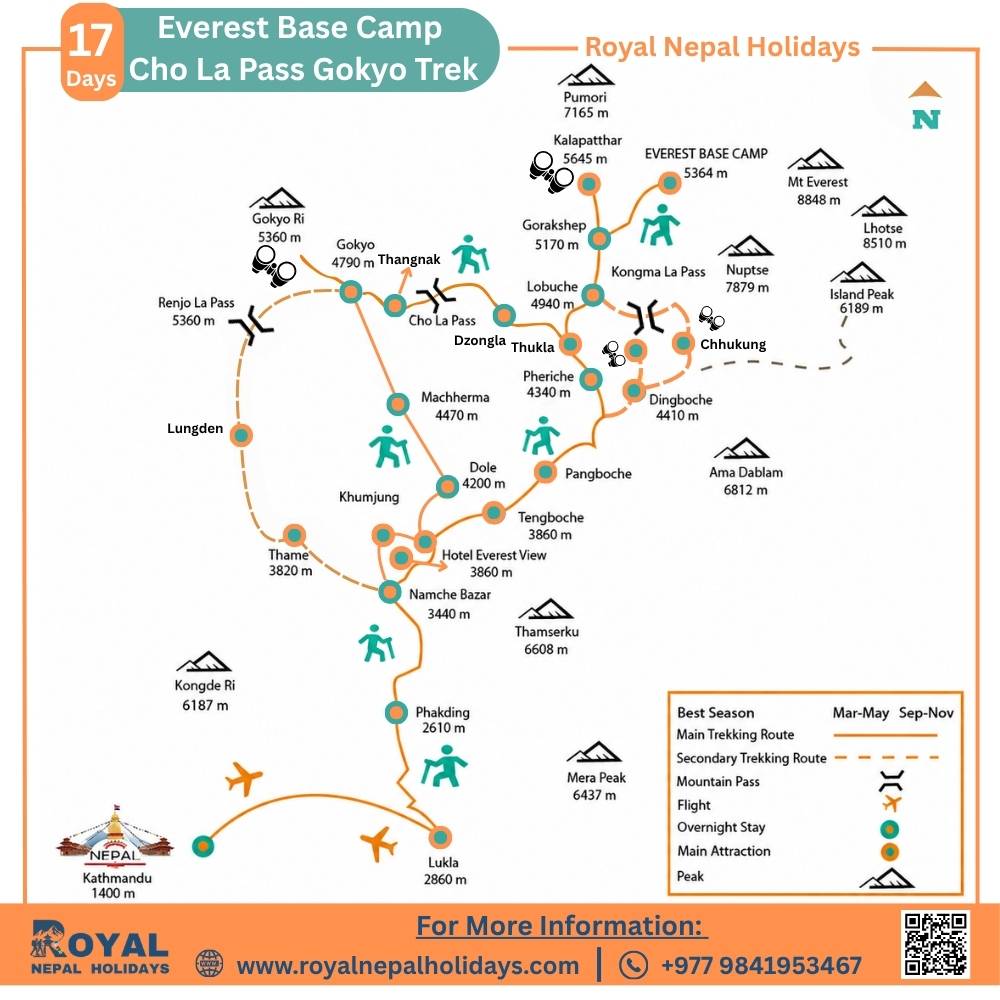
4.9  | 17 Days | Kathmandu, Nepal - Everest Region (Everest Base Camp, Cho La Pass & Gokyo Lakes) - Kathmandu, Nepal
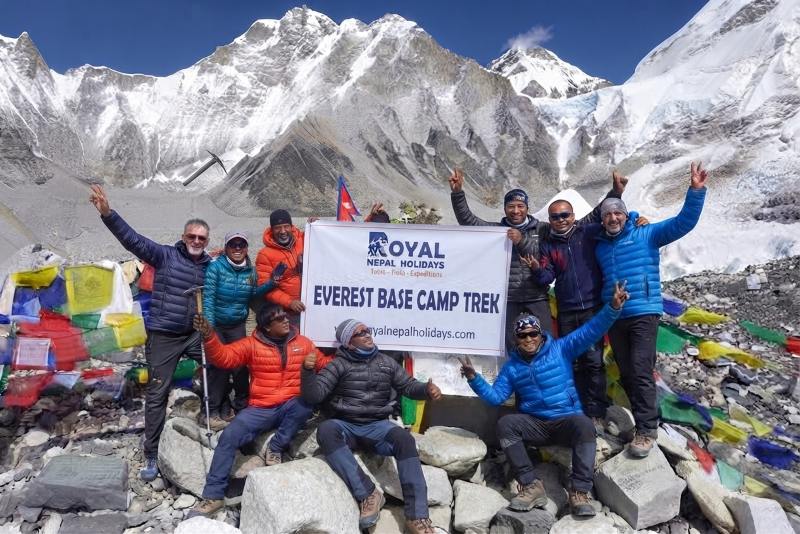
The Everest Base Camp Cho La Pass Gokyo Trek is widely regarded by trekkers, guides, and travel writers as one of the finest multi-week trekking circuits anywhere in the Himalaya, and arguably the single best way to experience the Everest region in full. Rather than walking up to Everest Base Camp and turning around the way most visitors do, this 17-day journey links three of the Khumbu's signature experiences into one continuous route: the classic trail to Everest Base Camp and Kala Patthar, the dramatic high-altitude crossing of Cho La Pass, and the turquoise splendor of the Gokyo Lakes beneath Gokyo Ri. For trekkers who want more than a single postcard view, and who are willing to commit an extra handful of days and a bit more effort, this is the trek that delivers the complete Everest experience.
The Everest Base Camp Cho La Pass Gokyo Trek is not one trail but three woven together. The first section follows the historic route used by Tenzing Norgay and Sir Edmund Hillary's expedition, climbing steadily through Sherpa villages, prayer-flag-strung ridgelines, and rhododendron forest to reach Everest Base Camp itself and the sweeping sunrise viewpoint of Kala Patthar. From there, instead of retracing the same path back to Lukla as most itineraries do, the trek turns west and climbs onto the Cho La Pass, a glaciated crossing at 5,420 meters that connects the Khumbu Valley to the Gokyo Valley. This is the technical heart of the trek: a route across a rocky, sometimes icy pass that rewards trekkers with a genuine sense of high-mountain achievement and with views that few visitors to Nepal ever see. Descending the far side of Cho La Pass brings you into the Gokyo Valley, home to the Gokyo Lakes Trek's main attraction — a chain of glacially fed alpine lakes of an almost unreal blue-green color, sitting beneath the flank of the Ngozumpa Glacier, the longest glacier in the Nepal Himalaya. From the village of Gokyo, a further climb up Gokyo Ri delivers what many experienced trekkers consider the single best panoramic mountain view in the entire Everest region, a vista that takes in Everest, Lhotse, Makalu, and Cho Oyu together in one frame.
Combining the Everest Base Camp Trek, the Cho La Pass Trek, and the Gokyo Lakes Trek into a single 17-day itinerary offers a far more complete picture of the Everest region than the classic out-and-back Everest Base Camp trek alone. Where the standard EBC trek shows you one valley and one perspective on the mountain, this extended circuit shows you two valleys, two distinct base-camp-style destinations (Everest Base Camp and Gokyo Ri), and a genuine high-altitude pass crossing that adds a technical and adventurous dimension the classic trek simply does not have. Trekkers who complete both routes consistently describe the Gokyo side of the mountain, and the Ngozumpa Glacier in particular, as visually the more dramatic of the two, while the walk to Everest Base Camp itself carries the historical and symbolic weight of following in the footsteps of the first successful Everest expedition.
Along the way, the trek delivers uninterrupted panoramic views of the giants of the Khumbu: Everest, Lhotse, Nuptse, Makalu, Cho Oyu, and the perfectly pyramidal Ama Dablam are all visible at various points along the route, often from multiple different angles as the trail changes valleys. The crossing of Cho La Pass and the days spent around Gokyo also bring you face to face with the Ngozumpa Glacier, a vast river of ice, rubble, and meltwater lakes that few trekkers on the standard EBC route ever see up close.
This trek is best suited to trekkers who already have some hiking or trekking experience, who are in good general physical condition, and who are comfortable with the idea of walking for six to seven hours a day at altitude for an extended period. No technical climbing skill is required, and no ropes or harnesses are used on Cho La Pass under normal conditions, but the pass crossing does involve scrambling over loose rock and, depending on the season, walking across snow or ice, so a reasonable level of fitness, sure-footedness, and mental resilience make a significant difference to how much you enjoy the day. Previous multi-day trekking experience is a strong asset but not an absolute requirement — many first-time high-altitude trekkers complete this route successfully each year with the right pacing, acclimatization schedule, and guide support. Royal Nepal Holidays builds two dedicated acclimatization days into this itinerary specifically to reduce the risk of altitude sickness and to give trekkers of varying fitness levels the best possible chance of reaching all three highlight destinations comfortably.
Whether you are a seasoned trekker looking for the ultimate Everest region challenge, or a committed first-timer prepared to train properly beforehand, the Everest Base Camp Cho La Pass Gokyo Trek offers 17 days that combine history, high-altitude adventure, and some of the most spectacular mountain scenery on Earth.
| Category | Details |
|---|---|
| Duration | 17 Days |
| Trip Grade | Challenging |
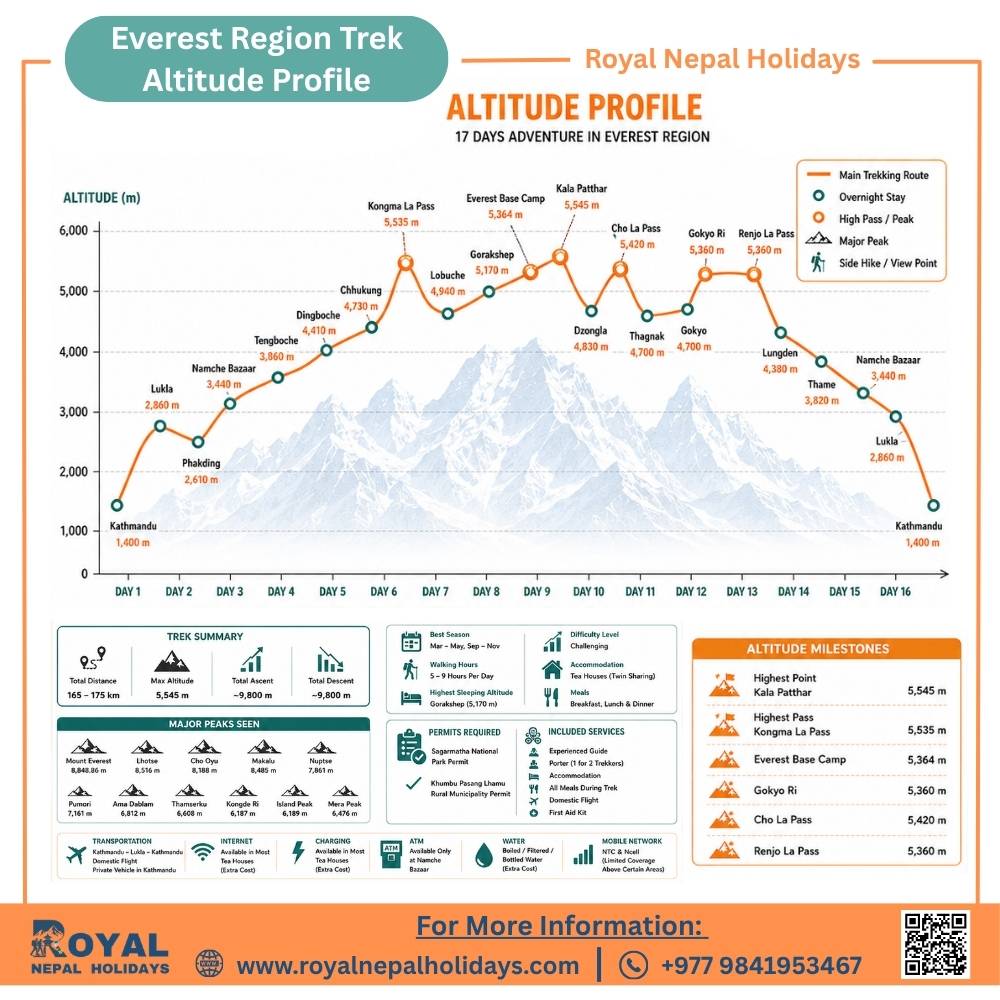
| Maximum Altitude | 5,545 m (Kala Patthar) |
| Trekking Days | 14 |
| Accommodation | Teahouses / Lodges |
| Meals | Breakfast, Lunch, Dinner (as per itinerary) |
| Transportation | Domestic flight (Kathmandu–Lukla), private vehicle for airport transfers |
| Group Size | 2–12 (private and customized groups available) |
| Best Season | Spring (Mar–May) and Autumn (Sep–Nov) |
| Destination | Everest (Khumbu) Region, Solukhumbu District, Nepal |
| Starts/Ends | Kathmandu |
| Trek Style | Teahouse (lodge-to-lodge) |
| Guide Requirement | Mandatory (licensed local guide provided) |
| Permit Required | Sagarmatha National Park Permit, Khumbu Rural Municipality Permit |
| Wi-Fi Availability | Available (paid) at most teahouses |
| Charging Availability | Available (paid) at most teahouses |
| Drinking Water | Boiled/filtered water and bottled water available for purchase |
| Difficulty | Strenuous, high-altitude pass crossing |
| Walking Hours | 5–7 hours per day on average |
| Total Distance | Approximately 130 km round trip |
| Highest Pass | Cho La Pass (5,420 m) |
| Highest Viewpoint | Kala Patthar (5,545 m) |
| Emergency Rescue | Helicopter evacuation available (insurance required) |
| Customizable Trip | Yes – dates, pace, and add-ons fully customizable |
Royal Nepal Holidays has built its reputation on genuinely local expertise and a personal approach to trekking in the Everest region. Every trekking group is led by experienced, government-licensed guides who have grown up in or spent years working in the mountains they lead trekkers through, meaning route knowledge, cultural insight, and safety judgment come from real experience rather than a script.
| Feature | Classic EBC Trek | EBC + Cho La Pass + Gokyo |
|---|---|---|
| Duration | 12–14 days | 17 days |
| Valleys Explored | 1 (Khumbu Valley) | 2 (Khumbu and Gokyo Valleys) |
| High Pass Crossing | None | Cho La Pass (5,420 m) |
| Glacial Lakes | Not included | Gokyo Lakes included |
| Glacier Views | Khumbu Glacier only | Khumbu Glacier and Ngozumpa Glacier |
| Viewpoints | Kala Patthar only | Kala Patthar and Gokyo Ri |
| Difficulty | Moderate to Challenging | Challenging |
| Technical Difficulty | Low | Moderate (rocky/icy pass crossing) |
| Crowds | Higher, single trail | Lower on Gokyo/Cho La side |
| Overall Experience | Focused, iconic | Complete, varied, more adventurous |
| Best For | First-time trekkers, shorter trips | Experienced or ambitious trekkers wanting the full Everest region experience |
Lukla is the gateway to the Everest region and home to Tenzing-Hillary Airport, famous for its short mountain runway and dramatic approach between steep hillsides. Most treks begin and end here, and the town itself has a lively trekker atmosphere with lodges, gear shops, and cafes catering to those about to start or just finishing their journey.
Namche Bazaar is the unofficial capital of the Khumbu, a horseshoe-shaped town built into the hillside that has served as a Sherpa trading hub for centuries. Today it offers bakeries, gear shops, bars, a Saturday market, and the region's best infrastructure, making it a natural acclimatization stop and a favorite among trekkers for its energy and mountain views.
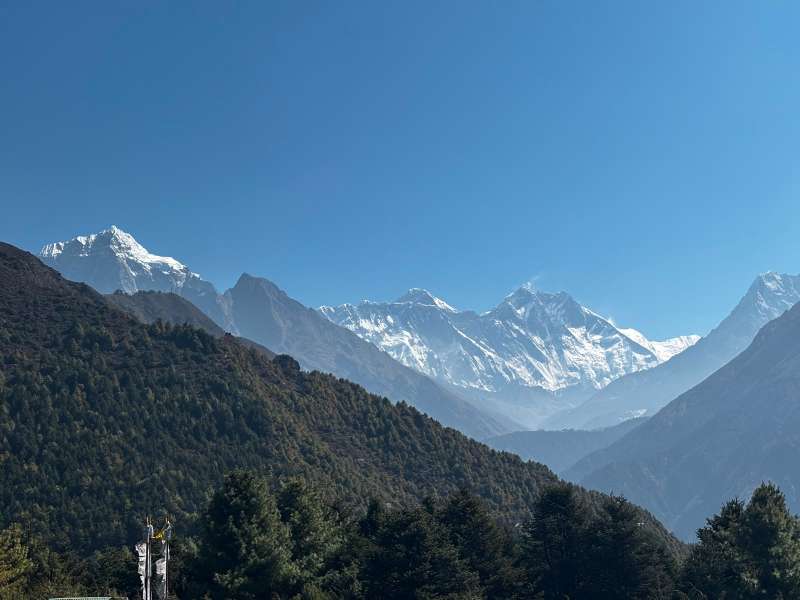
Perched above Namche, the Everest View Hotel offers one of the most accessible panoramic views of Everest, Lhotse, and Ama Dablam in the region, along with a cup of tea or coffee enjoyed at nearly 3,880 meters. It is a popular short excursion during the Namche acclimatization day.
Tengboche is home to the largest and most spiritually significant monastery in the Khumbu region. Set on a ridge with Ama Dablam rising dramatically behind it, the monastery is a center of Sherpa Buddhist life and a highlight for trekkers interested in the region's culture and spirituality.
Dingboche is a high-altitude farming village known for its stone-walled fields and dramatic surrounding peaks. It serves as a key acclimatization stop before pushing higher into the Everest Base Camp side of the trek, with excellent short acclimatization hikes nearby.
A small, high-altitude settlement, Lobuche is the last major stop before Gorak Shep and Everest Base Camp. It sits close to the Khumbu Glacier and serves as an important rest point given the significant altitude gain in this section of the trek.
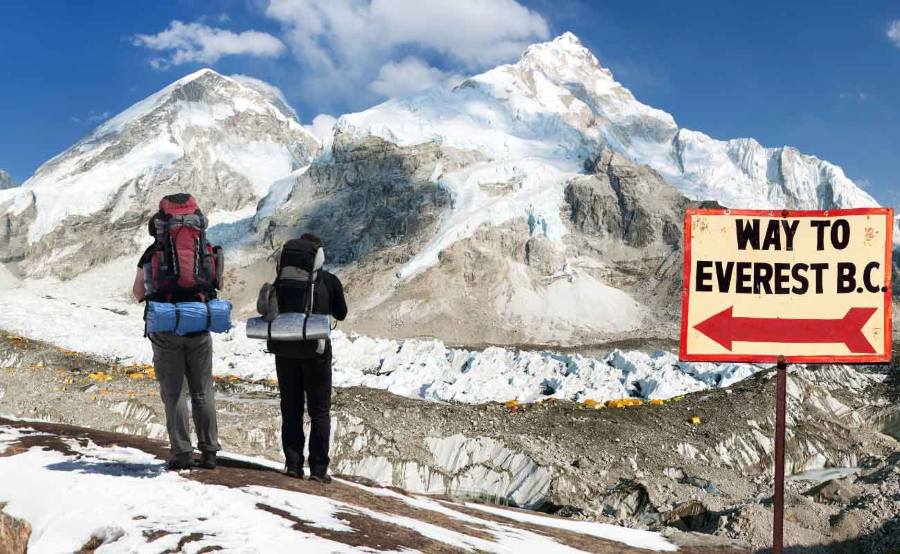
The trek's most iconic destination, Everest Base Camp sits at 5,364 meters at the foot of the Khumbu Icefall. While Everest's summit is not visible directly from Base Camp itself, the surrounding glacier, icefall, and mountaineering atmosphere make it one of the most rewarding destinations in the trekking world.
Kala Patthar is the true viewpoint of this trek, offering the best close-up panorama of Mount Everest available without technical climbing. Most trekkers hike up before dawn to catch sunrise lighting the summit pyramid of Everest and its neighboring giants.
Cho La Pass is a high, glaciated pass at 5,420 meters connecting the Khumbu Valley to the Gokyo Valley. The crossing involves a steep, rocky ascent, a traverse across the pass itself (often snow or ice covered), and a descent onto or alongside a glacier on the far side. It is considered one of the most rewarding high-altitude crossings in the Everest region.
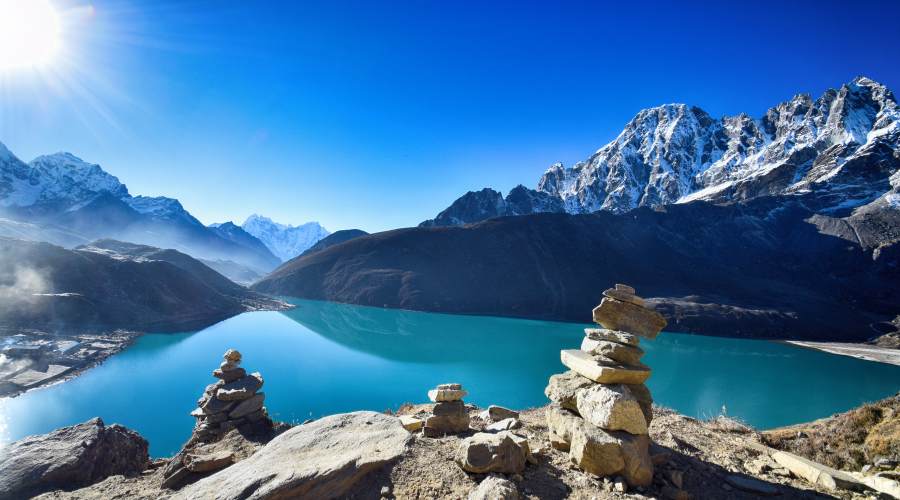
The Gokyo Lakes are a series of sacred, glacially fed alpine lakes known for their striking turquoise and emerald colors. Considered holy by both Hindus and Buddhists, the lakes sit within a dramatic amphitheater of peaks and are one of the most photographed features in the entire Khumbu region.
Gokyo Ri is widely considered to offer the single best panoramic mountain view in the Everest region, taking in Everest, Lhotse, Makalu, and Cho Oyu together with the Ngozumpa Glacier stretched out below. The climb is steep but short, and most trekkers ascend for sunrise or sunset.
The Ngozumpa Glacier is the longest glacier in the Nepal Himalaya, a vast, debris-covered river of ice that the trail runs alongside on the way to and from Cho La Pass and Gokyo. Its scale and the surrounding meltwater lakes are among the most striking landscapes on the entire route.
Elevation: 1,400 m (4,593 ft)
Driving Duration: 30–45 Minutes (Depending on Traffic)
Accommodation: 3-Star Hotel in Kathmandu (Upgrade Available)
Meals: Dinner (Optional Welcome Dinner)
Welcome to Nepal! Upon your arrival at Tribhuvan International Airport in Kathmandu, a friendly representative from Royal Nepal Holidays will greet you outside the arrival terminal and transfer you to your hotel in the heart of the city. The vibrant capital of Nepal serves as the gateway to the Himalayas and offers an exciting blend of ancient culture, bustling streets, colorful markets, and centuries-old temples.
After checking in, take some time to relax and recover from your journey. Depending on your arrival time, you can stroll around the lively tourist district of Thamel, famous for its trekking gear shops, cafés, restaurants, handicraft stores, and vibrant nightlife. This is also an excellent opportunity to purchase or rent any last-minute trekking equipment you may need for your adventure.
In the evening, your trekking guide will conduct a comprehensive trip briefing. During this meeting, you'll receive detailed information about the trek, weather conditions, altitude acclimatization, safety measures, luggage arrangements, domestic flights to Lukla, and what to expect over the next 17 days. Your guide will also answer any questions you may have, ensuring you feel fully prepared for the journey ahead.
If time permits, enjoy a traditional Nepali welcome dinner featuring authentic local cuisine and cultural performances, offering a memorable introduction to Nepal's rich heritage.
Your first night is spent in Kathmandu, where you can rest comfortably before your Himalayan adventure begins.
Today's Highlights
Overnight: Hotel in Kathmandu
Highest Elevation: 2,840 m (9,318 ft)
Trekking Distance: Approximately 8 km (5 miles)
Walking Duration: 3–4 Hours
Flight Duration: 30–35 Minutes
Accommodation: Tea House/Lodge
Meals: Breakfast, Lunch & Dinner
Your Himalayan adventure officially begins with one of the world's most exciting mountain flights. Early in the morning, you'll transfer to the domestic airport for your scenic flight to Lukla, the gateway to the Everest region. During peak trekking seasons, flights may operate from Ramechhap Airport instead of Kathmandu due to air traffic regulations.
As the aircraft flies above rolling hills and snow-capped peaks, breathtaking views of the Himalayan range unfold beneath you. After landing at the famous Tenzing-Hillary Airport in Lukla, you'll meet the rest of the trekking crew, including your porter, before beginning the trek.
The trail gently descends through charming Sherpa villages, colorful prayer wheels, fluttering prayer flags, and dense forests of pine and rhododendron. Crossing several suspension bridges over the Dudh Koshi River, you'll pass traditional stone houses, mani walls, and small Buddhist shrines that reflect the unique culture of the Khumbu region.
After a comfortable trek of about three to four hours, you'll arrive at the peaceful village of Phakding, nestled beside the Dudh Koshi River. The afternoon provides ample time to relax, explore the village, or take a short walk along the riverbank.
This relatively easy first trekking day allows your body to begin adjusting to the increasing altitude while enjoying spectacular mountain scenery.
Today's Highlights
Overnight: Tea House in Phakding
Highest Elevation: 3,440 m (11,286 ft)
Trekking Distance: Approximately 10–11 km (6.5 miles)
Walking Duration: 6–7 Hours
Accommodation: Tea House/Lodge
Meals: Breakfast, Lunch & Dinner
Following breakfast, today's trek takes you deeper into Sagarmatha National Park, a UNESCO World Heritage Site renowned for its dramatic landscapes and rich biodiversity. The trail follows the crystal-clear Dudh Koshi River, crossing several iconic suspension bridges adorned with colorful prayer flags.
You'll pass through picturesque villages such as Benkar, Monjo, and Jorsalle, where permits are checked before entering the national park. Along the way, enjoy magnificent views of waterfalls, dense pine forests, and towering Himalayan peaks.
One of today's most memorable moments is crossing the famous Hillary Suspension Bridge, suspended high above the river. From here, the trail climbs steadily through forests toward Namche Bazaar. Although this ascent is physically demanding, it rewards trekkers with one of the first breathtaking views of Mount Everest on clear days, accompanied by the majestic peaks of Lhotse and Nuptse.
By afternoon, you'll arrive at Namche Bazaar, the vibrant trading hub of the Khumbu region. Nestled within a natural amphitheater, Namche is home to cozy cafés, bakeries, trekking shops, banks, museums, and bustling local markets.
Spend the evening relaxing and preparing for tomorrow's acclimatization day.
Today's Highlights
Overnight: Tea House in Namche Bazaar
Highest Elevation: Everest View Hotel (3,880 m) (Optional Hike)
Walking Duration: 3–5 Hours
Accommodation: Tea House/Lodge
Meals: Breakfast, Lunch & Dinner
Acclimatization is one of the most important aspects of high-altitude trekking, and today's schedule is carefully designed to help your body adapt before ascending further into the Himalayas. Rather than resting completely, the principle is to "climb high, sleep low."
After breakfast, you'll enjoy a rewarding hike to the renowned Everest View Hotel, one of the highest luxury hotels in the world. The trail offers spectacular panoramic views of Mount Everest, Ama Dablam, Lhotse, Nuptse, Thamserku, and Kongde Ri. On clear mornings, this viewpoint provides one of the finest mountain panoramas in the Everest region.
You may also visit the nearby village of Khumjung, famous for its traditional Sherpa culture, ancient monastery, and the legendary Yeti scalp display. Along the way, you'll gain valuable insight into Sherpa traditions, Buddhist heritage, and life in the high Himalayas.
Returning to Namche Bazaar for lunch, you can spend the afternoon exploring local museums, bakeries, coffee shops, or the Sherpa Culture Museum. This relaxed day significantly improves your chances of successful acclimatization while allowing you to appreciate the region's natural beauty and culture.
Today's Highlights
Overnight: Tea House in Namche Bazaar
Highest Elevation: 4,110 m (13,484 ft)
Trekking Distance: Approximately 11 km (6.8 miles)
Walking Duration: 6–7 Hours
Accommodation: Tea House/Lodge
Meals: Breakfast, Lunch & Dinner
Leaving the busy streets of Namche Bazaar behind, today's journey follows the less-traveled route toward the beautiful Gokyo Valley, offering a quieter and more peaceful trekking experience compared to the classic Everest Base Camp trail.
The trail begins with gradual ascents through rhododendron and juniper forests before reaching Mong La Pass (3,975 m), where spectacular views of Ama Dablam, Khumbila, Thamserku, and distant Himalayan giants unfold before you. After descending to the small settlement of Phortse Thanga, you'll enjoy lunch beside the river before continuing the climb through forests filled with birch, pine, and rhododendron.
As you gain elevation, the landscape gradually changes from lush forests to alpine terrain. Keep an eye out for Himalayan wildlife such as musk deer, Himalayan tahr, colorful pheasants, and, with a bit of luck, the elusive Himalayan monal—the national bird of Nepal.
By late afternoon, you'll reach the peaceful village of Dole, situated on the mountainside with magnificent views across the Khumbu Valley.
Today's Highlights
Overnight: Tea House in Dole
Highest Elevation: 4,470 m (14,665 ft)
Trekking Distance: Approximately 7 km (4.3 miles)
Walking Duration: 4–5 Hours
Accommodation: Tea House/Lodge
Meals: Breakfast, Lunch & Dinner
Today's trek is shorter but involves a steady ascent into the heart of the spectacular Gokyo Valley. As you leave Dole, the trail traverses open hillsides covered with alpine shrubs and yak grazing pastures. The tree line gradually disappears, giving way to rugged mountain scenery and expansive views of the surrounding peaks.
Passing through the tiny settlements of Lhabarma and Luza, you'll continue toward Machhermo, a picturesque village renowned for its breathtaking mountain vistas. Throughout the journey, you'll enjoy uninterrupted views of Cho Oyu (8,188 m)—the world's sixth-highest mountain—as well as Kantega, Thamserku, and other impressive Himalayan peaks.
Upon reaching Machhermo, you'll have time to relax before attending an optional altitude awareness briefing, where guides discuss the signs and prevention of Acute Mountain Sickness (AMS). This knowledge becomes increasingly important as you approach elevations above 5,000 meters over the coming days.
The peaceful surroundings, crisp mountain air, and spectacular Himalayan scenery make Machhermo an ideal place to rest before continuing toward the magnificent Gokyo Lakes.
Today's Highlights
Overnight: Tea House in Machhermo
Highest Elevation: 4,790 m (15,715 ft)
Trekking Distance: Approximately 7 km (4.3 miles)
Walking Duration: 4–5 Hours
Accommodation: Tea House/Lodge
Meals: Breakfast, Lunch & Dinner
Today is one of the most scenic days of your Everest Base Camp Cho La Pass Gokyo Trek as you journey to the spectacular Gokyo Valley, home to the world's highest freshwater lake system. After breakfast, the trail gradually climbs through an open alpine landscape with magnificent views of towering Himalayan peaks and expansive glacial valleys.
As you leave Machhermo behind, you'll pass grazing yak pastures and ancient stone shelters before climbing a ridge that offers your first breathtaking views of the Ngozumpa Glacier—the largest glacier in the Nepal Himalayas. The trail then descends gently toward the first of the beautiful turquoise Gokyo Lakes.
Continuing along the lake system, you'll pass the First Lake (Longpongo) and Second Lake (Taboche Tsho) before reaching the dazzling Third Gokyo Lake (Dudh Pokhari), beside which the charming village of Gokyo is located. The contrast between the crystal-clear blue water and the surrounding snow-covered mountains creates one of the most unforgettable landscapes in the Everest region.
Upon arrival, you can relax beside the lake, enjoy warm tea while admiring the spectacular scenery, or explore the peaceful village. On clear afternoons, reflections of Cho Oyu, Gyachung Kang, and surrounding peaks shimmer beautifully across the lake's surface.
This tranquil setting provides the perfect environment to rest before tomorrow's acclimatization hike to Gokyo Ri.
Overnight: Tea House in Gokyo
Highest Elevation: Gokyo Ri (5,357 m / 17,575 ft)
Walking Duration: 4–5 Hours
Accommodation: Tea House/Lodge
Meals: Breakfast, Lunch & Dinner
Today's acclimatization day features one of the finest viewpoints in the entire Everest region—Gokyo Ri. An early morning start allows you to witness a spectacular Himalayan sunrise as golden light gradually illuminates the world's highest mountains.
The steady climb to the summit of Gokyo Ri takes approximately two to three hours. Although the ascent is physically demanding due to the high altitude, every step is rewarded with breathtaking panoramic views.
From the summit, you'll enjoy one of Nepal's most remarkable mountain panoramas, featuring Mount Everest (8,848.86 m), Lhotse (8,516 m), Makalu (8,485 m), and Cho Oyu (8,188 m)—four of the world's fourteen highest peaks visible from a single viewpoint. Other magnificent mountains such as Ama Dablam, Cholatse, Taboche, Pumori, Nuptse, and Gyachung Kang complete this unforgettable Himalayan panorama.
After spending time capturing photographs and enjoying the scenery, descend to Gokyo for breakfast. The remainder of the day can be spent exploring nearby lakes, relaxing beside Dudh Pokhari, or simply enjoying the peaceful atmosphere of this remote mountain village.
This acclimatization day significantly improves your body's ability to adapt before crossing the challenging Cho La Pass.
Overnight: Tea House in Gokyo
Highest Elevation: 4,900 m (Approx.)
Trekking Distance: Approximately 6 km (3.7 miles)
Walking Duration: 3–4 Hours
Accommodation: Tea House/Lodge
Meals: Breakfast, Lunch & Dinner
Today's trek is relatively short but extremely important as you move into position for tomorrow's crossing of the legendary Cho La Pass. After breakfast, you'll leave the tranquil Gokyo Valley and begin traversing the rugged terrain of the Ngozumpa Glacier.
Walking across the glacier is an unforgettable experience. The trail winds through rocky moraines, glacial debris, and uneven terrain shaped by centuries of ice movement. Although the route requires careful footing, your experienced guide will ensure a safe crossing.
Throughout the journey, you'll enjoy dramatic views of Cholatse, Taboche, and the surrounding glacial landscape. Unlike previous days, today's environment feels wild, remote, and untouched, offering an authentic Himalayan wilderness experience.
After crossing the glacier, you'll reach the small settlement of Thagnak. This quiet village serves as the final overnight stop before tackling Cho La Pass.
The afternoon is dedicated to rest, hydration, and preparing your equipment for tomorrow's early morning departure. Your guide will provide a detailed safety briefing about the pass crossing, weather conditions, and trail expectations.
Overnight: Tea House in Thagnak
Highest Elevation: Cho La Pass (5,420 m / 17,782 ft)
Trekking Distance: Approximately 10 km (6.2 miles)
Walking Duration: 7–9 Hours
Accommodation: Tea House/Lodge
Meals: Breakfast, Lunch & Dinner
Today is undoubtedly one of the most exciting and rewarding days of the entire trek as you cross the legendary Cho La Pass, one of the highest and most spectacular mountain passes in the Everest region.
An early pre-dawn departure helps ensure stable weather and safer trail conditions. The ascent begins gradually before becoming steeper as you approach the rocky slopes beneath the pass. Depending on the season, sections of the trail may be covered with snow or ice, making careful footing essential.
Upon reaching the summit of Cho La Pass (5,420 m), you'll be rewarded with breathtaking panoramic views of towering Himalayan peaks, dramatic glaciers, and rugged mountain landscapes stretching across the Khumbu region. Colorful prayer flags flutter in the mountain wind, marking your successful crossing of one of Nepal's most iconic high passes.
After celebrating your achievement and capturing memorable photographs, the trail descends carefully across rocky terrain toward the beautiful valley leading to Dzongla. Along the descent, enjoy magnificent views of Ama Dablam, Cholatse, Lobuche Peak, and surrounding glaciers.
Arriving in Dzongla after an unforgettable day, you'll enjoy a well-earned rest while reflecting on one of the greatest achievements of your Himalayan adventure.
Overnight: Tea House in Dzongla
Highest Elevation: 4,910 m (16,109 ft)
Trekking Distance: Approximately 8 km (5 miles)
Walking Duration: 4–5 Hours
Accommodation: Tea House/Lodge
Meals: Breakfast, Lunch & Dinner
After the excitement of yesterday's high-pass crossing, today's trek is comparatively shorter and allows your body to recover while continuing toward Everest Base Camp.
Leaving Dzongla, the trail gradually descends before joining the main Everest Base Camp route near Lobuche. Along the way, enjoy exceptional views of Ama Dablam, Pumori, Nuptse, Lobuche East, and surrounding Himalayan peaks.
The landscape becomes increasingly dramatic as glacial moraines replace vegetation, highlighting the harsh yet beautiful environment of the upper Khumbu region.
By early afternoon, you'll reach Lobuche, a small settlement situated beneath towering mountain peaks. The remainder of the day is dedicated to rest, hydration, and preparing for tomorrow's long-awaited journey to Everest Base Camp.
Overnight: Tea House in Lobuche
Highest Elevation: Everest Base Camp (5,364 m / 17,598 ft)
Trekking Distance: Approximately 15 km (9.3 miles)
Walking Duration: 7–8 Hours
Accommodation: Tea House/Lodge at Gorak Shep
Meals: Breakfast, Lunch & Dinner
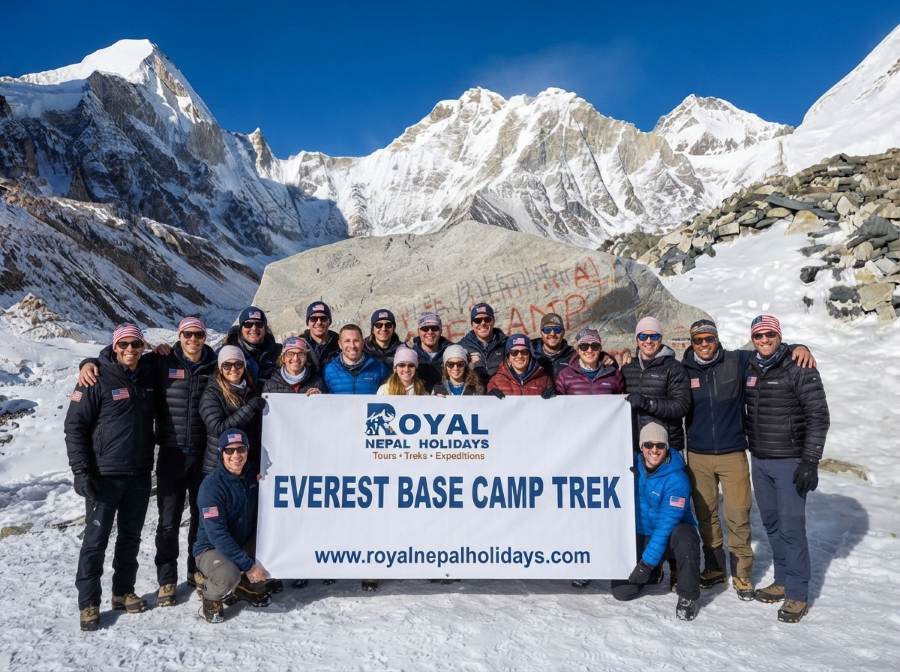
Today marks the highlight of your Everest Base Camp Cho La Pass Gokyo Trek as you finally stand at the foot of the world's highest mountain.
Following breakfast, you'll trek across rocky glacial terrain toward Gorak Shep, the last permanent settlement before Everest Base Camp. After a short break and lunch, continue along the famous trail beside the Khumbu Glacier, surrounded by towering Himalayan giants.
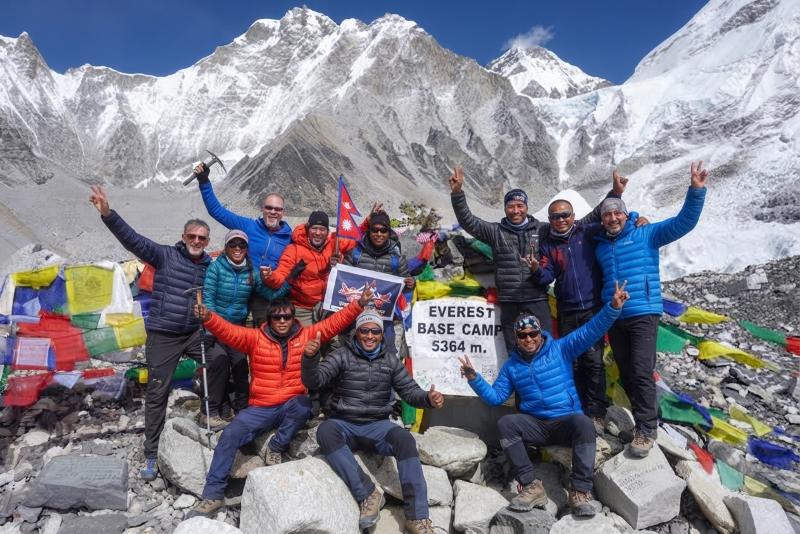
The final approach to Everest Base Camp is both emotional and inspiring. Reaching the iconic stone marker at 5,364 meters is a dream come true for trekkers from around the world. During the spring climbing season, colorful expedition tents create a vibrant atmosphere beneath the towering Khumbu Icefall, while in autumn and winter, the peaceful surroundings offer equally unforgettable experiences.
Take time to celebrate your achievement, capture memorable photographs, and admire the incredible beauty of the Khumbu Glacier and surrounding peaks. Although the summit of Mount Everest is not visible directly from Base Camp, the dramatic setting makes this one of the world's most legendary trekking destinations.
After spending quality time at Everest Base Camp, retrace your steps to Gorak Shep, where you'll spend the night before tomorrow's sunrise hike to Kala Patthar, the highest viewpoint of the trek.
Overnight: Tea House in Gorak Shep
Highest Elevation: Kala Patthar (5,555 m / 18,225 ft)
Ending Elevation: Pheriche (4,240 m / 13,911 ft)
Trekking Distance: Approximately 13 km (8 miles)
Walking Duration: 7–8 Hours
Accommodation: Tea House/Lodge
Meals: Breakfast, Lunch & Dinner
Today begins before sunrise with one of the most memorable experiences of the entire Everest Base Camp Cho La Pass Gokyo Trek. In the early morning darkness, you'll set out from Gorak Shep for the challenging ascent to Kala Patthar (5,555 m), the highest point of the trek and the most celebrated viewpoint in the Everest region.
The climb is steep and demanding due to the thin mountain air, but reaching the summit is incredibly rewarding. As the first rays of sunlight illuminate the Himalayas, you'll witness a breathtaking panorama featuring Mount Everest, Nuptse, Lhotse, Pumori, Lingtren, Khumbutse, and numerous surrounding peaks. Unlike Everest Base Camp, Kala Patthar offers an unobstructed view of the summit of Mount Everest, making it the perfect place for unforgettable photographs and quiet reflection on your journey.
After spending time enjoying the spectacular sunrise, you'll descend to Gorak Shep for a well-earned breakfast before continuing your descent toward Pheriche. The trail retraces part of the route through Lobuche before gradually descending into a broader valley where oxygen levels become noticeably higher and walking feels more comfortable.
As you lose altitude, the rugged glacial terrain slowly gives way to alpine meadows and grazing yak pastures. Surrounded by magnificent mountain scenery, you'll arrive at the peaceful village of Pheriche, where a comfortable teahouse awaits.
After several days above 5,000 meters, tonight's lower elevation provides a welcome opportunity for your body to recover while you reflect on the incredible achievements of reaching both Everest Base Camp and Kala Patthar.
Overnight: Tea House in Pheriche
Highest Elevation: 4,240 m (13,911 ft)
Ending Elevation: 3,440 m (11,286 ft)
Trekking Distance: Approximately 20 km (12.4 miles)
Walking Duration: 7–8 Hours
Accommodation: Tea House/Lodge
Meals: Breakfast, Lunch & Dinner
After breakfast, you'll begin a long but enjoyable descent through the beautiful Khumbu Valley. The trail gradually leads downhill toward Pangboche, one of the oldest Sherpa villages in the Everest region, known for its ancient monastery and traditional Himalayan culture.
Continuing through fragrant rhododendron, juniper, and pine forests, you'll arrive at the famous Tengboche Monastery, the spiritual heart of the Khumbu region. If time allows, you may visit the monastery and observe Buddhist monks performing their daily prayers while surrounded by magnificent Himalayan scenery.
From Tengboche, the trail descends through lush forests toward the Dudh Koshi River before climbing gently back to Namche Bazaar. As you descend below 4,000 meters, the warmer temperatures and richer vegetation provide a refreshing contrast to the high alpine landscapes of the previous days.
Arriving in Namche Bazaar feels like returning to civilization after your high-altitude adventure. Enjoy a hot shower, freshly brewed coffee, delicious bakery treats, or simply celebrate your successful journey with your trekking team.
Overnight: Tea House in Namche Bazaar
Highest Elevation: 3,440 m (11,286 ft)
Ending Elevation: 2,840 m (9,318 ft)
Trekking Distance: Approximately 18 km (11.2 miles)
Walking Duration: 6–7 Hours
Accommodation: Tea House/Lodge
Meals: Breakfast, Lunch & Dinner
Today marks your final day of trekking in the Everest region. Leaving Namche Bazaar behind, you'll descend steeply toward the iconic Hillary Suspension Bridge, enjoying one last opportunity to admire the spectacular landscapes of the Khumbu Valley.
Crossing the Dudh Koshi River several times, you'll retrace your route through the charming villages of Jorsalle, Monjo, Benkar, and Phakding. Familiar mountain trails, prayer wheels, mani walls, and colorful prayer flags create a nostalgic atmosphere as you reflect on the incredible journey you've completed.
The final gradual ascent brings you back to Lukla, where your trekking adventure officially concludes. This evening is traditionally a time of celebration, with trekkers, guides, and porters gathering to share stories, enjoy a farewell dinner, and celebrate the successful completion of one of Nepal's most rewarding trekking routes.
Take the opportunity to thank your guide and porter for their dedication, professionalism, and support throughout the expedition.
Overnight: Tea House in Lukla
Flight Duration: Approximately 30–35 Minutes
Driving Duration (Airport to Hotel): 30–45 Minutes
Accommodation: Hotel in Kathmandu
Meals: Breakfast
After an early breakfast, you'll head to Tenzing-Hillary Airport for your scenic return flight to Kathmandu. Weather permitting, the short mountain flight offers one final opportunity to admire the dramatic Himalayan landscape from above, bringing your unforgettable Everest adventure to a close.
Upon arrival in Kathmandu (or Ramechhap during peak trekking seasons, followed by a drive to Kathmandu), a representative from Royal Nepal Holidays will transfer you to your hotel.
The remainder of the day is free for leisure. You may wish to explore the historic streets of Kathmandu, visit nearby UNESCO World Heritage Sites, enjoy authentic Nepali cuisine, or shop for souvenirs in the bustling markets of Thamel. Popular purchases include handmade crafts, Tibetan singing bowls, pashmina shawls, trekking gear, and traditional artwork.
In the evening, you may join an optional farewell dinner with the Royal Nepal Holidays team, where you'll receive a Certificate of Trek Completion and celebrate your successful journey to Everest Base Camp, Cho La Pass, and Gokyo Lakes.
Overnight: Hotel in Kathmandu
Meals: Breakfast
Your unforgettable 17-Day Everest Base Camp Cho La Pass Gokyo Trek comes to an end today. After breakfast, depending on your international flight schedule, a representative from Royal Nepal Holidays will transfer you to Tribhuvan International Airport for your onward journey.
As you leave Nepal, you'll take with you memories of standing at Everest Base Camp, witnessing the sunrise from Kala Patthar, crossing the legendary Cho La Pass, exploring the turquoise Gokyo Lakes, and experiencing the warm hospitality of the Sherpa people. These moments create lifelong memories and a deep appreciation for the beauty of the Himalayas.
If you have additional time in Nepal, Royal Nepal Holidays can arrange customized extensions to destinations such as Pokhara, Chitwan National Park, Lumbini, or Bhaktapur. Adventure enthusiasts may also consider an Everest Base Camp Helicopter Tour, Annapurna Base Camp Trek, Langtang Valley Trek, or other trekking and cultural experiences throughout Nepal.
Our team sincerely thanks you for choosing Royal Nepal Holidays and looks forward to welcoming you back for your next Himalayan adventure.
Are you interested on planning custom trip? It only takes 2 minutes.
| Add-On Service | Description |
|---|---|
| Extra Hotel Nights | Book additional nights in Kathmandu before or after the trek. |
| Lukla Helicopter Flight | Upgrade your Lukla flight with a scenic helicopter transfer. |
| Everest Base Camp Helicopter Return | Return from Gorak Shep to Kathmandu by helicopter (subject to availability). |
| Porter Service | Hire an additional porter for extra luggage support. |
| Private Trek | Customize the itinerary with a private guide and flexible schedule. |
| English-Speaking Guide | Experienced government-licensed trekking guide. |
| Private Airport Transfers | Comfortable private airport pickup and drop-off service. |
| Hotel Upgrade | Upgrade to a 4-star or 5-star hotel in Kathmandu. |
| Travel Insurance Assistance | Guidance on choosing suitable trekking insurance. |
| Wi-Fi & Local SIM | Assistance with purchasing an NTC or Ncell SIM card. |
| Trekking Gear Rental | Rent sleeping bags, down jackets, trekking poles, crampons, and duffel bags. |
| Extra Luggage Storage | Secure luggage storage in Kathmandu during your trek. |
| Kathmandu Sightseeing Tour | Guided UNESCO World Heritage sightseeing before or after your trek. |
| Private Transportation | Private vehicle for airport transfers and city travel. |
| Nepal Visa Assistance | Information and support for Nepal visa procedures. |
| Welcome & Farewell Dinner | Traditional Nepali dinner with cultural performances. |
Response Time 0-2 Hours , Response Rate 100%
The Everest Base Camp Cho La Pass Gokyo Trek is rated challenging, sitting a clear step above the classic Everest Base Camp trek in terms of physical and technical demand.
| Category | Rating |
|---|---|
| Physical Fitness | ⭐⭐⭐⭐⭐ |
| Technical Difficulty | ⭐⭐⭐ |
| Altitude Challenge | ⭐⭐⭐⭐⭐ |
| Trail Condition | Moderate to Challenging |
| Experience Required | Previous Trekking Recommended |
Good candidates:
Not recommended for:
Fitness level: A recommended baseline includes the ability to comfortably hike 15–20 kilometers with a daypack over hilly terrain, ideally practiced on consecutive days, in the months leading up to the trek.
Two dedicated acclimatization days are built into this itinerary, at Namche Bazaar and Dingboche, both following the well-established "climb high, sleep low" principle used throughout safe high-altitude trekking practice.
Symptoms of AMS (Acute Mountain Sickness):
Prevention strategies:
Emergency procedures: Royal Nepal Holidays' guides are trained to recognize the signs of altitude sickness and will not hesitate to modify the itinerary, descend with a trekker, or arrange emergency helicopter evacuation if symptoms become moderate to severe. All trekkers are strongly advised to carry comprehensive travel insurance covering high-altitude trekking and helicopter evacuation before departure.
| Season | Conditions | Suitability |
|---|---|---|
| Spring (March–May) | Warming temperatures, rhododendrons in bloom, generally stable weather | Excellent – one of the two best seasons |
| Summer/Monsoon (June–August) | Heavy rainfall, leeches at lower elevations, poor visibility, flight delays | Not recommended |
| Autumn (September–November) | Clear skies, stable weather, excellent mountain visibility | Excellent – the most popular and often best season |
| Winter (December–February) | Cold temperatures, possible snow on Cho La Pass, fewer crowds | Possible for experienced trekkers with proper gear; pass crossing more technical |
| Month | Daytime Temp (Namche, approx.) | Nighttime Temp (High Camps, approx.) | Conditions |
|---|---|---|---|
| January | 4°C | -15°C | Cold, clear skies, possible snow on Cho La Pass |
| February | 5°C | -13°C | Cold, generally clear, pass may require extra caution |
| March | 9°C | -8°C | Improving, early spring, good visibility |
| April | 12°C | -5°C | Warm days, rhododendrons blooming, excellent conditions |
| May | 14°C | -3°C | Warm, occasional pre-monsoon cloud buildup |
| June | 15°C | 2°C | Monsoon onset, increasing rain and cloud |
| July | 16°C | 4°C | Heavy monsoon rain, poor visibility, not recommended |
| August | 15°C | 3°C | Continued monsoon, muddy trails, not recommended |
| September | 13°C | 0°C | Clearing skies, transition to autumn |
| October | 11°C | -4°C | Excellent visibility, stable weather, peak season |
| November | 8°C | -8°C | Cold but very clear, excellent mountain views |
| December | 5°C | -12°C | Cold, clear, quieter trails, possible early snow on the pass |
Two permits are mandatory for this trek:
| Permit | Required |
|---|---|
| Sagarmatha National Park Permit | Yes |
| Khumbu Pasang Lhamu Permit | Yes |
| TIMS Card | Not Required |
Sagarmatha National Park Entry Permit: Required for entry into Sagarmatha National Park, the protected area encompassing Everest and the surrounding peaks. This permit can be obtained in Kathmandu or at the park entrance checkpoint near Monjo.
Khumbu Pasang Lhamu Rural Municipality Permit: A local area permit required for trekkers passing through the Khumbu region, collected either in Kathmandu or at a checkpoint along the trail.
Both permits are arranged by Royal Nepal Holidays as part of your trip and are included in the trip cost. Permit costs are subject to periodic revision by Nepali authorities, so current rates should always be verified with Royal Nepal Holidays at the time of booking.
Accommodation throughout the trek is in teahouses (also called lodges), family-run guesthouses found in every village along the route.
| Location | Type |
|---|---|
| Kathmandu | Hotel |
| Trek Route | Tea House |
| Rooms | Twin Sharing |
| Toilet | Shared/Attached |
| Hot Shower | Available (Extra Cost) |
| Charging | Available (Extra Cost) |
| Wi-Fi | Available (Extra Cost) |
Typical menu: Teahouse menus commonly include dal bhat (lentils, rice, and vegetables), noodle soups, fried rice, momos (dumplings), pasta dishes, potato dishes, porridge, pancakes, and basic bakery items in larger villages such as Namche.
| Meal | Examples |
|---|---|
| Breakfast | Porridge, Eggs, Bread, Pancakes, Tea |
| Lunch | Dal Bhat, Fried Rice, Noodles, Soup |
| Dinner | Dal Bhat, Pasta, Pizza, Curry, Soup |
| Drinks | Tea, Coffee, Hot Lemon, Ginger Tea |
A downloadable, printable packing checklist should be included here, covering:
Comprehensive travel insurance is mandatory for this trek and must specifically cover:
Royal Nepal Holidays can advise on suitable insurance providers but does not sell insurance directly; trekkers are responsible for arranging their own policy before departure.
| Transport | Route |
|---|---|
| Domestic Flight | Kathmandu/Ramechhap–Lukla |
| Private Vehicle | Airport Transfers |
| Helicopter | Optional Upgrade |
Kathmandu–Lukla: The standard route for this trek, a short domestic flight of approximately 30–40 minutes offering dramatic mountain views.
Ramechhap option: During peak trekking season (particularly March–May and October–November), Lukla flights are frequently rerouted to depart from Ramechhap Airport, roughly a 4 to 5-hour drive from Kathmandu, due to congestion at Kathmandu's domestic terminal. Trekkers should be prepared for this possibility and the early departure time it typically requires.
Flight delays: Weather-related delays and cancellations are common on the Lukla route, particularly during shoulder seasons or periods of poor visibility. Building buffer days into your overall itinerary, as this trek does with its preparation day in Kathmandu, significantly reduces the risk of a delay disrupting the wider trip.
Helicopter alternatives: In cases of flight cancellation, or for trekkers wanting a faster or more comfortable option, helicopter transfers between Kathmandu and Lukla can be arranged at an additional cost.
Sagarmatha National Park: A UNESCO World Heritage Site, the park protects a range of high-altitude flora and fauna alongside its famous peaks.
Best sunrise locations: Kala Patthar (for Everest and Lhotse) and Gokyo Ri (for the broadest panoramic view including Everest, Lhotse, Makalu, and Cho Oyu) are the two standout sunrise photography locations on this trek.
Drone rules: Drone use is restricted within Sagarmatha National Park and requires prior permission from Nepali authorities; flying without authorization can result in confiscation and fines. Confirm current regulations with Royal Nepal Holidays before packing a drone.
Camera settings: At high altitude, strong UV light and high-contrast snow scenes call for a polarizing filter where possible, slightly underexposed settings to preserve highlight detail on snow, and extra battery capacity since cold temperatures drain batteries considerably faster than at lower elevations.
Royal Nepal Holidays, owned by Sushil Tiwari, brings together years of on-the-ground experience in the Everest region with a genuinely personal approach to trip planning. Guides such as Bashu, Chandra, and Uttam bring deep local knowledge of the Khumbu's trails, culture, and conditions to every group they lead, and the company's small-group, flexible-departure model means your itinerary is built around you rather than a fixed template. With transparent pricing, licensed local guiding, 24/7 support during your trip, and clear emergency evacuation procedures built into every itinerary, Royal Nepal Holidays offers the combination of expertise, safety, and genuine local insight that a trek of this scale and ambition deserves.
Excellent
It is rated challenging, involving consecutive days of high-altitude walking and a technical pass crossing at Cho La, making it more demanding than the classic EBC trek.
This itinerary runs 17 days from arrival in Kathmandu to departure, including 14 trekking days.
Beginners with good fitness, proper pre-trek training, and no underlying health issues can complete it, though prior trekking experience is a strong advantage given the pass crossing.
It is a serious high-altitude crossing involving rock scrambling and possible snow or ice, but it is not considered technically dangerous when done with an experienced guide under normal conditions.
Kala Patthar, at 5,545 meters, is the highest point reached on this trek.
Full crampons are generally not required; lightweight microspikes are recommended for the Cho La Pass crossing, particularly outside the peak dry season.
The Sagarmatha National Park Entry Permit and the Khumbu Pasang Lhamu Rural Municipality Permit are both required and included in your trip cost.
This 17-day itinerary is priced at USD 1600 per person, with inclusions and exclusions detailed in the cost breakdown section above.
March to May and September to November offer the most stable weather and best visibility for this trek.
Yes, guide-only arrangements can be discussed directly with Royal Nepal Holidays, though the full package including accommodation and meals is recommended for first-time trekkers.
Yes, comprehensive travel insurance covering high-altitude trekking and helicopter evacuation is mandatory for all trekkers.
ATMs are available in Kathmandu and Namche Bazaar only; cash should be withdrawn before continuing beyond Namche.
Yes, at most teahouses for a small fee, though it becomes less reliable at higher altitudes.
Yes, charging is available at most teahouses for a fee; a power bank is recommended for the highest stops.
Teahouses serve a mix of Nepali and international dishes, including dal bhat, noodle soups, momos, and pasta, with vegetarian options widely available.
Domestic flights to Lukla typically enforce a combined baggage limit in the range of 10–15 kg depending on the airline; confirm current limits with Royal Nepal Holidays before departure.
This trek adds a crossing of Cho La Pass and a visit to the Gokyo Lakes and Gokyo Ri, covering two valleys instead of one and offering a more complete Everest region experience.
Two dedicated acclimatization days are built into this itinerary, at Namche Bazaar and Dingboche.
Groups typically range from 2 to 12 trekkers, with private and fully customized departures also available.
Previous high-altitude experience is a strong advantage but not an absolute requirement with proper preparation and a well-paced itinerary.
Your guide will assess symptoms immediately and may recommend rest, descent, or, in more serious cases, emergency helicopter evacuation.
Lukla flights are operated by experienced local pilots accustomed to the region's mountain conditions; delays due to weather are common but flights themselves are considered routine by regional carriers.
The itinerary can be adjusted, though shortening it significantly is not recommended given the altitude gain and acclimatization needs of this route.
Flights between Kathmandu and Lukla, all trekking accommodation and meals, a licensed guide, porter service, and permits are included, as detailed in the cost breakdown above.
International flights, visa fees, travel insurance, personal expenses, and tips are not included.
Yes, most nationalities can obtain a Nepal visa on arrival at Kathmandu airport or in advance through a Nepali embassy or consulate.
Teahouse lodges with twin-share rooms, shared bathrooms, and basic but comfortable amenities, becoming more basic at higher elevations.
Yes, in most lower and mid-route villages for a fee, though they become rare or unavailable at the highest stops.
A full layered clothing system, a 4-season sleeping bag, sturdy broken-in boots, trekking poles, and other items detailed in the packing list section above.
Yes, porter service, typically shared between two trekkers, is included in the trip cost.
A licensed guide is mandatory under current Nepali trekking regulations for this route.
A structured training program of hiking, cardio, and stair or hill training over the two to three months before departure is strongly recommended.
No, Everest's summit is not visible from Base Camp itself due to surrounding terrain; the summit is visible from Kala Patthar and Gokyo Ri.
Nighttime temperatures at the highest stops can drop well below freezing, particularly from November through February, sometimes reaching -15°C or colder.
It is possible but more technical due to increased likelihood of snow and ice; extra caution, appropriate gear, and flexibility in scheduling are recommended.
The full round trip covers approximately 130 kilometers over the course of the itinerary.
No specific vaccinations are mandatory for Nepal, though routine vaccinations and travelers' diarrhea precautions are commonly recommended; consult a travel health professional before departure.
It is possible for fit, well-prepared trekkers of a wide age range, though the altitude, distance, and pass crossing make it less suitable for young children or those with significant health concerns.
Booking several months in advance is recommended, particularly for the peak spring and autumn seasons, to secure Lukla flights and preferred departure dates.
Response Time 0-2 Hours , Response Rate 100%
You may also like
Join The Everest Base Camp Trek 14 Days With Everest Helicopter Service. Explore Sherpa Villages, Stunning Himalayan Views, Kala Patthar, And Everest Base Camp. Expert Guides, Fixed Departures, And Best Price From USD 1,400 Per Person. View Details →
Experience The 10 Days Everest Base Camp Trek In Nepal With Expert Local Guides. Explore Namche Bazaar, Tengboche, Kala Patthar, And Everest Base Camp. View Itinerary, Cost, Permits, Best Time, And Book Your Unforgettable Himalayan Adventure Today. View Details →
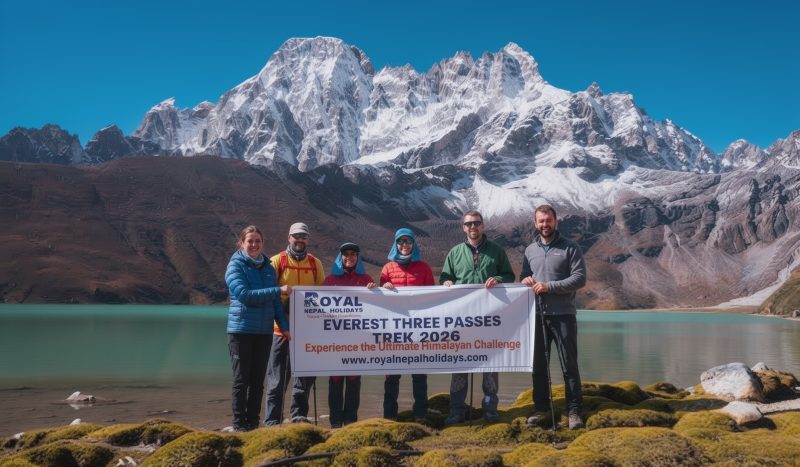
Trek All Three Everest Passes In 17 Days With Royal Nepal Holidays. Cross Kongma La, Cho La & Renjo La, Visit EBC, Kala Patthar & Gokyo Lakes. Book Now. View Details →
 30 Minutes Drive
 Hotel in Kathmandu
 Breakfast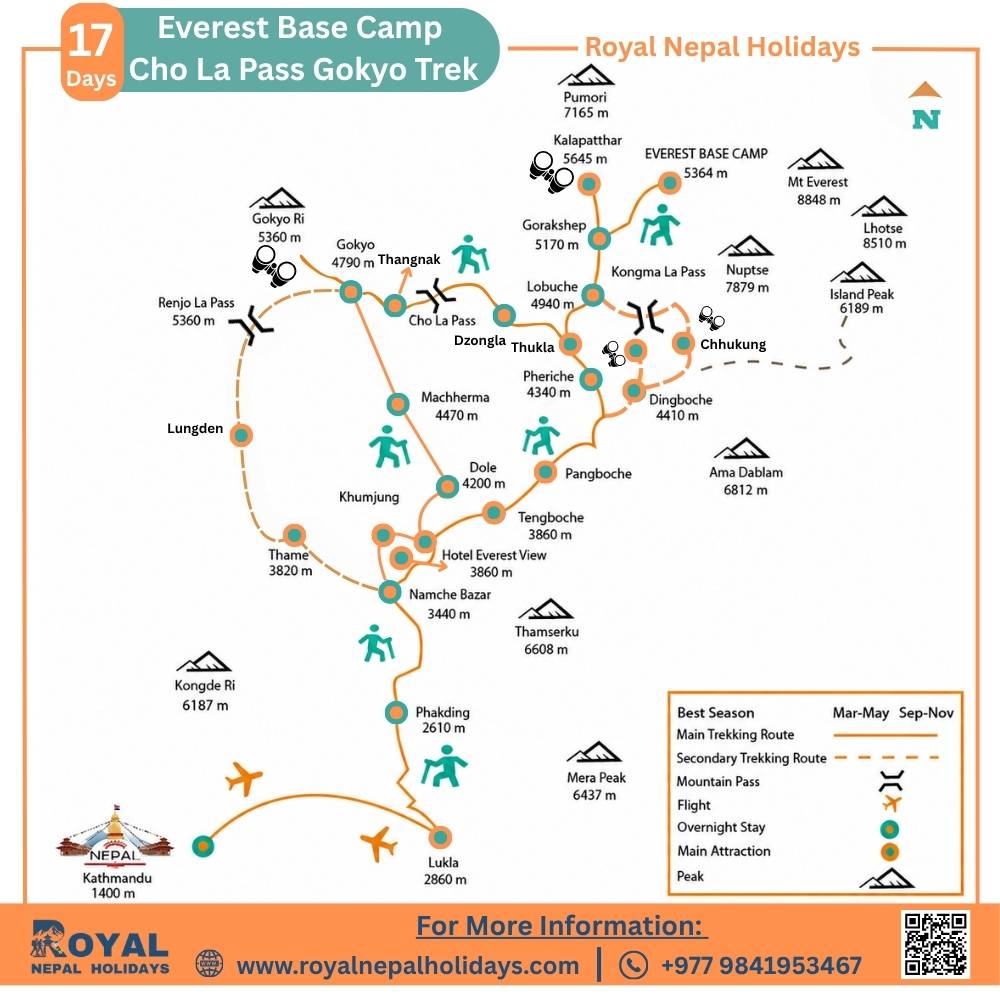





Everest Base Camp Hit Different Than I Expected
I'm Not Really A "trek Guy," But My Wife Wouldn't Stop Talking About It, So We Booked It. Best Decision I Could've Made, Honestly.
The First Few Days Were Rough — My Legs Were Screaming By Namche, And I Questioned Everything. But The Guys At The Tea House Were So Chill About It, And Our Guide Dorje Just Kept Saying "slow And Steady," Which Somehow Made It Less Intimidating. The Acclimatization Days Were Actually Perfect Because It Gave Us Time To Explore The Villages And Chat With Locals.
Everest Base Camp Hit Different Than I Expected. I Thought It Would Just Be A Pile Of Rocks, But Standing There Looking Up At The Icefall, Understanding That People Actually Try To Climb that — It Properly Messes With Your Head In The Best Way. Kala Patthar Sunrise Was Incredible. Worth Getting Up At 4am For, Despite The Cold Trying To Kill Me.
Cho La Pass Was Intense. I Won't Lie — I Was Scared On The Glacier Section. But Dorje Made Sure We Were Roped Up Properly, And He Kept Checking In, Making Sure We Felt Okay. Once We Got Over It And Started Descending, I Felt This Weird Rush Of Accomplishment. Like, I Actually Did That.
The Gokyo Lakes Were Surprisingly My Favorite Part. Less Crowded Than Base Camp, And That Turquoise Water Is Actually That Color — Not Photoshopped Or Anything. We Spent A Whole Afternoon Just Sitting There, Barely Talking, Which Says Something Because My Wife And I Usually Can't Shut Up.
Came Back Thinking I'd Be Wrecked, But I Feel Stronger Than I Have In Years. Already Looking At Doing Annapurna Next Year. Who Knew?
Highly Recommend If You're Fit Enough To Try. Don't Overthink It.
Gokyo Was Peaceful. Perfect Place To Just Breathe And Process Everything
I Did This Trek To Challenge Myself After A Rough Breakup. Needed To Prove I Could Do Something Hard On My Own.
The Trek Absolutely Delivered. Days 1-3 To Namche Were Actually Pretty Fun — Nice Gradual Introduction, And The Mountain Views Started Immediately. I Met This Group Of People From Different Countries In The Tea House, And We Ended Up Hiking Parts Of It Together. Community Made Everything Better.
The Altitude Thing Was Real, Though. I Got A Proper Headache At Dingboche And Genuinely Worried I'd Have To Turn Back. But I Rested, Drank Tons Of Water, And The Next Day Was Better. It's Weird How Your Body Adapts If You Just Give It Time.
Base Camp Was Emotional For Me In Ways I Didn't Anticipate. Just Standing There, Thinking About How Hard Everything In Life Had Felt Lately, And Realizing I'd Literally Walked To The Base Of The World's Highest Mountain — Something Shifted. I Cried A Bit. Didn't Care Who Saw.
Cho La Was Scary But Manageable With The Right Guide. The Ice Crossing Made Me Nervous, But Our Guide Explained Everything Clearly, And I Trusted Him Completely. That Moment Reaching The Pass And Looking Back At What We'd Climbed — That Was When I Really Felt Proud Of Myself.
Gokyo Was Peaceful. Perfect Place To Just Breathe And Process Everything. The Lakes Are Genuinely That Beautiful, And It's Less Touristy Than Base Camp.
I'm A Different Person Coming Back. More Confident, Less Worried About What Others Think. Highly Recommend Doing This Alone If You're Considering It — Some Of The Best Growth Happened In My Own Headspace.
Worth Every Blister
We've Been Married 27 Years And Spent Most Of Them In The Same City, Same Jobs, Same Routine. This Trek Was Our Big "yes" To Adventure Before We Get Too Old.
Honestly? First Week Was Harder Than We Expected. Not The Physical Part As Much As The Mental Adjustment To Being Uncomfortable. Cold Showers, Basic Tea Houses, Carrying Stuff Uphill — None Of It's Glamorous. But Somewhere Around Day Five, We Stopped Complaining And Started Enjoying It.
Our Guide Was Patient With Us. We're Not Spring Chickens, And He Never Made Us Feel Slow Or Like We Were Holding Up The Group. He'd Share Facts About The Plants, Tell Us Stories About His Village, Ask About Our Family. Made It Personal Instead Of Transactional.
The Views Are Honestly Hard To Describe. You See Everest In Films And Photos, But Being Actually there, In Person, Realizing How Massive These Mountains Are — No Camera Captures That. We Took Tons Of Pictures, But They're Honestly Kind Of Pointless Because The Real Experience Can't Be Photographed.
Cho La Was Intimidating. We're Not Climbers, And Walking On A Glacier With Crampons Felt Legitimately Dangerous. But We Moved Slowly, Stayed Focused, And We Made It. Felt Like We'd Accomplished Something Major Together. The Kind Of Shared Experience That Reminds You Why You Chose Each Other.
Gokyo Lakes Were Stunning But Honestly, The Hike Back Down Was Tough On Our Knees. Worth It Though.
Coming Home, We Feel Stronger As A Couple And Stronger Individually. Already Talking About The Himalayas Again For Next Year. This Trek Gave Us Something We Were Missing — A Shared Challenge, A Reason To Rely On Each Other, And Proof That We Can Still Do Hard Things.
Recommend It To Anyone Considering It. Just Make Sure You're Actually Fit Enough To Do It.
Life-Changing In The Best Way
Booked This Somewhat Randomly After Too Much Wine One Night. Spent The Next Six Months Training And Wondering What I'd Gotten Myself Into.
Turns Out I'd Gotten Myself Into One Of The Most Incredible Experiences Of My Life. Mr Sushil Guides Every Way Possible, A Great Guy.
The Trek Isn't Just About Everest Base Camp — That's What I Thought Going In. But Adding Cho La And Gokyo Makes It A Proper Circuit, And Each Section Feels Distinct. Base Camp Is The Famous Bit, Obviously. Cho La Is The Adrenaline Rush Where You Realize You're Doing Something Genuinely Technical And Slightly Risky. And Gokyo Is Where You Recover Emotionally And Just Soak In The Beauty.
The Physical Challenge Is Real But Not Impossible. I Trained With Stairs And Weekend Hikes, And That Preparation Made A Huge Difference. Still Got Sore, Still Got Tired, Still Had Altitude Headaches — But Nothing I Couldn't Manage.
What Surprised Me Most Was The People. Everyone On The Trek Comes From Different Places And Different Lives, But You're All Doing The Same Hard Thing, So You Just Connect Immediately. Had Some Brilliant Conversations With Random Trekkers In Tea Houses About Life, Work, Family — Real Conversations You Don't Normally Have.
The Sherpa Guides Are Genuinely Amazing. They're Not Just Leading You Up The Mountain; They're Managing Your Safety, Reading The Weather, Knowing Exactly When You Need Encouragement And When You Need To Be Left Alone. Respect Their Job — It's Harder Than It Looks.
One Thing Nobody Tells You: Your Knees Get Absolutely Hammered On The Descent. Worth It, But Prepare For That.
Would Definitely Do This Again. Actually Already Looking At Booking A Return Trip. This Trek Does Something To You That Regular Holidays Don't — Makes You Feel Properly Alive.