
Trip Durations
10 Days

Quick Contact
4.9  | 10 Days | Kathmandu - Annapurna Base Camp - Kathmandu

There is a moment on this trek, usually somewhere past Machhapuchhre Base Camp, when the trail flattens out, the tea house lights disappear behind you, and the amphitheater of ice opens up on every side. That moment is why people fly across the world for the Annapurna Base Camp Trek. It is not just a walk to 4,130 meters. It is a slow, ten-day unfolding of Gurung villages, rhododendron forests, hot stone steps, and finally, a wall of eight-thousand-meter peaks that seems to lean over the small wooden lodge where you'll sleep that night.
Royal Nepal Holidays has been guiding trekkers into the Annapurna Sanctuary for years, and this guide is built from that experience. Below you'll find everything you need to plan, book, and complete the Annapurna Base Camp Trek in Nepal — the real itinerary, the real costs, the real difficulty level, and the honest advice our guides give trekkers before they ever leave Kathmandu.
| Detail | Information |
|---|---|
| Duration | 10 Days (Kathmandu to Kathmandu) |
| Maximum Altitude | 4,130 m (Annapurna Base Camp) |
| Difficulty | Moderate |
| Accommodation | Teahouses / Lodges (Hotel in Kathmandu & Pokhara) |
| Meals | Breakfast, Lunch, Dinner (full board on trek) |
| Transportation | Flight, Private Vehicle, Trekking on Foot |
| Best Season | March–May (Spring) and September–November (Autumn) |
| Starting Point | Nayapul (via Pokhara) |
| Ending Point | Jhinu Danda / Pokhara |
| Walking Distance | Approximately 70–75 km round trip |
| Daily Walking Hours | 5–7 hours per day |
| Group Size | 1–24+ (Private and Group departures available) |
| Guide | Government-licensed, English-speaking trekking guide |
| Porter | Available on request (1 porter per 2 trekkers) |
| Permits | ACAP (Annapurna Conservation Area Permit) and TIMS Card |
| Price | From USD 950 per person (group size dependent) |
Every one of these numbers matters when you're deciding whether the Annapurna Base Camp Trek is right for you, and we'll unpack each one in detail as you read on.
Booking a trek from outside Nepal can feel like a leap of faith. You're trusting a company you've never met with your safety, your money, and often the trip of a lifetime. Here's why trekkers choose Royal Nepal Holidays for the Annapurna Base Camp Trek.
Ask ten different trekkers why they chose the Annapurna Base Camp Trek over Everest, and you'll get ten different answers — but most of them circle back to the same idea: ABC gives you the high-mountain drama of the Himalaya without demanding three weeks of your life or a small fortune in flights.
The trek is officially a journey into the Annapurna Sanctuary, a natural amphitheater of glaciers and rock ringed by some of the highest peaks on Earth. You don't just see Annapurna I, the tenth-highest mountain in the world — you walk directly into its shadow, along with Annapurna South, Hiunchuli, Gangapurna, and the impossibly sharp fishtail summit of Machhapuchhre.
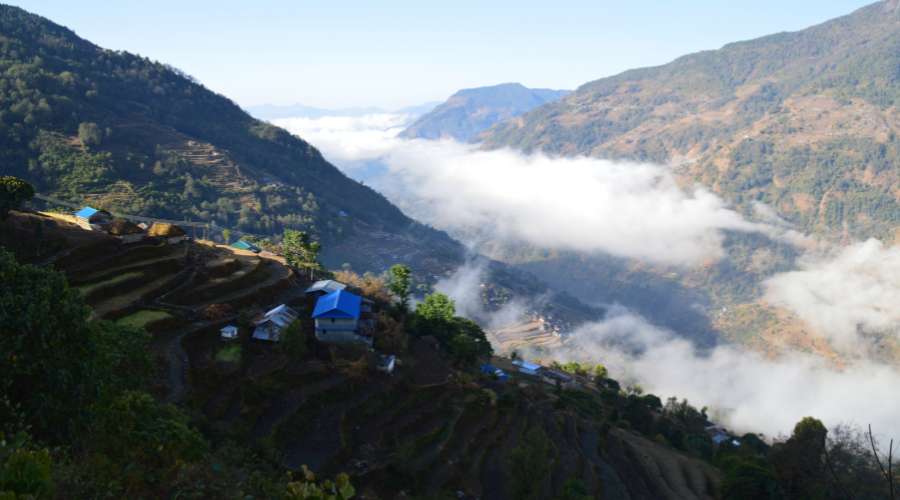
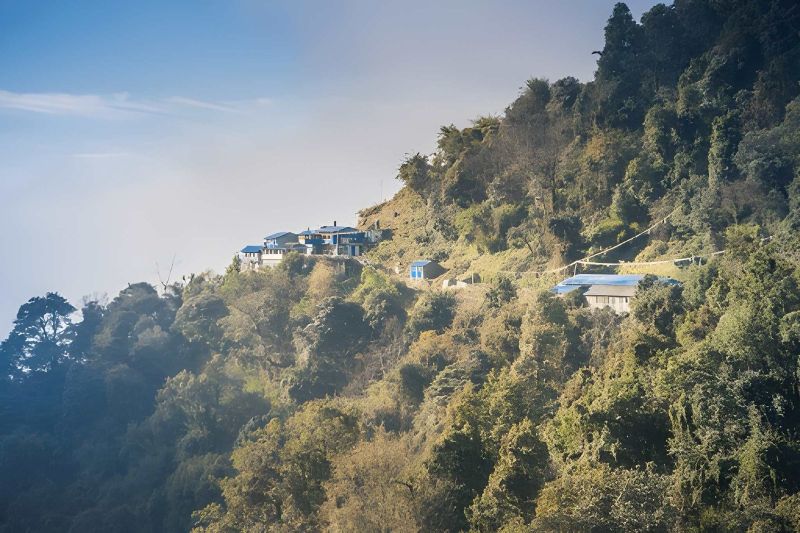
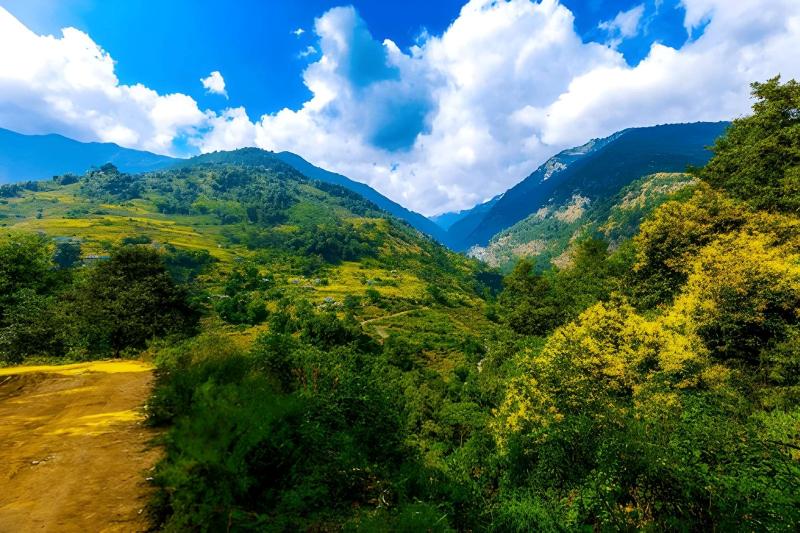
Unlike many trekking routes in Nepal that stay on one side of a valley, the Annapurna Base Camp Trek route curls through several distinct worlds. You start in the warm, terraced lowlands near Nayapul, climb through dense rhododendron and oak forests that turn the hillsides red every spring, and pass through Gurung villages like Ghandruk and Chhomrong where stone houses, prayer flags, and mani walls tell you you've entered a different cultural zone entirely.
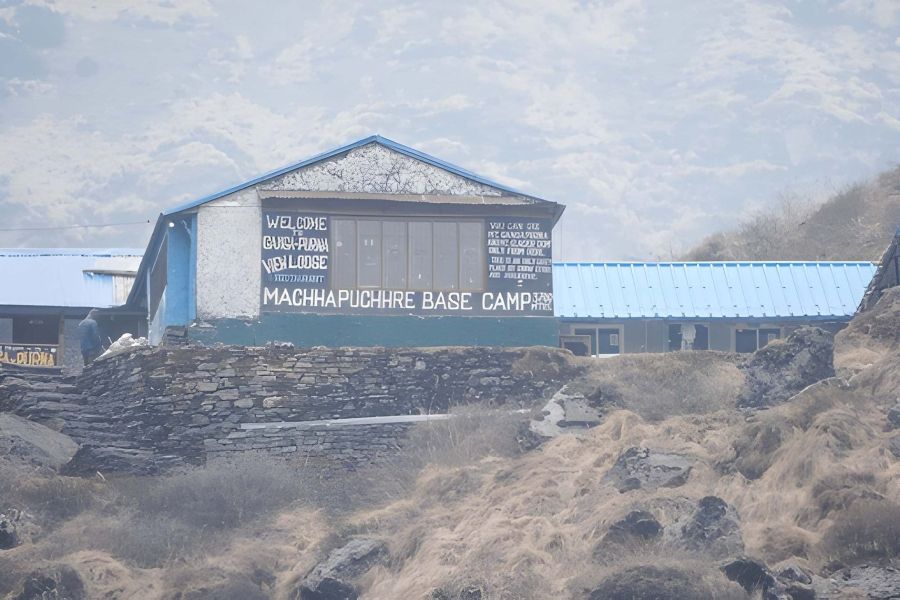
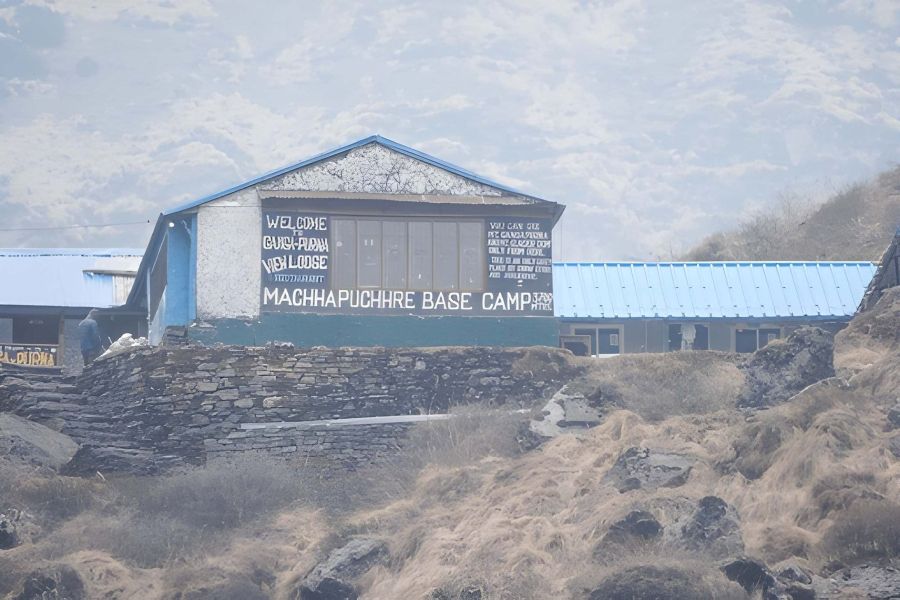
By the time you reach Bamboo and Himalaya, the forest has thinned into pine and birch, and the air has that thin, mineral smell of high altitude. Machhapuchhre Base Camp, sitting at 3,700 meters, is where most trekkers say the trip changes — the sanctuary walls close in, the mountains stop being background scenery and become the entire view.
And then there's Jhinu Danda, on the way back down, where natural hot springs beside the Modi Khola river let you soak tired legs while looking up at the same peaks you stood beneath a day earlier.
This is a trek built on tea houses rather than tents, on dal bhat rather than freeze-dried meals, and on daily contact with Gurung culture rather than isolation. It is, for good reason, one of the most beloved treks in Nepal — and one that Royal Nepal Holidays runs more often than almost any other itinerary we offer.
Trekking to Annapurna Base Camp gives you the reward of standing inside a genuine Himalayan sanctuary — a feeling usually reserved for mountaineers — without technical climbing skills, without three weeks of vacation time, and without the higher altitude risks of treks that climb above 5,000 meters.
You get variety, too. Few treks in Nepal pack in this much ecological and cultural range in just ten days: subtropical forest, rhododendron woodland, alpine terrain, glacial moraine, Gurung and Magar villages, and hot springs, all connected by a single, well-established trail.
If you fall into that second group, talk to us — we can suggest a gentler alternative like the Ghorepani Poon Hill Trek, which shares part of the same route at lower altitude.
| Day | Route | Elevation | Walking Hours |
|---|---|---|---|
| Day 1 | Arrival in Kathmandu | 1,400 m | — |
| Day 2 | Pokhara – Nayapul – Ulleri | 1,960 m | 6–7 hrs |
| Day 3 | Ulleri – Ghorepani | 2,860 m | 5–6 hrs |
| Day 4 | Poon Hill – Tadapani | 3,210 m / 2,630 m | 6–7 hrs |
| Day 5 | Tadapani – Upper Sinuwa | 2,360 m | 5–6 hrs |
| Day 6 | Sinuwa – Deurali | 3,200 m | 5–6 hrs |
| Day 7 | Deurali – Annapurna Base Camp | 4,130 m | 5–6 hrs |
| Day 8 | ABC – Upper Sinuwa | 2,350 m | 6–7 hrs |
| Day 9 | Sinuwa – Jhinu – Pokhara – Kathmandu | 1,400 m | 7–8 hrs |
| Day 10 | Final Departure | — | — |
Elevation: 1,400 m (4,593 ft)
Driving Duration: 30–45 Minutes
Accommodation: 3-Star Hotel (Upgrade Available)
Meals: Optional Welcome Dinner
Welcome to Nepal, the land of the Himalayas! Upon your arrival at Tribhuvan International Airport in Kathmandu, a friendly representative from Royal Nepal Holidays will warmly welcome you and transfer you to your hotel in a private tourist vehicle.
The drive to your hotel offers your first glimpse of Nepal's vibrant capital, where ancient temples, bustling markets, colorful prayer flags, and lively streets blend seamlessly with modern life. Depending on your arrival time, you may relax after your flight or explore the famous Thamel district, Kathmandu's tourism hub filled with cafés, trekking shops, restaurants, and cultural attractions.
In the evening, you'll attend a comprehensive trek briefing with your experienced trekking guide. During this meeting, you'll receive detailed information about the Annapurna Base Camp Trek itinerary, altitude awareness, trail conditions, weather expectations, safety procedures, and the equipment you'll need over the coming days. Your guide will also answer any questions to ensure you're fully prepared.
If you need trekking gear such as a down jacket, trekking poles, sleeping bag, or waterproof clothing, your guide can recommend reputable rental and outdoor equipment stores in Thamel.
The rest of the evening is yours to enjoy. You may sample authentic Nepali cuisine, stroll through the vibrant streets of Thamel, or simply rest before tomorrow's journey to Pokhara, the gateway to the Annapurna region.
Expert Tip: Stay hydrated after your international flight, avoid excessive alcohol, and organize your daypack for an early departure tomorrow.
Maximum Elevation: 1,960 m (6,430 ft)
Flight Duration: 25 Minutes
Drive Duration: 1.5–2 Hours
Trekking Duration: 6–7 Hours
Distance: Approximately 11 km
Accommodation: Tea House
Meals: Breakfast, Lunch & Dinner
Your Himalayan adventure truly begins today with a spectacular morning flight from Kathmandu to Pokhara. During the short flight, enjoy breathtaking aerial views of the snow-capped Himalayas, including Langtang, Manaslu, Dhaulagiri, and the majestic Annapurna range on clear days.
Upon landing in Pokhara, you'll embark on a scenic drive to Nayapul, passing traditional villages, fertile terraces, and winding mountain roads alongside the Modi Khola River. Nayapul marks the official starting point of your Annapurna Base Camp Trek.
The trail begins gently, following stone pathways through charming settlements such as Birethanti before gradually ascending through lush forests, terraced rice fields, and waterfalls. You'll cross suspension bridges decorated with colorful prayer flags while enjoying views of rushing rivers and distant Himalayan peaks.
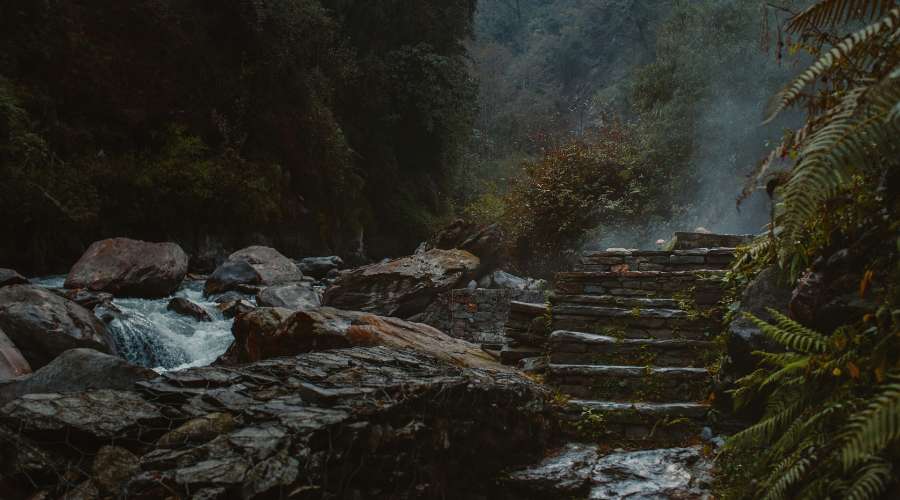
The final section of today's trek is the famous climb to Ulleri, consisting of thousands of well-built stone steps. Although physically demanding, this ascent rewards you with stunning scenery and a genuine sense of accomplishment. Along the way, you'll encounter friendly local villagers, mule caravans transporting supplies, and fellow trekkers beginning their Himalayan journey.
Ulleri is a picturesque Magar village perched on a hillside, offering panoramic views of the surrounding valleys and nearby mountains. After checking into your cozy tea house, enjoy a freshly prepared dinner while taking in the peaceful mountain atmosphere.
Expert Tip: Trek at a steady pace on the stone staircases, drink plenty of water, and use trekking poles to reduce strain on your knees.
Maximum Elevation: 2,860 m (9,383 ft)
Trekking Duration: 5–6 Hours
Distance: Approximately 10 km
Accommodation: Tea House
Meals: Breakfast, Lunch & Dinner
After an early breakfast, continue your journey deeper into the Annapurna Conservation Area. Today's trail winds through one of Nepal's most beautiful forests, where ancient oak trees, towering rhododendrons, and dense bamboo create a peaceful natural setting.
During spring (March to May), the rhododendron forests burst into vibrant shades of red, pink, and white, transforming the landscape into one of the most colorful trekking routes in the Himalayas. Bird enthusiasts may spot the Himalayan Monal, Nepal's national bird, along with various pheasants and other native wildlife.
The trail passes through the small settlements of Banthanti and Nangethanti, ideal locations for tea breaks while enjoying fresh mountain air and spectacular scenery. As you gain altitude, the views become increasingly dramatic, with glimpses of Annapurna South, Hiunchuli, Machhapuchhre (Fishtail), and other snow-capped peaks appearing through the forest.
By afternoon, you'll reach Ghorepani, one of the most popular overnight stops in the Annapurna region. This charming mountain village is surrounded by dense rhododendron forests and serves as the gateway to the famous Poon Hill viewpoint.
After checking into your tea house, take time to relax, enjoy a hot drink, and prepare for tomorrow's pre-dawn hike to Poon Hill, one of Nepal's most iconic sunrise viewpoints.
Photography Tip: Keep your camera ready throughout the day, as clearings in the forest provide stunning frames of Machhapuchhre and the Annapurna range against lush greenery.
Expert Tip: Temperatures become cooler as you gain altitude. Dress in layers and keep a warm jacket accessible for the evening in Ghorepani.
Maximum Elevation: 3,210 m (10,531 ft) – Poon Hill
Ending Elevation: 2,630 m (8,628 ft) – Tadapani
Trekking Duration: 6–7 Hours (Including Poon Hill Hike)
Distance: Approximately 12 km
Accommodation: Traditional Tea House
Meals: Breakfast, Lunch & Dinner
Today is one of the most memorable days of your Annapurna Base Camp Trek. Before dawn, your guide will wake you for an unforgettable hike to Poon Hill, one of Nepal's most celebrated sunrise viewpoints. Equipped with headlamps, you'll ascend for about 45–60 minutes under a starlit Himalayan sky.
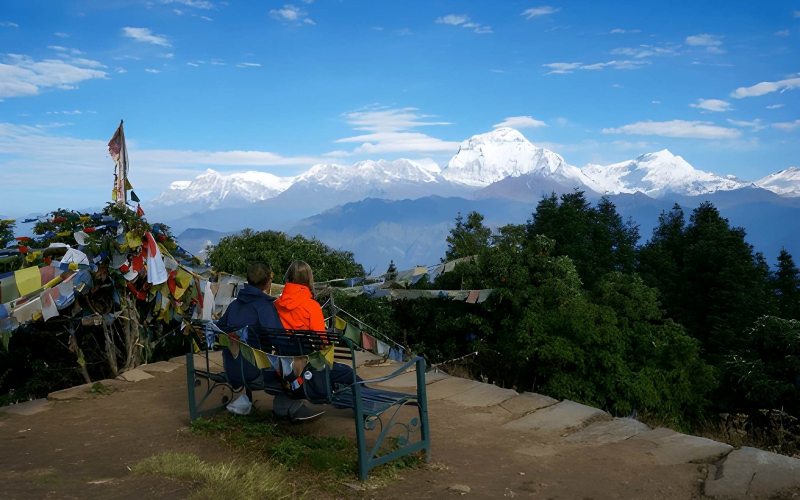
As the first rays of sunlight touch the snow-covered peaks, witness a breathtaking panorama stretching across the Annapurna and Dhaulagiri ranges. From the summit, you'll enjoy spectacular 360-degree views of Annapurna I (8,091 m), Annapurna South, Machhapuchhre (Fishtail), Dhaulagiri (8,167 m), Nilgiri, Hiunchuli, and numerous surrounding Himalayan peaks. Watching the mountains transform from soft pink to brilliant gold is an experience that remains with trekkers forever.
After spending time capturing photographs and soaking in the incredible scenery, descend to Ghorepani for a hearty breakfast before continuing toward Tadapani.
Leaving Ghorepani, the trail traverses beautiful ridgelines and dense forests filled with rhododendron, oak, magnolia, and pine trees. During spring, the blooming rhododendron forests create one of Nepal's most colorful trekking landscapes. Along the route, you'll pass small clearings that reveal magnificent mountain vistas and peaceful forest sections where Himalayan birds and langurs are frequently spotted.
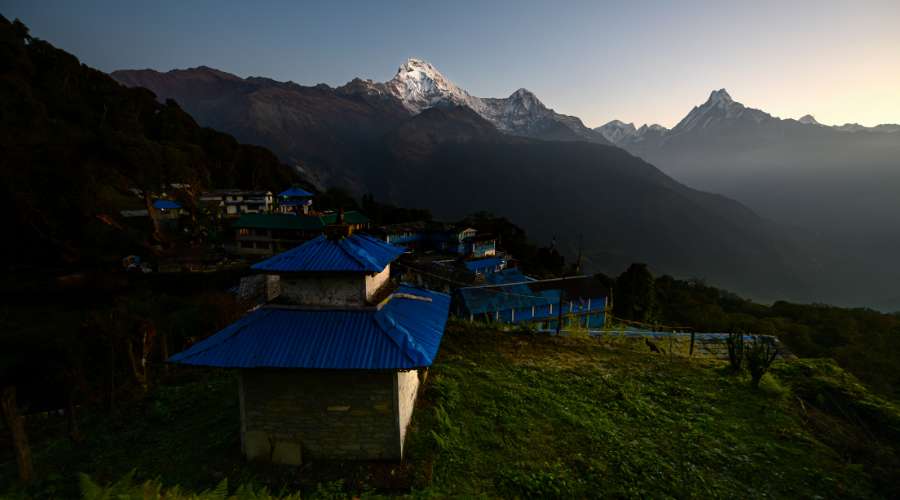
The journey includes both gentle ascents and descents before arriving at Tadapani, a peaceful village perched on a forested ridge. The name "Tadapani" means "far water," reflecting the area's natural springs and tranquil surroundings. From your tea house, enjoy close-up views of Annapurna South and the iconic Machhapuchhre.
As evening falls, relax beside the dining room stove, share stories with fellow trekkers, and enjoy another delicious meal prepared by your hosts.
Photography Tip: Bring spare camera batteries, as cold temperatures drain battery life quickly. A wide-angle lens is perfect for capturing the Himalayan panorama.
Expert Tip: Dress warmly for the early morning hike, as temperatures before sunrise can fall below freezing during autumn and winter.
Maximum Elevation: 2,630 m (Starting Point)
Ending Elevation: 2,360 m (Upper Sinuwa)
Trekking Duration: 5–6 Hours
Distance: Approximately 10–11 km
Accommodation: Tea House
Meals: Breakfast, Lunch & Dinner
Wake to the peaceful sounds of birds and enjoy another stunning Himalayan sunrise before beginning today's trek toward Upper Sinuwa. The trail descends through lush forests rich with rhododendron, bamboo, oak, and maple trees, creating a refreshing and shaded walking experience.
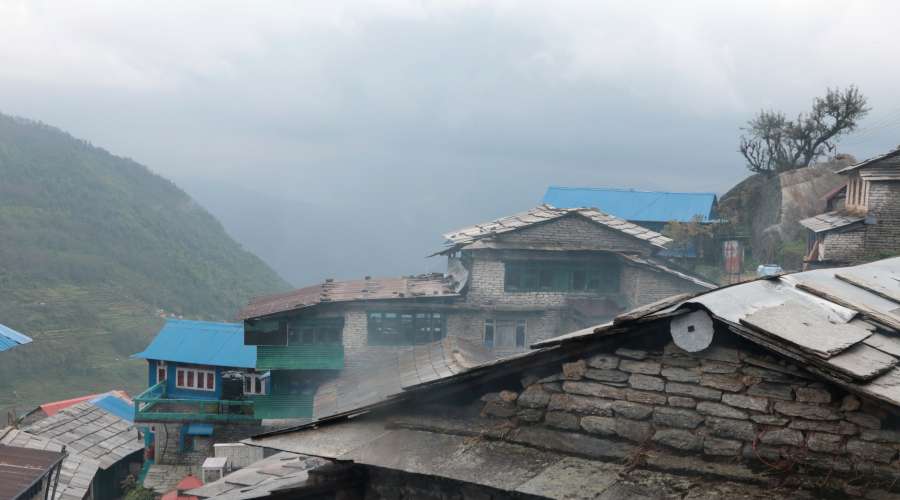
As you make your way toward Chhomrong, you'll pass through traditional Gurung villages where stone houses, neatly maintained terraces, and colorful prayer flags reflect the unique mountain culture of the Annapurna region. Friendly villagers often greet trekkers with warm smiles, providing opportunities to experience authentic Nepalese hospitality.
Chhomrong is one of the largest and most significant villages on the Annapurna Base Camp route. Surrounded by towering peaks, it offers breathtaking views of Annapurna South, Hiunchuli, and Machhapuchhre. After a well-earned lunch, you'll descend a long stone staircase to cross the Chhomrong Khola via a suspension bridge before beginning a steady climb toward Sinuwa.
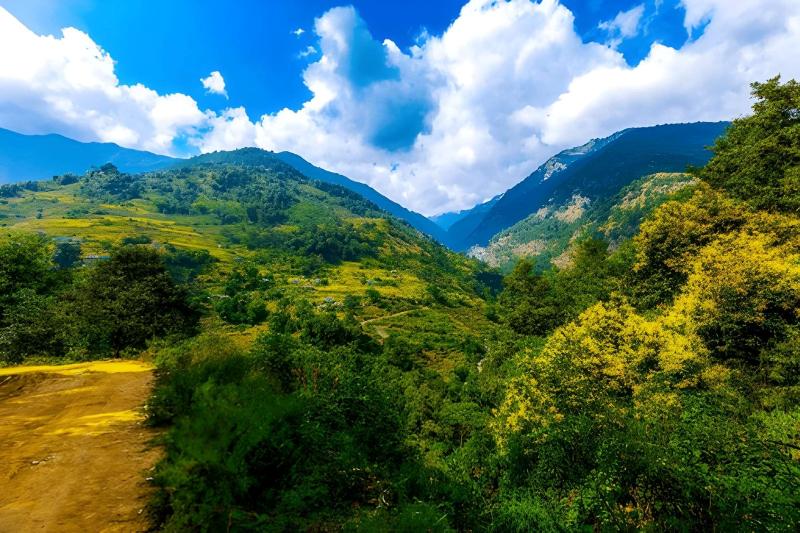
The afternoon trail enters a dense subtropical forest where bamboo groves, moss-covered trees, waterfalls, and the sounds of mountain streams create a magical atmosphere. This section of the Annapurna Sanctuary Trek marks the transition from cultivated villages to the untouched wilderness of the Annapurna Conservation Area.
Upper Sinuwa is a small settlement surrounded by forest, offering comfortable tea houses and peaceful surroundings ideal for rest before continuing to higher elevations.
Nature Highlight: This region is home to Himalayan langurs, colorful pheasants, and numerous native bird species. Keep your eyes open for wildlife along the quieter sections of the trail.
Expert Tip: Today's route includes many stone steps. Trekking poles will help reduce fatigue and provide extra stability on both ascents and descents.
Maximum Elevation: 3,200 m (10,499 ft)
Trekking Duration: 5–6 Hours
Distance: Approximately 10 km
Accommodation: Mountain Tea House
Meals: Breakfast, Lunch & Dinner
Today's trek takes you deeper into the heart of the Annapurna Sanctuary, where the landscape gradually transforms from dense subtropical forest to dramatic alpine terrain. After breakfast, you'll follow a peaceful trail through thick bamboo forests before reaching the small settlements of Bamboo and Dovan.
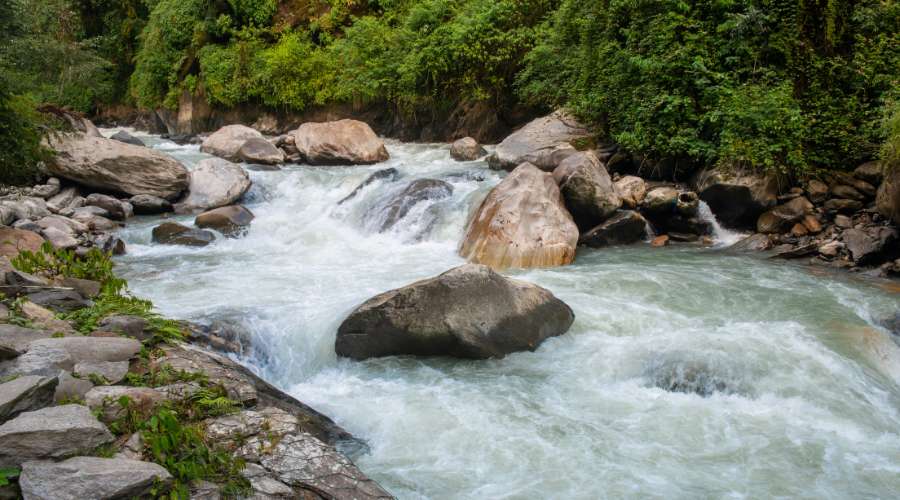
As you continue alongside the Modi Khola River, towering cliffs rise on either side while cascading waterfalls tumble down the mountainsides. The trail becomes increasingly rugged, offering spectacular views of glacial valleys and surrounding peaks. Along the way, you'll notice the vegetation becoming sparser as you gain altitude, replaced by hardy alpine shrubs and rocky terrain.
Passing through the settlement of Himalaya, you'll continue toward the famous Hinku Cave, a natural rock overhang that has long served as a resting place for trekkers and local porters. This is an excellent place to pause, enjoy refreshments, and admire the dramatic mountain scenery before continuing.
The final section to Deurali follows a gradual ascent through one of the most scenic parts of the trek. Towering peaks, glacial streams, and open alpine landscapes surround you as the Annapurna Sanctuary begins to reveal its full grandeur.
Upon reaching Deurali, settle into your tea house and take time to rest. Since you'll now be above 3,000 meters, proper hydration, a nutritious dinner, and a slow pace are essential to support acclimatization.
As night falls, the clear mountain skies often reveal countless stars, creating a magical Himalayan atmosphere unlike anything experienced at lower elevations.
Altitude Advice: Some trekkers may begin to notice the effects of higher elevation. Walk slowly, stay well hydrated, avoid alcohol, and immediately inform your guide if you experience persistent headaches, nausea, or unusual fatigue.
Photography Tip: The dramatic contrast between green forests, rocky cliffs, glacial rivers, and snow-covered mountains offers endless opportunities for landscape photography throughout today's trek.
Starting Elevation: 3,200 m (10,499 ft) – Deurali
Maximum Elevation: 4,130 m (13,550 ft) – Annapurna Base Camp
Trekking Duration: 5–6 Hours
Distance: Approximately 10 km
Accommodation: Mountain Tea House at Annapurna Base Camp
Meals: Breakfast, Lunch & Dinner
Today is the highlight of your Annapurna Base Camp Trek, taking you into the heart of the spectacular Annapurna Sanctuary, a natural amphitheater surrounded by some of the highest mountains on Earth. After an early breakfast, the trail gradually climbs above the tree line, revealing dramatic alpine landscapes, glacial moraines, and sweeping mountain vistas.
Leaving Deurali behind, you'll follow the Modi Khola through a broad glacial valley. The scenery becomes increasingly breathtaking as towering cliffs give way to snow-covered peaks that seem close enough to touch. Depending on the season, you may cross sections of snow or frozen streams, adding to the adventure.
After several hours of steady trekking, you'll arrive at Machhapuchhre Base Camp (MBC) at 3,700 meters. Although climbing Mount Machhapuchhre is prohibited because of its sacred status, the base camp offers extraordinary panoramic views of Machhapuchhre (Fishtail), Annapurna South, Hiunchuli, Gangapurna, and Annapurna III. This is an ideal place to enjoy lunch while taking in the incredible Himalayan scenery.
From MBC, the trail continues across open alpine terrain toward Annapurna Base Camp. As you enter the famous Annapurna Sanctuary, you'll be surrounded by a magnificent ring of towering peaks. The final approach is gentle, allowing you to fully appreciate the grandeur of this unique mountain basin.
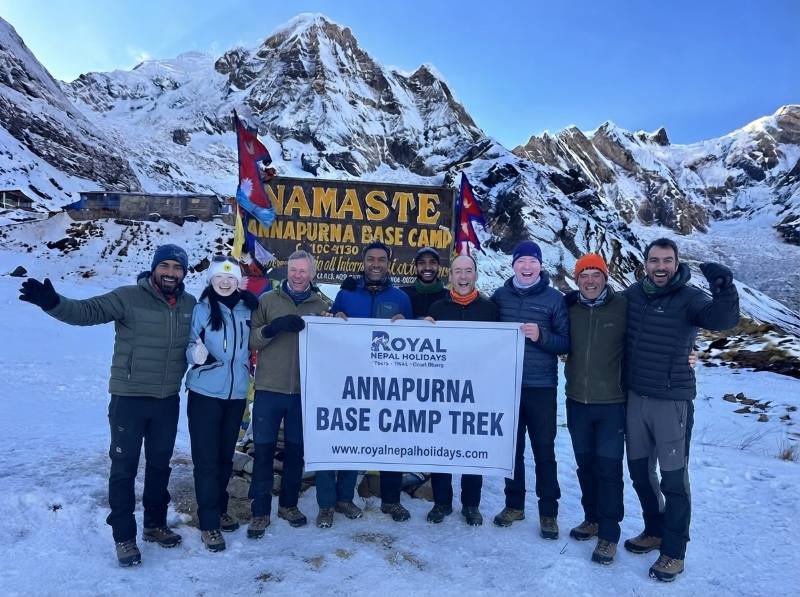
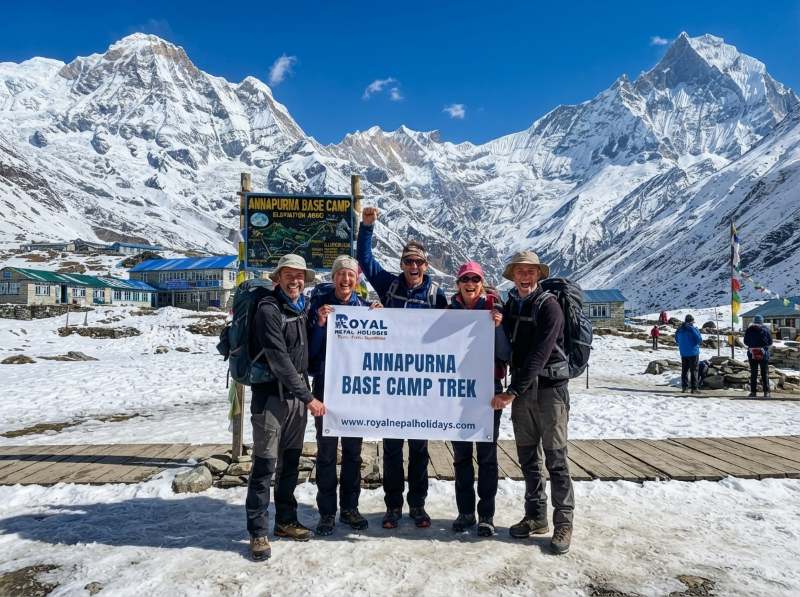
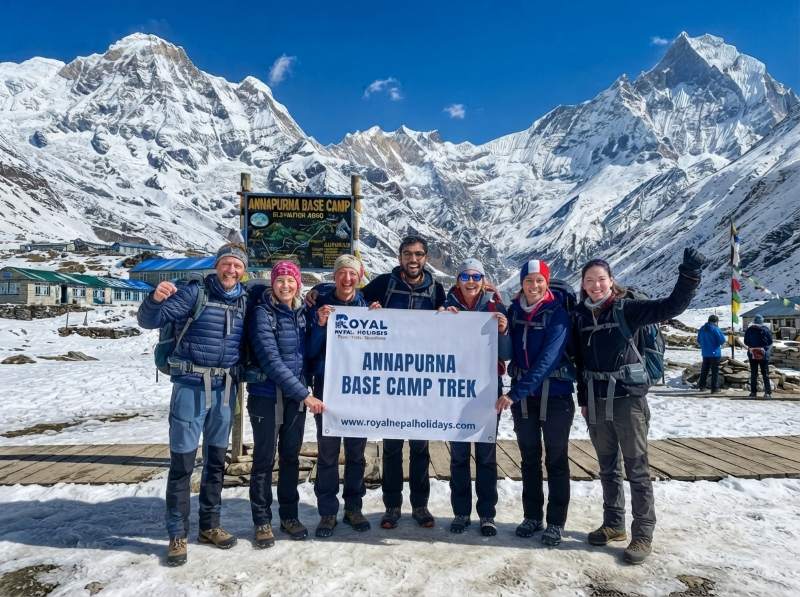
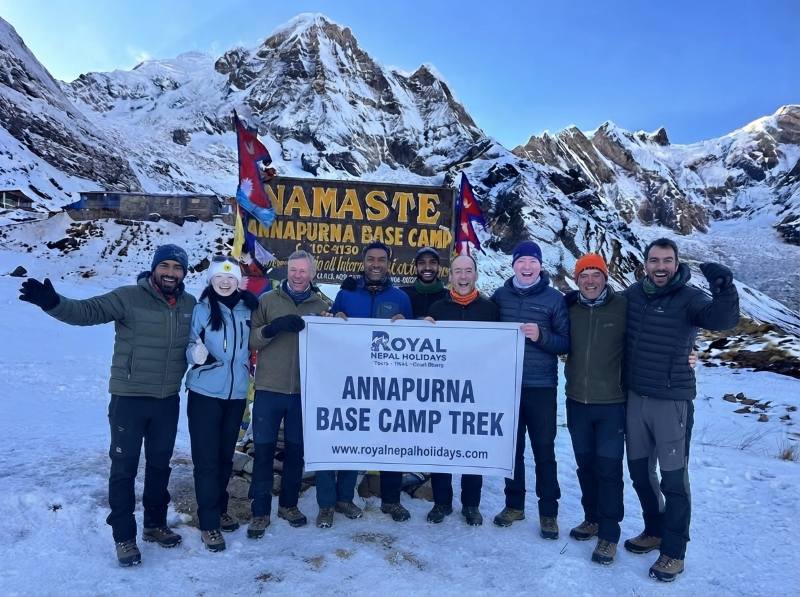
Reaching Annapurna Base Camp (4,130 m) is an unforgettable achievement. Standing beneath Annapurna I (8,091 m)—the world's tenth-highest mountain—you'll be rewarded with breathtaking 360-degree views of Annapurna South, Hiunchuli, Tent Peak, Gangapurna, Annapurna III, and the sacred Machhapuchhre.
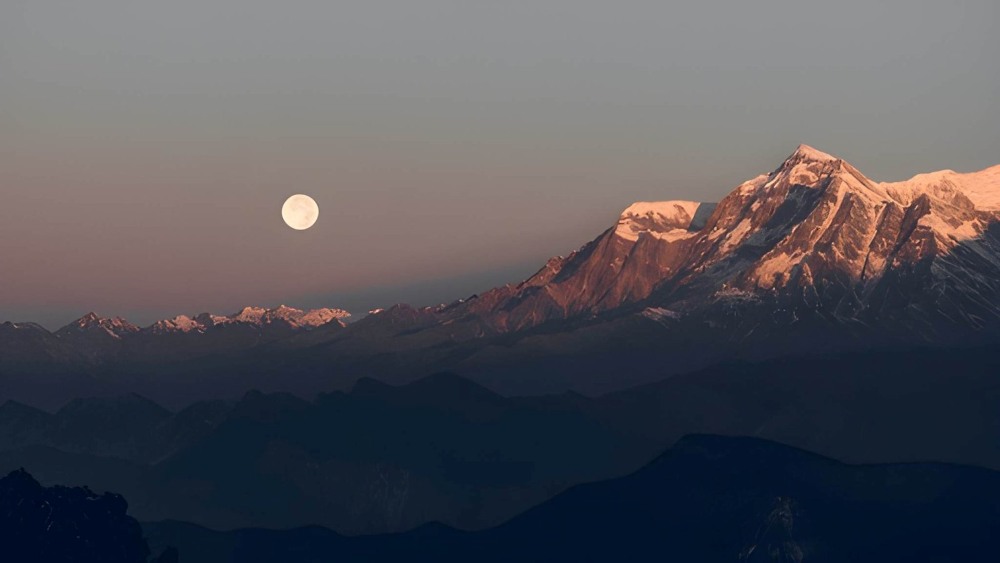
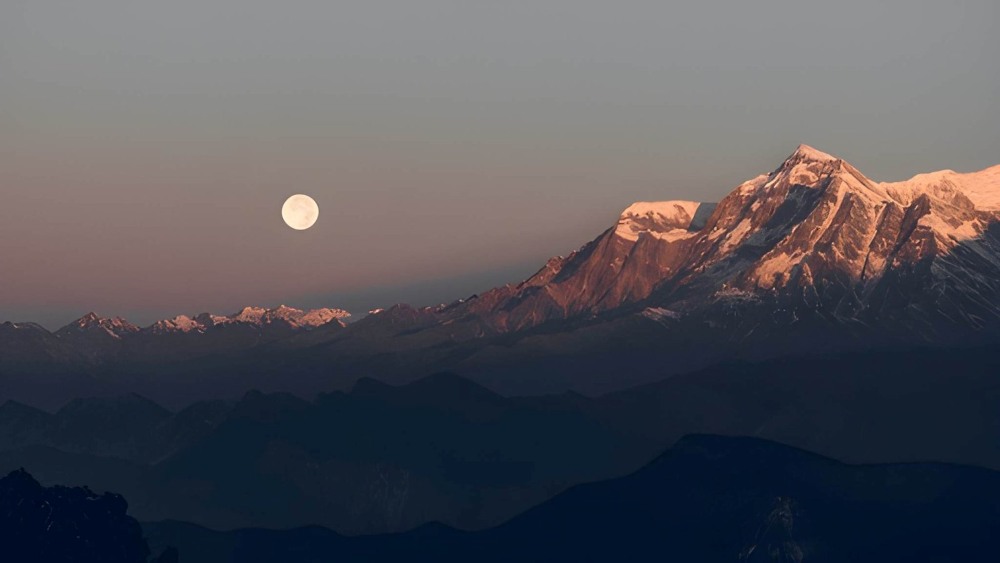
Spend the evening watching the changing colors of the mountains as the setting sun paints the snow-covered peaks in brilliant shades of gold, orange, and pink. Few trekking destinations in Nepal offer such an intimate Himalayan experience.
Altitude Advice: At 4,130 meters, proper acclimatization is essential. Drink plenty of water, eat a nutritious dinner, keep warm, and report any symptoms of Acute Mountain Sickness (AMS) to your guide immediately.
Photography Tip: Sunset at Annapurna Base Camp creates dramatic lighting on the surrounding peaks. A tripod is useful for capturing evening and early morning landscapes.
Starting Elevation: 4,130 m (13,550 ft)
Ending Elevation: 2,350 m (7,710 ft) – Upper Sinuwa
Trekking Duration: 7–8 Hours
Distance: Approximately 18–20 km
Accommodation: Tea House
Meals: Breakfast, Lunch & Dinner
Wake before dawn for one of the most unforgettable experiences of the Annapurna Base Camp Trek. As the first rays of sunlight illuminate the snow-covered peaks, the Annapurna Sanctuary transforms into a glowing natural amphitheater. Watching the sunrise over Annapurna I, Annapurna South, Machhapuchhre, Hiunchuli, and Gangapurna is a magical moment that many trekkers describe as the highlight of their journey in Nepal.
After enjoying breakfast with incredible mountain views, begin your descent from Annapurna Base Camp. Retracing your steps through Machhapuchhre Base Camp and Deurali, you'll notice how the changing perspective reveals entirely new views of the surrounding mountains and valleys.
As you descend, the air becomes warmer and oxygen levels increase, making walking more comfortable. The trail passes glacial rivers, alpine meadows, waterfalls, and lush forests before returning to the familiar settlements of Himalaya, Dovan, Bamboo, and finally Upper Sinuwa.
Although today's walk is mostly downhill, the long distance requires endurance. The combination of stone staircases and uneven trails can be demanding on your knees, making trekking poles especially helpful.
Spend the evening relaxing in the peaceful surroundings of Upper Sinuwa while reflecting on the incredible accomplishment of reaching Annapurna Base Camp.
Expert Tip: Descending too quickly can increase strain on your knees. Maintain a comfortable pace, use trekking poles, and stay hydrated throughout the day.
Starting Elevation: 2,350 m (7,710 ft)
Ending Elevation: Kathmandu – 1,400 m (4,593 ft)
Trekking Duration: 5–6 Hours
Driving Duration: Approximately 2.5 Hours
Flight Duration: 25 Minutes
Accommodation: 3-Star Hotel in Kathmandu
Meals: Breakfast & Lunch
Your final day on the trail begins with a pleasant walk through dense forests toward Chhomrong before descending to the beautiful village of Jhinu Danda, famous for its natural hot springs located beside the Modi Khola River.
After several days of trekking through the Annapurna region, soaking in these mineral-rich hot springs is the perfect way to relax tired muscles while enjoying the peaceful riverside setting. Many trekkers consider this a well-earned reward after successfully completing the journey to Annapurna Base Camp.
Following your break, continue to the road head where your private vehicle will be waiting for the scenic drive back to Pokhara. Along the way, enjoy one last look at Nepal's rolling hills, terraced farms, and traditional villages before reaching Pokhara Airport.
Board a short domestic flight back to Kathmandu, where a representative from Royal Nepal Holidays will transfer you to your hotel. The evening is free to explore Thamel, shop for souvenirs, or celebrate your successful Himalayan adventure with a traditional Nepali farewell dinner.
Travel Tip: Consider purchasing locally handmade souvenirs, pashmina products, prayer flags, or traditional handicrafts from Thamel to remember your adventure.
Meals: Breakfast
Transportation: Private Airport Transfer
After breakfast, your unforgettable Annapurna Base Camp Trek in Nepal comes to an end. Depending on your international flight schedule, a representative from Royal Nepal Holidays will transfer you comfortably to Tribhuvan International Airport for your onward journey.
As you leave Nepal, you'll carry with you memories of breathtaking Himalayan landscapes, welcoming mountain communities, peaceful forests, dramatic glacial valleys, and the incredible achievement of standing at the foot of Annapurna I. From the magical sunrise at Poon Hill to the unforgettable panorama of Annapurna Base Camp, every step of the journey offers experiences that will stay with you for a lifetime.
Whether it was sharing stories with fellow trekkers in cozy tea houses, enjoying traditional Nepali hospitality, crossing suspension bridges above rushing rivers, or watching golden light illuminate the world's highest mountains, the Annapurna Base Camp Trek is far more than a hike—it's a life-changing adventure.
We sincerely thank you for choosing Royal Nepal Holidays as your trusted trekking partner in Nepal. Our experienced guides, dedicated support team, and commitment to safety are designed to make every journey memorable and worry-free.
We hope to welcome you back for another Himalayan adventure, such as the Everest Base Camp Trek, Annapurna Circuit Trek, Mardi Himal Trek, Langtang Valley Trek, Manaslu Circuit Trek, or one of our many tailor-made Nepal holiday packages.
Royal Nepal Holidays wishes you a safe journey home and looks forward to welcoming you back to Nepal for your next Himalayan adventure. Namaste!
Are you interested on planning custom trip? It only takes 2 minutes.
The Annapurna Base Camp Trek price with Royal Nepal Holidays depends on group size, with per-person cost decreasing as group size increases.
Group Pricing (Per Person)
| Number of People | Price Per Person |
|---|---|
| 1 person | USD 1,150 |
| 2 people | USD 1,090 |
| 3 people | USD 1,050 |
| 4 to 6 people | USD 990 |
| 7 to 12 people | USD 950 |
| 13 to 18 people | USD 890 |
| 19 to 24 people | USD 850 |
| Included Services |
|---|
| Airport Transfers |
| Kathmandu–Pokhara Flights |
| Pokhara–Kathmandu Flights |
| Private Ground Transportation |
| 3-Star Hotel in Kathmandu |
| Tea House Accommodation During Trek |
| Breakfast, Lunch & Dinner During Trek |
| Licensed Trekking Guide |
| Porter Service (1 Porter for 2 Trekkers) |
| Annapurna Conservation Area Permit |
| First Aid Kit |
| Government Taxes & Service Charges |
| Not Included |
|---|
| Nepal Visa Fee |
| International Flights |
| Travel Insurance |
| Personal Expenses |
| Hot Showers |
| WiFi Charges |
| Charging Fees |
| Soft Drinks & Alcohol |
| Tips for Guide & Porter |
| Personal Trekking Equipment |
Response Time 0-2 Hours , Response Rate 100%
The Annapurna Base Camp Trek route follows a well-established corridor through the southern Annapurna region, starting from Nayapul near Pokhara and tracing the Modi Khola river valley almost the entire way to its source at the base of Annapurna I.

Route Sequence: Nayapul → Tikhedhunga → Ulleri → Ghorepani → Poon Hill (side trip) → Tadapani → Chhomrong → Sinuwa → Bamboo → Dovan → Himalaya → Deurali → Machhapuchhre Base Camp → Annapurna Base Camp → (return via Sinuwa) → Jhinu Danda → Siwai/Nayapul → Pokhara
Villages Along the Route: Tikhedhunga, Ulleri, Nangethanti, Ghorepani, Banthanti, Tadapani, Chhomrong, Sinuwa, Bamboo, Dovan, Himalaya, Deurali, Machhapuchhre Base Camp, Jhinu Danda
Elevation Profile: The trek climbs from roughly 1,070m at Nayapul to 4,130m at Annapurna Base Camp, with several ups and downs along the way rather than a single steady climb — notably the descent-and-reclimb around Chhomrong and Sinuwa. Total elevation gain across the trek exceeds 5,000m when you account for these dips.
Total Distance: Approximately 70–75 km round trip, depending on the exact route variation and whether Poon Hill is included.
Total Walking Time: Roughly 45–50 hours of trekking spread across the itinerary.
One of the defining features of this trek is how many major peaks become visible, often from multiple angles across different days.
| Mountain | Elevation |
|---|---|
| Annapurna I | 8,091 m |
| Annapurna South | 7,219 m |
| Annapurna III | 7,555 m |
| Gangapurna | 7,455 m |
| Machhapuchhre (Fishtail) | 6,993 m |
| Hiunchuli | 6,441 m |
| Tent Peak (Tharpu Chuli) | 5,663 m |
Annapurna I (8,091m) — The 10th highest mountain in the world and the highest point in the Annapurna massif. First summited in 1950, it remains one of the most dangerous 8,000m peaks to climb. You'll see it up close from Annapurna Base Camp itself.
Annapurna South (7,219m) — Visible from Poon Hill, Chhomrong, and throughout the upper trail, this peak forms one wall of the Annapurna Sanctuary.
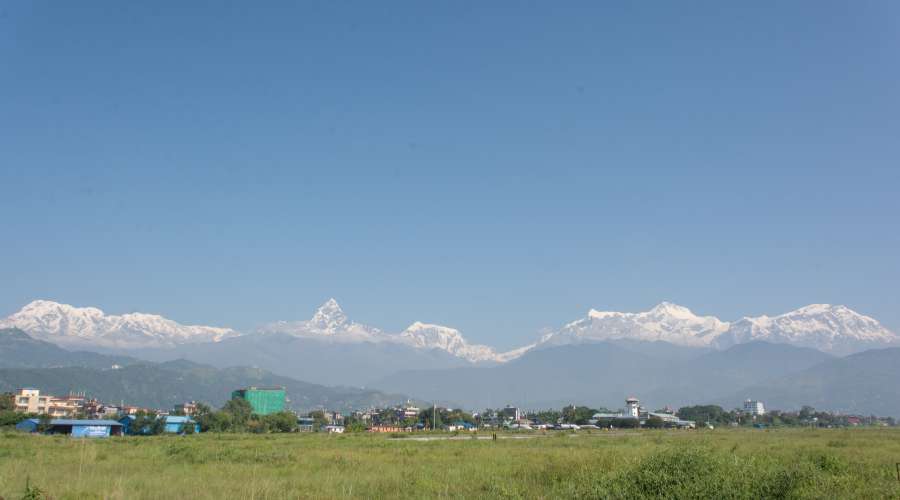
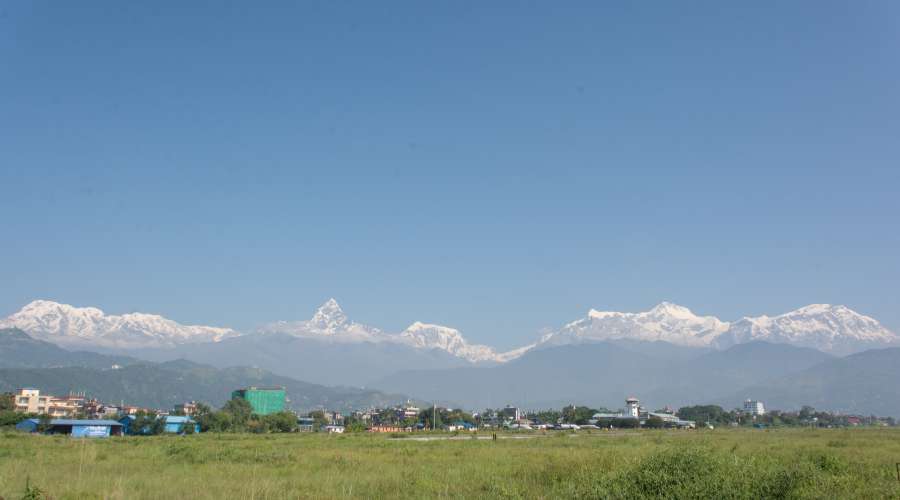
Machhapuchhre / Fishtail Mountain (6,993m) — Perhaps the most photographed peak in Nepal, its distinctive twin-pronged summit is considered sacred and has never been officially summited. Visible from Pokhara itself and almost continuously once you pass Ghorepani.
Hiunchuli (6,441m) — A dramatic, steep peak forming part of the southern rim of the Sanctuary, best seen from Chhomrong and the approach to Machhapuchhre Base Camp.
Gangapurna (7,455m) — Visible from within the Sanctuary itself, with a glacier that feeds into the valley below Manang on the other side of the range.
Tent Peak / Tarke Kang (5,663m) — A smaller but strikingly shaped peak visible from Annapurna Base Camp, often overlooked next to its taller neighbors but a favorite among photographers for its pyramidal shape.
| Category | Rating |
|---|---|
| Physical Fitness | Moderate |
| Technical Difficulty | Easy |
| Altitude Challenge | Moderate |
| Daily Walking | 5–7 Hours |
| Trekking Experience | Helpful but Not Essential |
| Beginner Friendly | Yes (Good Fitness Required) |
The Annapurna Base Camp Trek is officially graded Moderate, and that rating is fair — it's harder than a casual hike but well within reach of a healthy adult who prepares in advance.
Fitness Required: You should be comfortable walking 5–7 hours a day, several days in a row, on uneven terrain. Regular hikers, runners, and gym-goers typically adapt within the first two to three days.
Terrain: Expect a mix of dirt trail, rocky paths, and — especially on Day 2 into Ulleri — long stretches of uneven stone stairs. Some sections are steep, and the final approach to Annapurna Base Camp crosses loose scree and rockier ground.
Stone Stairs: The climb from Tikhedhunga to Ulleri is the single toughest stretch of stairs on the route, and the Chhomrong descent-and-reclimb is a close second. These sections test your legs more than your lungs.
Altitude: At 4,130m, Annapurna Base Camp is high enough to trigger mild altitude symptoms in some trekkers, but well below the altitudes (5,000m+) where risk increases sharply. The itinerary is built with gradual elevation gain and built-in acclimatization stops.
Weather: Conditions can shift quickly, especially above Deurali. Cold, wind, and occasional snow are possible even in the main trekking seasons, particularly at Annapurna Base Camp itself in the evening and early morning.
Who Can Do It: Most reasonably fit adults, including many first-time trekkers, complete this trek successfully every year. Children, older trekkers, and those with health conditions should consult a doctor and consider a slightly extended itinerary.
Suggested Training Plan (6–8 weeks before departure):
Annapurna Base Camp sits at 4,130m, high enough that altitude sickness (Acute Mountain Sickness, or AMS) is a genuine consideration, though the risk is considerably lower than on treks that reach 5,000m or higher.
Common Symptoms
Prevention
Medication Some trekkers use Diamox (acetazolamide) as a preventive measure, taken under medical advice before or during the trek. This is not a substitute for proper acclimatization and should be discussed with your doctor before departure, ideally with a prescription in hand.
Hydration Dehydration mimics and worsens AMS symptoms. Warm water, herbal tea, and garlic soup (a popular teahouse remedy genuinely believed to help with altitude) are all encouraged throughout the trek.
Emergency Rescue Royal Nepal Holidays guides carry pulse oximeters and monitor all trekkers daily. In the event of worsening AMS, the protocol is immediate descent, and in serious cases, helicopter evacuation to Pokhara or Kathmandu, which is why comprehensive travel insurance with high-altitude helicopter rescue coverage is mandatory for all our trekkers.
Acclimatization The ABC itinerary naturally builds in gradual elevation gain, and the stop at Machhapuchhre Base Camp before pushing on to Annapurna Base Camp itself acts as a practical acclimatization point.
This is general information, not medical advice. If you are experiencing symptoms of altitude sickness, tell your guide immediately and consider consulting a medical professional.
| Month | Temperature (Day/Night at ABC) | Crowds | Visibility | Recommendation | Photography |
|---|---|---|---|---|---|
| January | -5°C to 8°C / -15°C to -5°C | Low | Good, clear cold-season air | Possible but cold; snow likely at higher points | Excellent for snow-covered peaks |
| February | -4°C to 9°C / -13°C to -4°C | Low | Good | Cold but manageable with proper gear | Excellent, fewer trekkers in shots |
| March | 2°C to 14°C / -8°C to 0°C | Moderate | Good, improving | Great — rhododendrons begin blooming | Excellent, forest color emerging |
| April | 5°C to 17°C / -5°C to 3°C | High | Very good | One of the best months overall | Outstanding — peak rhododendron bloom |
| May | 8°C to 19°C / -3°C to 5°C | Moderate-High | Fair, hazier before monsoon | Good, warmer, some afternoon cloud | Good mornings, hazier afternoons |
| June | 12°C to 20°C / 3°C to 8°C | Low | Poor, monsoon onset | Not recommended | Limited by cloud and rain |
| July | 13°C to 21°C / 5°C to 9°C | Very Low | Poor | Not recommended (monsoon) | Limited, lush green landscapes though |
| August | 12°C to 20°C / 4°C to 8°C | Very Low | Poor | Not recommended (monsoon) | Limited |
| September | 8°C to 18°C / 0°C to 6°C | Moderate | Improving through the month | Good from mid-September onward | Improving, clearer skies late month |
| October | 3°C to 16°C / -4°C to 2°C | Very High | Excellent | The single best month overall | Outstanding, the clearest skies of the year |
| November | 0°C to 13°C / -8°C to -1°C | High | Excellent | Excellent, cooler but very clear | Outstanding |
| December | -3°C to 10°C / -12°C to -4°C | Low-Moderate | Very good | Good for those prepared for cold | Excellent, crisp clear air |
In short: October and November offer the clearest skies and most reliable weather, making them the most popular months — book well in advance for teahouse space. March and April bring the rhododendron blooms and slightly warmer temperatures, at the cost of somewhat hazier afternoon visibility. Avoid June through August unless you specifically want a quieter, greener, rain-affected trek.
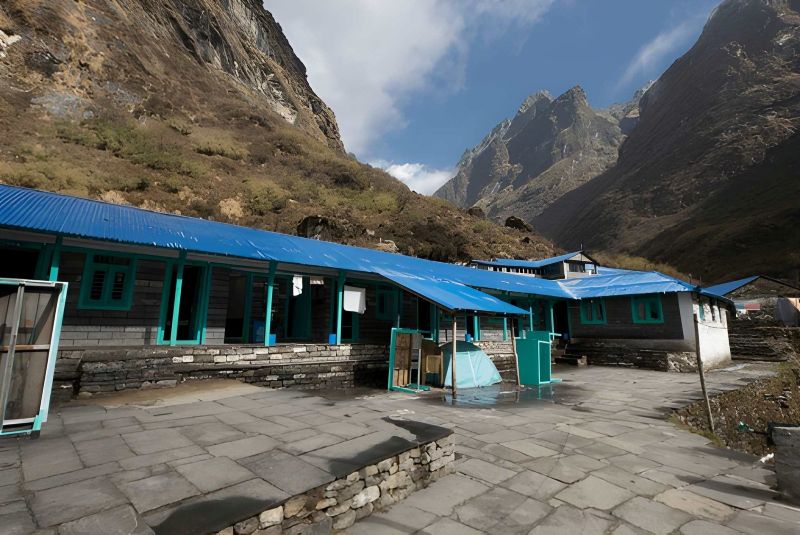
Accommodation throughout the trek is in teahouses — simple, family-run lodges that have supported trekkers in this region for decades.
| Location | Accommodation |
|---|---|
| Kathmandu | 3-Star Hotel |
| Ulleri | Tea House |
| Ghorepani | Tea House |
| Tadapani | Tea House |
| Upper Sinuwa | Tea House |
| Deurali | Tea House |
| Annapurna Base Camp | Tea House |
| Meal | Typical Options |
|---|---|
| Breakfast | Tibetan Bread, Toast, Pancakes, Eggs, Porridge, Tea, Coffee |
| Lunch | Dal Bhat, Fried Rice, Noodles, Pasta, Momos, Soups |
| Dinner | Dal Bhat, Curry, Pasta, Pizza, Fried Rice, Soup |
| Drinks | Tea, Coffee, Hot Lemon, Ginger Tea, Hot Chocolate |
Breakfast: Options usually include porridge, muesli, Tibetan bread, chapati, eggs (boiled, fried, or omelet), and hot drinks like tea, coffee, or hot lemon.
Lunch: Often eaten at a teahouse along the trail — common choices include fried noodles, fried rice, momos (dumplings), and soup.
Dinner: Dal bhat (rice, lentil soup, vegetable curry, and pickle) is the trekking staple for good reason — it's filling, well-balanced, and most teahouses offer free second helpings. Other options include pasta, pizza, and thukpa (Tibetan noodle soup).
Snacks: Chocolate bars, biscuits, and energy bars are available at most teahouses, though prices rise with altitude. Stocking up in Pokhara or Chhomrong (the last well-stocked shop) is a smart move.
Water: Bottled water is available throughout but becomes expensive and environmentally wasteful at altitude. Most trekkers use a combination of boiled water (purchased cheaply at teahouses) and a personal water filter or purification tablets.
Vegetarian: Extremely well catered for — dal bhat is naturally vegetarian, and most menus have extensive vegetarian sections.
Vegan: Achievable with some planning; dal bhat without ghee can usually be requested, and vegetable-based dishes are common, though dairy (particularly butter tea and milk tea) is widely used.
Gluten-Free: More challenging, since many staples involve wheat (chapati, noodles, pasta). Rice-based dal bhat is the most reliable gluten-free option throughout the trek.
Typical Prices: Expect to pay roughly USD 4–6 for dal bhat at lower altitudes, rising to USD 8–10 near Annapurna Base Camp. A pot of tea might cost USD 2–4 depending on elevation. Budgeting USD 25–35 per day for food is realistic.
| Permit | Cost (Foreign Nationals)* |
|---|---|
| Annapurna Conservation Area Permit (ACAP) | NPR 3,000 |
| TIMS Card | As applicable under current trekking regulations |
*Permit requirements and fees are subject to change; verify current regulations before publication.
ACAP (Annapurna Conservation Area Permit) Required for all trekkers entering the Annapurna Conservation Area. This permit funds conservation, community development, and trail maintenance throughout the region. Royal Nepal Holidays arranges this on your behalf as part of your package.
TIMS Card (Trekkers' Information Management System) Nepal's TIMS system tracks trekkers for safety purposes. Requirements and issuing procedures have shifted over recent years, so we always confirm the current process with local authorities before your trek and handle the paperwork directly — you won't need to navigate this yourself.
Required Documents
Permit Checkpoints Permits are checked at entry points including Nayapul/Birethanti and again at Ghandruk or other checkpoints along the route, depending on your exact path. Your guide carries and presents these on your behalf at each checkpoint.
| Route | Mode |
|---|---|
| Kathmandu → Pokhara | Domestic Flight |
| Pokhara → Nayapul | Private Vehicle |
| Jhinu → Pokhara | Private Jeep |
| Pokhara → Kathmandu | Domestic Flight |
Kathmandu to Pokhara Available by short domestic flight (approximately 25 minutes) or by tourist bus/private vehicle (6–7 hours by road). Most Royal Nepal Holidays itineraries use the flight to maximize trekking time, though the overland route is a scenic alternative for travelers who prefer it or want to save on cost.
Pokhara to Nayapul A private vehicle or shared jeep covers this roughly 1.5–2 hour drive, following a mostly paved road with some rougher patches near Nayapul itself.
Tourist Bus A budget-friendly option for the Kathmandu–Pokhara leg, tourist buses are comfortable, air-conditioned, and a popular way to see the countryside, though they take considerably longer than flying.
Private Jeep Available for travelers who want more flexibility, privacy, or comfort, particularly useful for families or small groups, and for the Pokhara–Nayapul transfer.
Flights Kathmandu–Pokhara flights operate multiple times daily in good weather, though delays and cancellations are possible during monsoon season or poor visibility — building in a buffer day is wise if your international departure is time-sensitive.
Road Conditions The Kathmandu–Pokhara highway is paved and well-traveled, though winding, with sections prone to landslides during monsoon. The final stretch to Nayapul includes some rougher, unpaved sections.
Clothing
Footwear
Medical Kit
Electronics
Accessories
Documents
| Month | Day Temperature | Night Temperature |
|---|---|---|
| January | -2°C | -12°C |
| February | 0°C | -10°C |
| March | 5°C | -7°C |
| April | 8°C | -3°C |
| May | 10°C | 0°C |
| June | 12°C | 2°C |
| July | 13°C | 4°C |
| August | 13°C | 4°C |
| September | 10°C | 1°C |
| October | 8°C | -2°C |
| November | 4°C | -7°C |
| December | 0°C | -10°C |
Spring (March–May) Daytime temperatures at lower elevations reach a comfortable 15–20°C, dropping to near or below freezing at Annapurna Base Camp overnight. Rhododendron forests bloom vividly through March and April. Occasional afternoon cloud builds as the season progresses toward the pre-monsoon period in May.
Summer / Monsoon (June–August) Heavy rainfall, leech-prone lower trails, and persistent cloud cover that obscures mountain views make this the least recommended season, though the landscape turns lush and green, and trails are markedly quieter.
Autumn (September–November) Widely considered the best trekking season. Skies clear dramatically after the monsoon withdraws, delivering the most reliable mountain visibility of the year. Temperatures are pleasant during the day and increasingly crisp at night as the season progresses into November.
Winter (December–February) Cold, especially at higher elevations, with overnight temperatures at Annapurna Base Camp regularly dropping well below freezing. Snowfall is possible, occasionally closing sections of the highest part of the trail temporarily. Days are often clear and crowds are minimal, appealing to trekkers who prioritize solitude and don't mind the cold.
Snowfall: Most likely at higher elevations (Deurali, MBC, ABC) from late November through February, occasionally into early March.
Rainfall: Concentrated heavily in the June–August monsoon window, with pre- and post-monsoon shoulder rain possible in late May and early September.
Visibility: Best in autumn (September–November), followed closely by winter (December–February) on clear days, then spring (March–May), with summer/monsoon offering the poorest visibility of the year.
Birds: The Annapurna Conservation Area hosts over 400 recorded bird species, including the Himalayan Monal (Danphe, Nepal's colorful national bird), sunbirds, and various species of eagle and vulture soaring over the higher ridgelines.
Animals: Langur monkeys are commonly seen in the forested lower sections. Himalayan tahr can sometimes be spotted on steep rock faces near Deurali and above. Red pandas and snow leopards inhabit the wider region but are rarely seen due to their elusive nature.
Flowers: Rhododendron, Nepal's national flower, dominates the mid-altitude forests, blooming most vividly in March and April in shades of red, pink, and white. Wild orchids, primulas, and other alpine wildflowers appear in the higher meadows during the pre-monsoon and monsoon months.
Forests: The trek moves through a genuine ecological transition — subtropical forest near Nayapul, oak and rhododendron at mid-elevations, bamboo groves around Bamboo village, and pine and birch as you approach the treeline near Deurali, before giving way entirely to alpine rock and scree near Annapurna Base Camp.
Leave No Trace: Carry out all non-biodegradable waste, stick to marked trails to avoid erosion, and avoid disturbing wildlife or picking flowers in the conservation area.
Plastic Reduction: Bring a reusable water bottle and use a filter or purification tablets rather than buying bottled water at every stop — plastic waste management is a genuine challenge in these remote mountain villages.
Support the Local Economy: Choosing to eat and stay at local teahouses, hiring local guides and porters, and buying snacks or souvenirs from village shops keeps trekking revenue within the communities that host you.
Respect Local Culture: Ask before photographing local people, dress modestly in villages, remove shoes when entering homes or monasteries if asked, and pass mani walls and prayer wheels on your left, a Buddhist tradition observed throughout the region.
Royal Nepal Holidays pays fair wages to all guides and porters, limits porter loads to safe weight standards, and provides appropriate gear and insurance for our staff — because responsible tourism starts with how we treat the people who make your trek possible.
Best Sunrise Spots: Poon Hill (for the widest panoramic sunrise over the entire Annapurna range) and Annapurna Base Camp itself (for a more intimate, close-range sunrise directly on Annapurna I and the surrounding Sanctuary walls).
Best Sunset Spots: Annapurna Base Camp and Machhapuchhre Base Camp both offer excellent sunset light, with Machhapuchhre often catching the last golden light on its summit after the surrounding peaks have dimmed.
Best Viewpoints: Poon Hill, Chhomrong (for village-and-mountain composition shots), and the open alpine terrain between Deurali and Machhapuchhre Base Camp.
Drone Rules: Drone use is heavily restricted in Nepal's conservation areas and requires special permits that are difficult for individual trekkers to obtain. Check current regulations before packing a drone, and never fly without explicit permission, particularly near villages, monasteries, or other trekkers.
Camera Settings Tips from our Guides: Shoot mountain landscapes early morning or late afternoon when side-lighting brings out ridge detail; a polarizing filter helps cut haze and glare on bright alpine days; bring spare batteries, since cold temperatures drain them quickly at altitude.
Wifi: Available at most teahouses along the route for a small per-use fee, generally reliable at lower elevations and increasingly patchy above Chhomrong.
Charging: Paid charging is standard at most teahouses (roughly USD 1–3 per device), increasing with altitude and scarcity of power sources. A power bank is highly recommended as backup.
NTC (Nepal Telecom) and Ncell: Nepal's two major mobile networks both offer coverage through much of the lower and mid-altitude sections of the trek, with NTC generally providing slightly stronger coverage in remote mountain areas. Coverage becomes unreliable or absent above Chhomrong and near Annapurna Base Camp itself.
SIM Cards: Available for purchase in Kathmandu or Pokhara with a passport photo and copy — arrange this before heading to Nayapul, since options are far more limited once you're on the trail.
You could book this trek with dozens of companies. Here's why trekkers keep choosing Royal Nepal Holidays instead.
We are not a booking platform reselling someone else's trip — we are a Nepal-based operator with guides who have personally walked this trail hundreds of times, who know which teahouse owner makes the best garlic soup, and who can read a change in the weather before it shows up on any app.
Our pricing is transparent from the first quote to the final invoice. What you see is what you pay — no hidden permit surcharges, no last-minute "compulsory" extras once you've already committed. Our guides carry proper safety equipment, monitor your health daily, and have clear evacuation protocols if anything goes wrong. And because we're a smaller, locally-run company, you're not a booking number — our office team knows your itinerary, your preferences, and your name.
If you're still deciding, we're happy to build you a completely custom itinerary — longer for extra acclimatization, shorter if your schedule is tight, or combined with a Kathmandu city tour, a food tour, or an extension into the Annapurna Circuit.
Ready to start planning your Annapurna Base Camp Trek? [Request a custom quote] or [contact our team] directly — we typically respond within 24 hours with a tailored itinerary and transparent pricing.
Excellent
Yes. Few treks in Nepal deliver this much scenery, culture, and genuine high-mountain payoff in just 10 days, which is why it remains one of the most popular treks in the country.
It's rated moderate — challenging enough to require preparation, but achievable for most reasonably fit adults without technical climbing experience.
Yes, with proper preparation. Many first-time trekkers successfully complete ABC each year, especially with a good training plan in the weeks beforehand.
How cold is Annapurna Base Camp?
Overnight temperatures at Annapurna Base Camp typically range from -12°C in winter to around 0°C to 5°C in peak spring and autumn season.
Independent trekking is possible, but hiring a licensed guide is strongly recommended for safety, navigation, and cultural insight, and is required by current Nepal trekking regulations for most areas.
Yes, comprehensive travel insurance including high-altitude helicopter evacuation coverage is mandatory for all Royal Nepal Holidays trekkers.
Yes, most teahouses offer charging for a small fee, though it becomes less reliable at higher elevations. A power bank is a smart backup.
Budget roughly USD 25–40 per day for snacks, drinks, wifi, charging, hot showers, and tips. ATMs are only available in Kathmandu and Pokhara, so carry sufficient Nepali Rupees before starting the trek.
The standard itinerary is 10 days from Kathmandu to Kathmandu, including travel days to and from Pokhara.
The highest point is Annapurna Base Camp itself at 4,130 meters.
Autumn (September to November) and spring (March to May) offer the most reliable weather and clearest mountain views.
No prior technical experience is required, though general fitness and some hiking experience make the trek significantly more enjoyable.
Mild symptoms are relatively common due to the elevation gain, but serious AMS is uncommon when the itinerary's acclimatization pacing is followed.
Teahouses (basic lodges) throughout the trek, with hotels in Kathmandu and Pokhara before and after.
Generally considered slightly less difficult, mainly because ABC reaches a lower maximum altitude and involves a shorter overall duration.
Yes, and most itineraries, including this one, already route through Ghorepani and Poon Hill as part of the standard path.
The ACAP (Annapurna Conservation Area Permit) and a TIMS card, both arranged by Royal Nepal Holidays as part of your package.
Yes, at most teahouses for a small fee, though connectivity becomes less reliable at higher elevations.
Primarily Nepali and Tibetan-influenced teahouse food, with dal bhat as the trekking staple, alongside noodles, momos, and simple Western options like pasta and pizza.
No, ATMs are only available in Kathmandu and Pokhara. Carry enough cash for the entire trek before you start.
Yes, most nationalities can obtain a Nepal visa on arrival at Kathmandu airport or in advance through a Nepali embassy.
We offer both private departures for individuals, couples, and families, as well as group departures ranging up to 24 people.
Not strictly necessary, but highly recommended, especially for trekkers unused to carrying a full pack at altitude for multiple consecutive days.
Typically one porter carries the bags of two trekkers, up to a safe weight limit consistent with responsible trekking standards.
Tell your guide immediately. Mild symptoms are managed with rest, hydration, and monitoring; worsening symptoms require descent and, if necessary, evacuation.
Yes, for families with older children or teenagers who hike regularly. Younger children may find the combination of altitude and daily walking hours difficult.
A short, roughly 25-minute scenic flight offering excellent mountain views on clear days.
Yes, the Kathmandu–Pokhara leg can be done overland by tourist bus or private vehicle in about 6–7 hours each way.
Our team monitors flight schedules and adjusts your itinerary or arranges alternative transport if delays occur, minimizing disruption to your trek.
Not always — make sure your policy specifically covers trekking at altitude and includes helicopter evacuation, since standard travel insurance often excludes this.
Flights between Kathmandu and Pokhara, ground transport, guide and porter services, teahouse accommodation, full board meals during the trek, and all permits.
International flights, Nepal visa fees, travel insurance, personal expenses, and tips.
A general guideline is USD 8–12 per day for guides and USD 5–8 per day for porters, though this can vary based on group size and service.
Available at some lower-altitude teahouses for an extra fee, becoming less common or more expensive higher up.
Boiled water and purification options are available at teahouses; most trekkers use a personal filter or purification tablets rather than relying solely on bottled water.
Yes, the route is well-established and regularly used, though a licensed guide adds safety, especially in poor weather or early/late season snow.
Langur monkeys, Himalayan birds like the Danphe, and occasionally Himalayan tahr on steep rock faces near higher elevations.
Yes, vegetarian options are abundant, and vegan requests can usually be accommodated with some advance communication with your guide.
Domestic flights in Nepal typically have baggage limits around 15–20kg for checked luggage — check with your airline for exact allowances.
Start a structured training plan 6–8 weeks before departure, combining cardio, hill walking, and stair climbing with a loaded pack.
Yes, the region is well-established for tourism with good infrastructure, though normal travel precautions and a licensed guide are recommended.
A natural amphitheater of high peaks surrounding Annapurna Base Camp, considered sacred by local communities and one of the most dramatic mountain landscapes in Nepal.
Yes, a four-season sleeping bag rated to at least -10°C is strongly recommended, as teahouse blankets alone are usually insufficient at higher elevations.
Yes, many trekkers combine ABC with a Kathmandu city tour, a food tour, or additional treks like Mardi Himal or the Annapurna Circuit — ask our team about custom add-ons.
Response Time 0-2 Hours , Response Rate 100%
You may also like
Join The 5 Days Annapurna Base Camp Trek From Pokhara With Royal Nepal Holidays. Reach ABC At 4,130m, Explore The Annapurna Sanctuary And Relax At Jhinu Danda Natural Hot Spring. View Details →
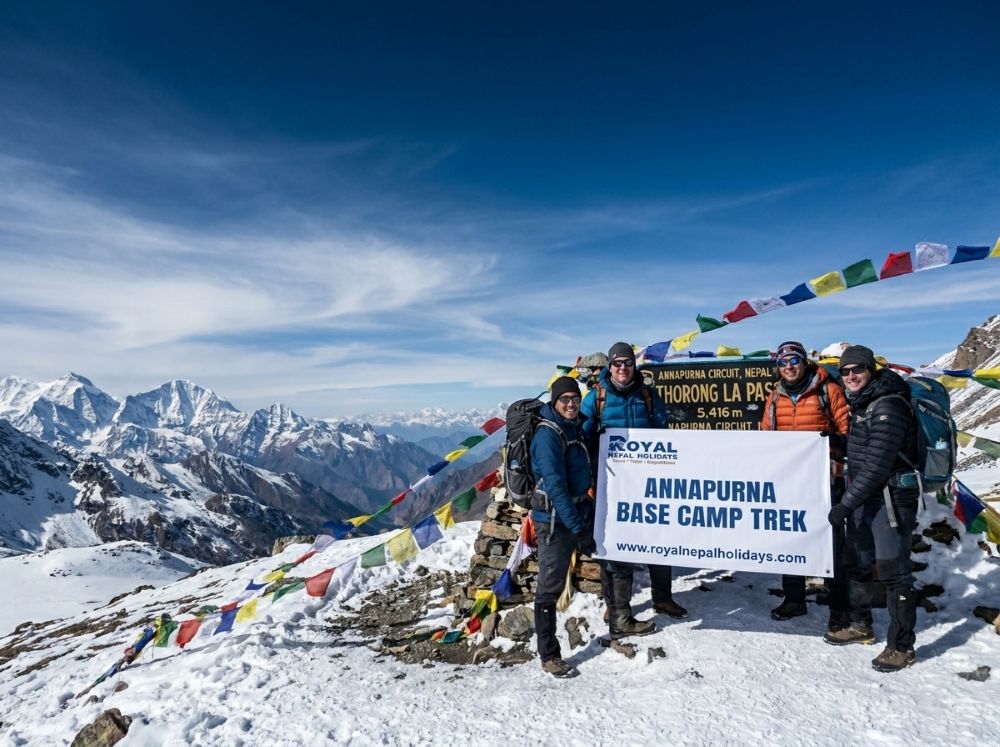
Explore The Annapurna Circuit Trek 14 Days With Royal Nepal Holidays. Cross Thorong La Pass At 5,416m, Visit Manang And Muktinath, And Enjoy A Guided Himalayan Adventure. View Details →
 30 Minutes
 Hotel in kathmandu
 Optional Welcome Dinner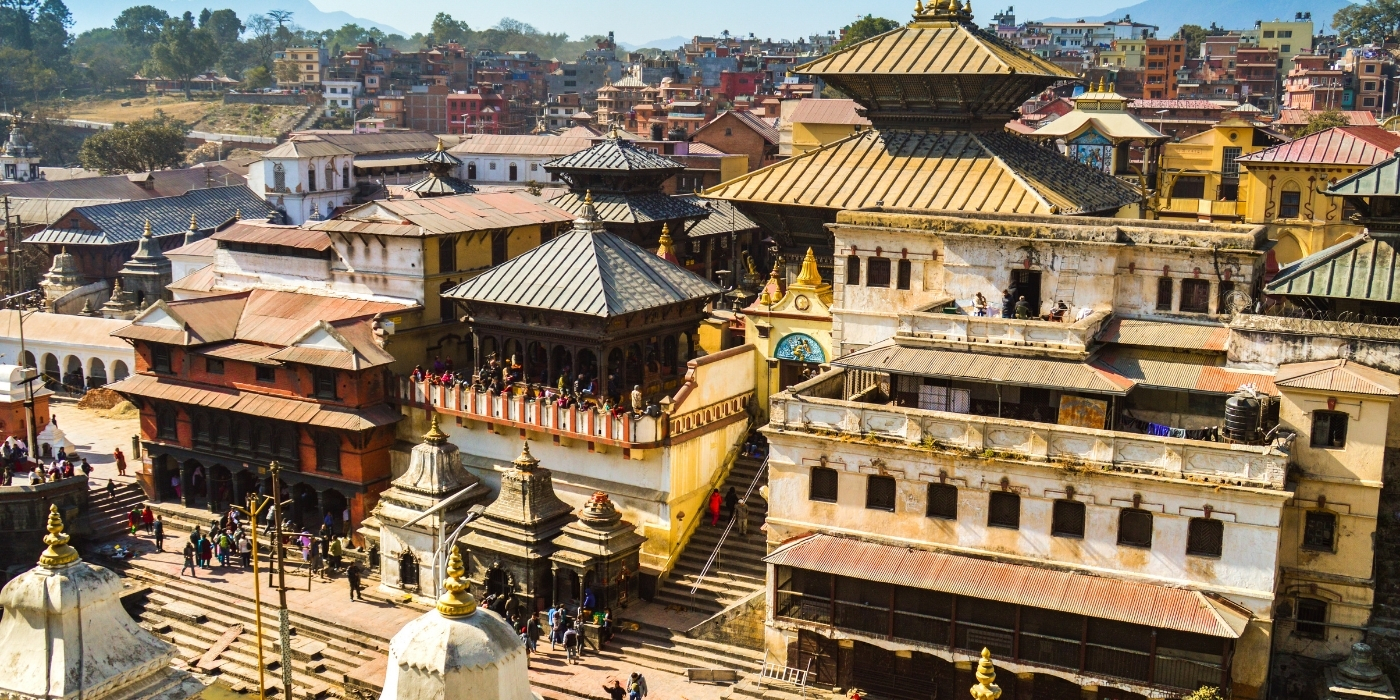









More Than Just A Trek – An Unforgettable Himalayan Journey!
The Annapurna Base Camp Trek Was A Dream, And Royal Nepal Holidays Made It A Perfect Reality. From My First Email Exchange With Mr. Sushil, The Process Was Seamless And Reassuring. Our Guide, Chandra, Was The Heart Of Our Trip. He Wasn't Just Leading The Way; He Was Sharing His Culture, Teaching Us Nepali Phrases, And Ensuring We Always Got The Best Food In The Teahouses (try The Dal Bhat!). The Moment We Reached The Annapurna Sanctuary And Were Suddenly Surrounded By Giants Like Annapurna I And Machhapuchhre, I Was Just Speechless. Chandra's Knowledge Of The Mountains And His Constant Attention To Our Safety And Well-being Were Outstanding. Waking Up To Those Crisp Mountain Views Every Morning Was Something I'll Never Forget. This Was An Experience Of A Lifetime, Handled With Incredible Professionalism And Warmth. I Would Highly Recommend Royal Nepal Holidays To Anyone Planning A Trip To Nepal.
A Challenging But Immensely Rewarding Trek With The Best Team.
I Just Completed The 10-day ABC Trek, And I’m Still Buzzing. The Journey Was Tough, Especially The Seemingly Endless Stone Steps To Chhomrong, But Our Guide, Uttam, Was A Fantastic Motivator. His Calm Demeanor And Constant Encouragement Made All The Difference. He Paced The Trek Perfectly, Making Sure We Acclimatized Properly And Always Checking On Our Health. The Organization By Royal Nepal Holidays Was Flawless. Every Teahouse Was Booked, Our Meals Were Ready, And We Never Had To Worry About Logistics. The Highlight For Me Was That First Glimpse Of The Base Camp Sign, With The Icy Peaks Towering Behind It. It Was A Deeply Emotional Moment Of Achievement. The Landscape Shifts From Lush Forests To A Powerful, Barren Amphitheater Of Snow And Rock. It Was Physically Demanding But Spiritually Uplifting. If I Return To Nepal, I Will Definitely Travel With Royal Nepal Holidays Again.
Absolutely Incredible! Felt Safe And Supported Every Step Of The Way.
As A Solo Female Traveler, Safety Was My Top Priority, And The Team At Royal Nepal Holidays Exceeded All My Expectations. My Guide, Bashu, Was Incredibly Professional, Kind, And Treated Me Like Family. He Shared So Many Stories About The Gurung Villages We Passed Through And Had A Great Sense Of Humor That Kept Our Spirits High. The Trek Itself Is Just Stunning. Walking Through Rhododendron Forests, Crossing Suspension Bridges Over The Modi Khola, And Then Finally Entering The Annapurna Sanctuary Is A Core Memory. The Accommodation In The Teahouses Was Simple But Clean And Cozy, And Bashu Always Made Sure I Was Comfortable. Mr. Sushil's Communication Before The Trip Was Excellent, Answering All My Questions Promptly. For Anyone, Especially Solo Trekkers, Considering This Adventure, You Can Place Your Full Trust In This Company. It Was An Empowering And Beautiful Experience.
The Annapurna Sanctuary Is Pure Magic. Royal Nepal Holidays Is The Way To Do It.
What A Trip! The 10-day Annapurna Base Camp Trek Was Phenomenal From Start To Finish. Our Guide, Chandra, Was An Absolute Legend. His Knowledge Of The Local Flora, Fauna, And Mountain Peaks Was Encyclopedic. He Managed Everything With Such Ease, Even When We Had A Brief, Unexpected Snowfall Near Deurali, Ensuring We Were Safe And Had The Right Gear. Waking Up At Machhapuchhre Base Camp To See The Fishtail Mountain Illuminated By The Morning Sun Was A Moment Of Pure Magic I Can't Put Into Words. The Logistics Were Impeccable – Our Permits, Transport, And Nightly Stops Were All Handled Flawlessly By Mr. Sushil's Team. The Path Itself Is A Journey Through Different Worlds, From Terraced Fields To Alpine Wilderness. The Feeling Of Standing At 4,130 Meters, Completely Encircled By The Annapurna Range, Is Humbling. I Can't Recommend This Company Enough For A Truly Authentic Himalayan Adventure.
An Adventure Of A Lifetime With A Truly Professional And Friendly Guide.
My Journey To Annapurna Base Camp With Royal Nepal Holidays Was Simply Perfect. Our Guide, Uttam, Was The Key To Our Success And Enjoyment. He Was Not Just A Guide But A Friend, Always Patient, Smiling, And Incredibly Attentive To The Group's Needs. He Set A Steady Pace, Telling Us "Bistari, Bistari" (slowly, Slowly), Which Helped Us All Acclimatize Well And Truly Enjoy The Scenery Without Feeling Rushed. The Views Are, Of Course, Out Of This World. Every Turn On The Trail Revealed A New, Breathtaking Vista Of The Himalayas. I Particularly Loved The Teahouse Culture; Sharing Stories With Other Trekkers In The Evenings Over A Hot Meal Was A Great Part Of The Experience. The Entire Trip, From The Airport Pickup In Kathmandu To The Final Celebratory Dinner, Was Expertly Organized By Mr. Sushil. You Feel You Are In Very Capable Hands. This Trek Exceeded All My Hopes.