Trip Durations
1 Day Tour

Quick Contact
4.9  | 1 Day Tour | Kathmandu - 7 UNESCO Tour - Kathmandu
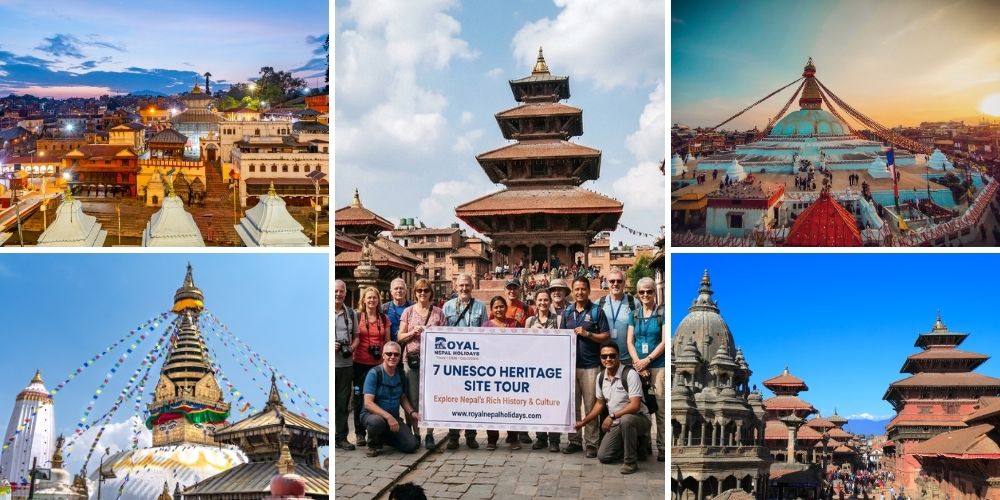
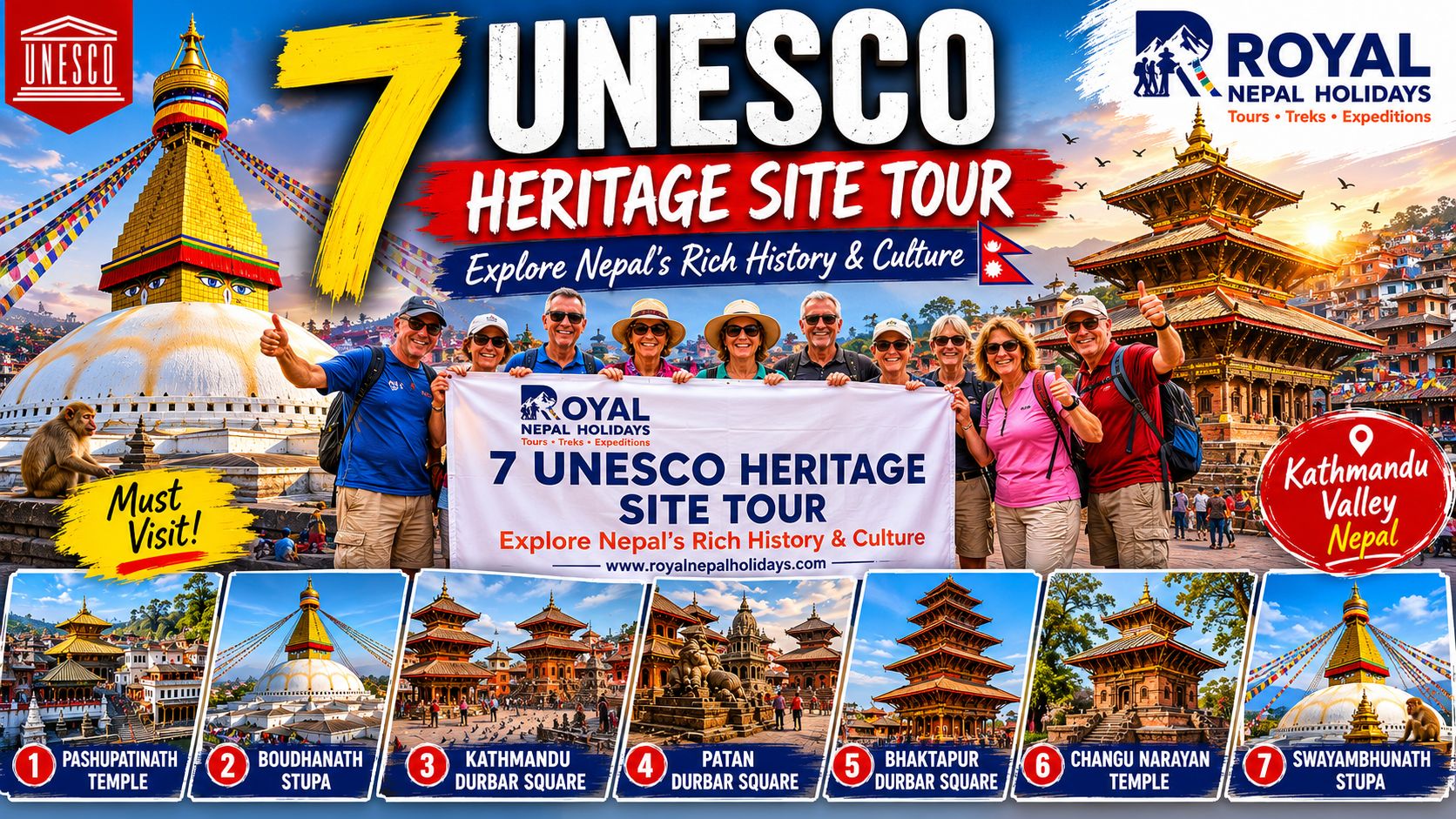
Kathmandu Valley is one of the most extraordinary cultural destinations on Earth. Within a radius of just 15 kilometers, you will find seven UNESCO World Heritage Sites – ancient temples, medieval palace squares, sacred stupas, and hilltop shrines that have stood for centuries and continue to pulse with daily religious life. The 7 UNESCO Heritage Sites Tour Kathmandu is not simply a sightseeing itinerary. It is an immersion into one of the world's oldest and most layered living civilizations, where Hinduism and Buddhism intertwine in art, architecture, and everyday ritual.
| Tour Name | 7 UNESCO Heritage Sites Tour Kathmandu |
|---|---|
| Destination | Kathmandu Valley, Nepal |
| Tour Duration | 1 Full Day (7-9 Hours) |
| Tour Type | Cultural & Heritage Tour |
| Tour Start Time | 8:00 AM |
| Tour End Time | 6 PM – 7:00 PM |
| Group Size | 1–20+ Travelers |
| Transportation | Private Vehicle |
| Guide | Licensed English-Speaking Cultural Guide |
| Difficulty Level | Easy |
| Maximum Altitude | 1,400 m (4,593 ft) |
| Meals | Not Included |
| Accommodation | Not Required |
| Best Season | Year-Round |
| Tour Style | Private / Group |
| Departure Point | Hotel Pickup in Kathmandu |
Kathmandu Valley earned its UNESCO World Heritage designation in 1979, and for good reason. The valley contains a concentration of cultural monuments unmatched anywhere in South Asia. From the all-seeing eyes of Swayambhunath watching over the misty city at dawn, to the medieval courtyards of Bhaktapur where potters still shape clay with their bare hands, every site tells a chapter of Nepal's remarkable story. This Kathmandu UNESCO Heritage Tour allows travelers to experience all seven chapters in a single full day, guided by experts who know every stone, every legend, and every hidden corner.
For first-time visitors to Nepal, this tour is the perfect introduction to the country's spiritual depth and architectural genius. For returning travelers, it offers fresh perspectives on familiar monuments. Whether you are a history enthusiast, a spiritual seeker, a photographer searching for iconic frames, or a curious traveler simply wanting to understand Nepal's soul, the UNESCO World Heritage Sites Tour Kathmandu delivers an experience that is both comprehensive and deeply personal.
The Kathmandu Cultural Heritage Tour with Royal Nepal Holidays combines private transportation, professional licensed guides, flexible timing, and a carefully sequenced route that minimizes travel time while maximizing the depth of each visit. From the moment you are picked up at your hotel to the moment you return in the evening, every detail is handled so that you can focus entirely on the experience.
Kathmandu Valley's seven UNESCO sites are spread across three ancient cities – Kathmandu, Patan, and Bhaktapur – as well as several hilltop and riverside locations. Many travelers spend multiple days attempting to see them all independently, often missing sites due to poor planning, traffic confusion, or unreliable local transport. The One Day Kathmandu Heritage Tour solves this problem completely. The itinerary is designed by local experts who understand the city's rhythms, the best visiting hours for each site, and the most efficient routes between them. You will see all seven sites without feeling rushed, with enough time at each location to absorb the beauty and meaning of what you are witnessing.
There is a profound difference between walking through a heritage site with a map and walking through it with a guide whose family has lived in the valley for generations. Royal Nepal Holidays employs licensed cultural guides who are born and raised in Kathmandu. They speak fluent English, carry deep knowledge of Newari history and iconography, and can explain the difference between a Shikhara-style temple and a Pagoda-style temple, why the eyes on Swayambhunath face all four directions, and what the 108 images on Boudhanath Stupa represent. This expertise transforms the Kathmandu Day Tour UNESCO Sites from a visual experience into an intellectual and spiritual journey.
Unlike many heritage destinations where ancient sites have become frozen museum pieces, Kathmandu's UNESCO monuments are alive. Priests perform morning pujas at Pashupatinath while pilgrims circle the ghats. Monks chant at Boudhanath while shopkeepers sell butter lamps along the outer wall. Children play in the courtyards of Bhaktapur Durbar Square while elderly women weave offerings near the temple steps. The Kathmandu Sightseeing Tour is not about looking at the past behind glass. It is about stepping into a culture that has never stopped breathing.
If you have one full day in Kathmandu, this is how to spend it. The 7 UNESCO Heritage Sites Tour Kathmandu gives first-time visitors a complete overview of the valley's history, religion, and architecture. By the end of the day, you will understand the difference between Hindu and Buddhist sacred spaces, recognize the key iconographic symbols of Nepali religious art, and have a genuine appreciation for why the Kathmandu Valley is considered one of humanity's greatest cultural treasures.
No other single-day tour in Nepal delivers the combination of experiences this itinerary provides. You will stand on a hilltop and watch the city spread below you at Swayambhunath. You will walk through royal courtyards at Patan and Bhaktapur. You will witness Hindu cremation rituals at the sacred Bagmati River. You will circle a stupa with Tibetan Buddhist pilgrims. Each site adds a different color to the picture of Nepal's extraordinary cultural heritage.
| Feature | Details |
|---|---|
| UNESCO Sites Covered | 7 |
| Cultural Heritage Sites | 3 Durbar Squares |
| Religious Sites | 2 Hindu & 2 Buddhist Monuments |
| Walking Time | 3–4 Hours Total |
| Driving Time | 4–5 Hours Total |
| Photography Opportunities | Excellent |
| Family Friendly | Yes |
| Senior Friendly | Yes |
| Solo Traveler Friendly | Yes |
| Wheelchair Accessible | Partially |
The Kathmandu Valley UNESCO Tour takes in a cultural landscape that has been continuously inhabited for over 2,000 years. The valley sits at an altitude of approximately 1,400 meters above sea level and was historically a crossroads on ancient trade routes between India and Tibet. This geographical position made it a meeting point for ideas, religions, artistic traditions, and political dynasties, all of which left their mark in stone, wood, and metal across the valley's sacred sites.
| UNESCO Heritage Site | Highlights |
|---|---|
| Swayambhunath Stupa | Monkey Temple, Valley Views |
| Kathmandu Durbar Square | Ancient Royal Palace, Kumari House |
| Pashupatinath Temple | Sacred Hindu Temple of Lord Shiva |
| Boudhanath Stupa | Largest Buddhist Stupa in Nepal |
| Patan Durbar Square | Newari Architecture & Patan Museum |
| Bhaktapur Durbar Square | Medieval City & Nyatapola Temple |
| Changu Narayan Temple | Oldest Hindu Temple in Nepal |
UNESCO designated the Kathmandu Valley as a World Heritage Site in 1979 under the category of Cultural Heritage. The inscription covers seven monument zones: Swayambhunath, Kathmandu Durbar Square, Pashupatinath Temple, Boudhanath Stupa, Patan Durbar Square, Bhaktapur Durbar Square, and Changu Narayan Temple. Together, they represent the artistic, architectural, and spiritual achievements of the Licchavi, Thakuri, Malla, and Shah dynasties who ruled the valley over nearly two millennia.
The architectural heritage of the Kathmandu Valley is particularly remarkable for the Newari building tradition, characterized by multi-tiered pagoda temples with intricately carved wooden struts, cornices, and torana gateways. The valley's craftspeople were so highly regarded that King Arniko of Nepal was invited to Tibet and then to China to build temples and pagodas in the 13th century, carrying Newari architectural traditions all the way to Beijing.
UNESCO's recognition of Kathmandu Valley also highlighted the valley's extraordinary density of monuments. Within its boundaries, there are more than 2,500 temples, monasteries, shrines, and sacred spaces – a concentration of heritage that is, by many assessments, unequaled anywhere in the world.
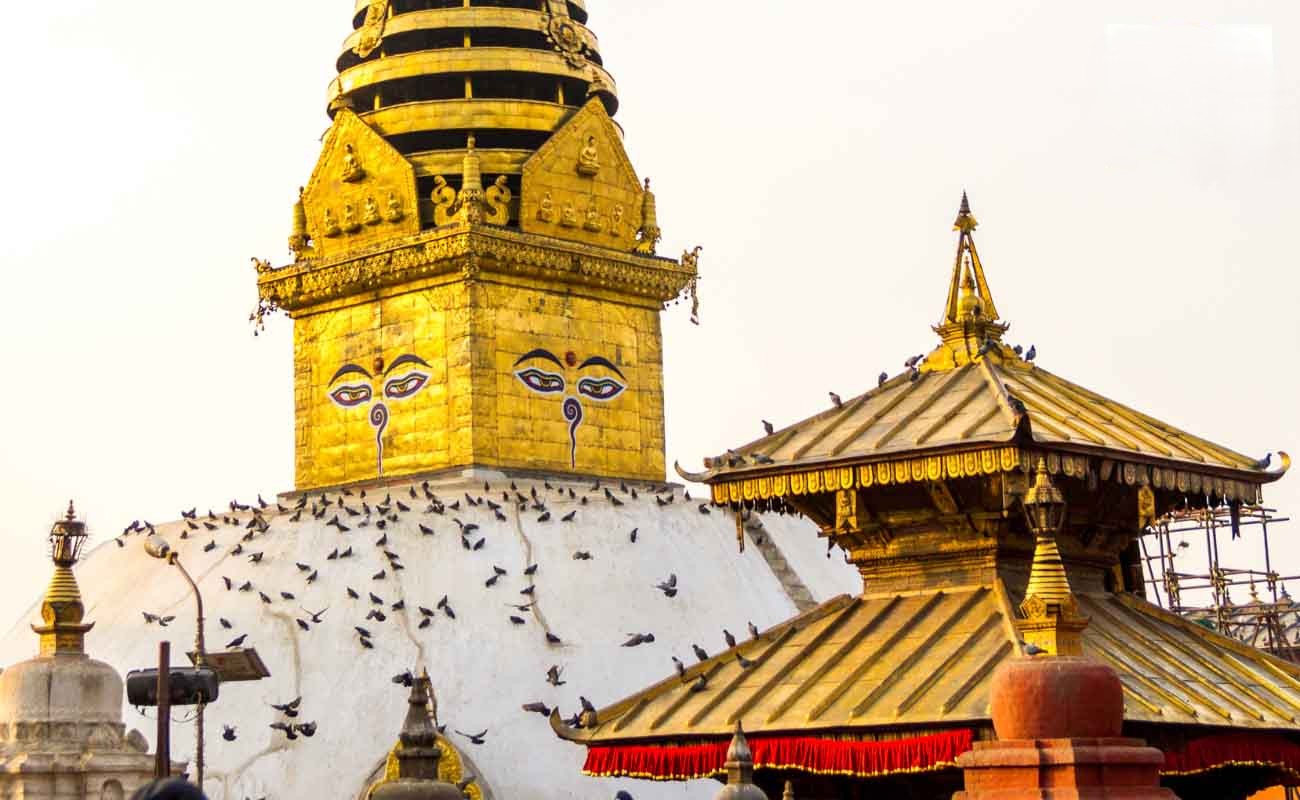
Swayambhunath is believed to be one of the oldest religious sites in Nepal, with origins that some chronicles trace back over 2,000 years. According to Buddhist legend, the Kathmandu Valley was once a great lake, and the stupa arose spontaneously from a lotus flower that grew in its waters. The name Swayambhu literally means "self-created" or "self-existent," and the site is considered one of the most sacred Buddhist pilgrimage destinations in all of Asia.
The hilltop location makes Swayambhunath the ideal first stop on the Kathmandu Historical Sites Tour, particularly in the early morning when the city below is still waking and the light is golden and soft. The 365 steps that lead to the summit are lined with statues and carvings that themselves represent an entire curriculum in Buddhist iconography.
Swayambhunath holds deep significance for both Buddhists and Hindus. Buddhist pilgrims circumambulate the stupa in a clockwise direction, spinning the hundreds of prayer wheels embedded in the surrounding wall, each rotation sending mantras into the universe. Hindus venerate a shrine to Harati, the goddess of smallpox and children's diseases, located within the complex. This coexistence of Hindu and Buddhist devotion is a defining feature of Kathmandu's spiritual landscape and is on vivid display at Swayambhunath every morning.
The hilltop commands one of the finest panoramic views in the valley. On clear days, particularly in October and November after the monsoon rains have washed the sky clean, you can see the snow-capped Himalayan peaks stretching across the northern horizon. The city of Kathmandu spreads below in all directions, its terracotta rooftops punctuated by the golden spires of countless temples. This view alone justifies the early morning start.
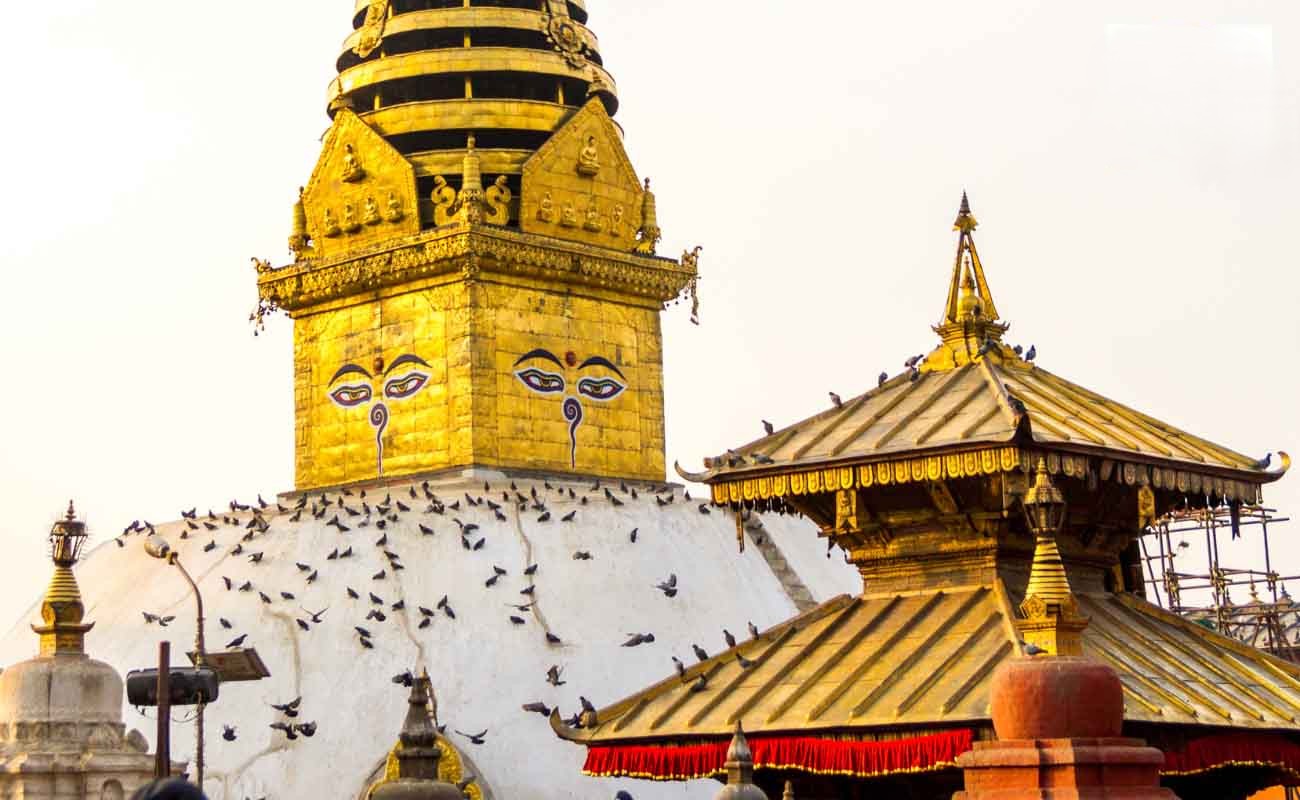
The stupa's great white dome represents the world. Above it rises a square tower painted on each face with the all-seeing eyes of the Buddha – eyes that gaze out in all four cardinal directions, symbolizing the omniscience of enlightened mind. Above the eyes is what appears to be a nose but is actually the Nepali numeral one, representing the oneness of all existence. The thirteen gilded rings of the spire above represent the thirteen stages of spiritual development that lead to Nirvana. Every element of the architecture is a teaching.
Red and white macaque monkeys inhabit the forest surrounding the stupa, earning the site its popular nickname, the Monkey Temple. They are considered sacred, believed to be the descendants of lice that fell from the hair of the bodhisattva Manjushri when he cut the hill to drain the ancient lake.
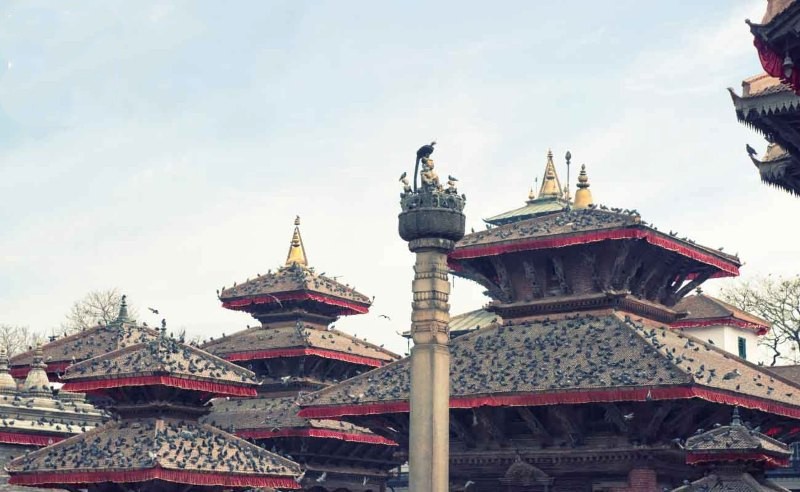
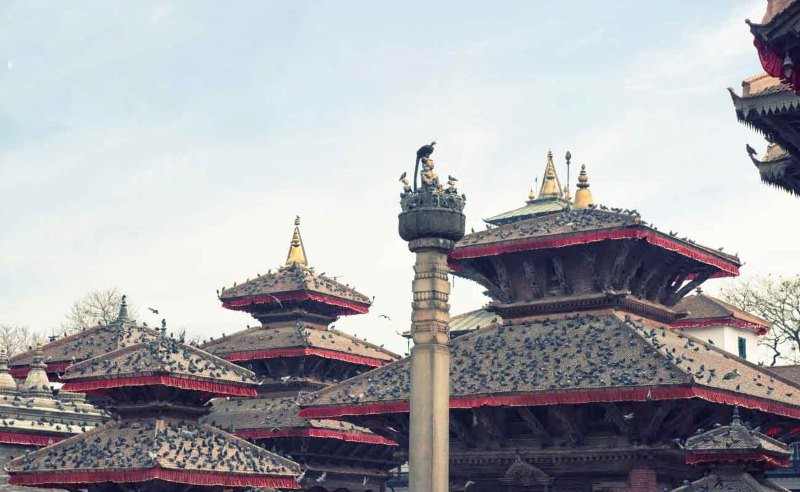
Kathmandu Durbar Square, also known as Hanuman Dhoka Durbar Square, was the seat of the ancient Malla Kings and later the Shah dynasty until the 19th century. The square is not a single building but an entire complex of palaces, courtyards, and temples that grew and evolved over many centuries, with different rulers adding towers, shrines, and gates according to their own ambitions and piety.
The Kathmandu Heritage Walk Tour through this square is a walk through layers of history. The oldest surviving structures date to the Licchavi period, roughly the 4th to 9th centuries CE, while the majority of the standing buildings reflect Malla-period construction from the 12th to 18th centuries. The 2015 earthquake caused significant damage to several structures, including the nine-story Basantapur Tower, but major restoration work is underway, and the square retains its essential character and grandeur.
One of the most extraordinary aspects of Kathmandu Durbar Square is the Kumari Ghar, the residence of the Kumari – a young girl selected through rigorous ritual examination to embody the goddess Taleju. The living goddess appears briefly in an upper window of the elaborately carved wooden building, and to receive her gaze is considered an enormous blessing. The tradition of the living goddess is unique to Nepal and represents the seamless fusion of Hindu and Buddhist traditions that defines Kathmandu's religious life.
The palace complex houses the Hanuman Dhoka Museum, which contains coronation chambers, royal apartments, and a permanent exhibition documenting the history of Nepal's Shah dynasty. The museum takes its name from the statue of the monkey god Hanuman that guards the entrance to the royal palace, draped in a red cloak and sheltered under a decorative umbrella. Hanuman has stood here since 1672 CE.
The temples surrounding the square showcase the full range of Newari architectural styles. The Trailokya Mohan Narayan Temple is a beautiful example of a three-tiered pagoda temple. The Jagannath Temple is notable for its erotic carvings on the roof struts, which scholars interpret variously as fertility symbols, tantric teachings, or even practical lightning protection. The square is also one of the best places in Nepal to observe Newari social life, as it remains an active hub of commerce, worship, and daily activity.
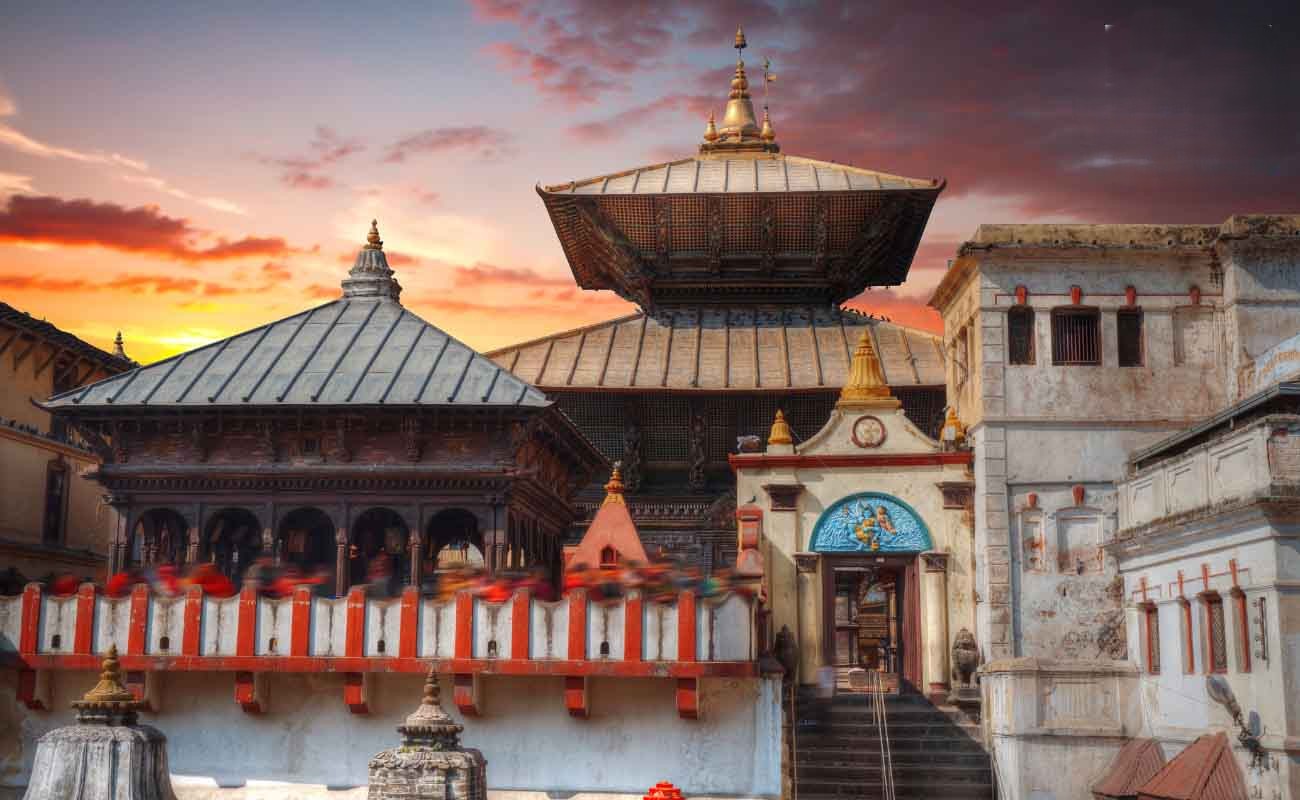
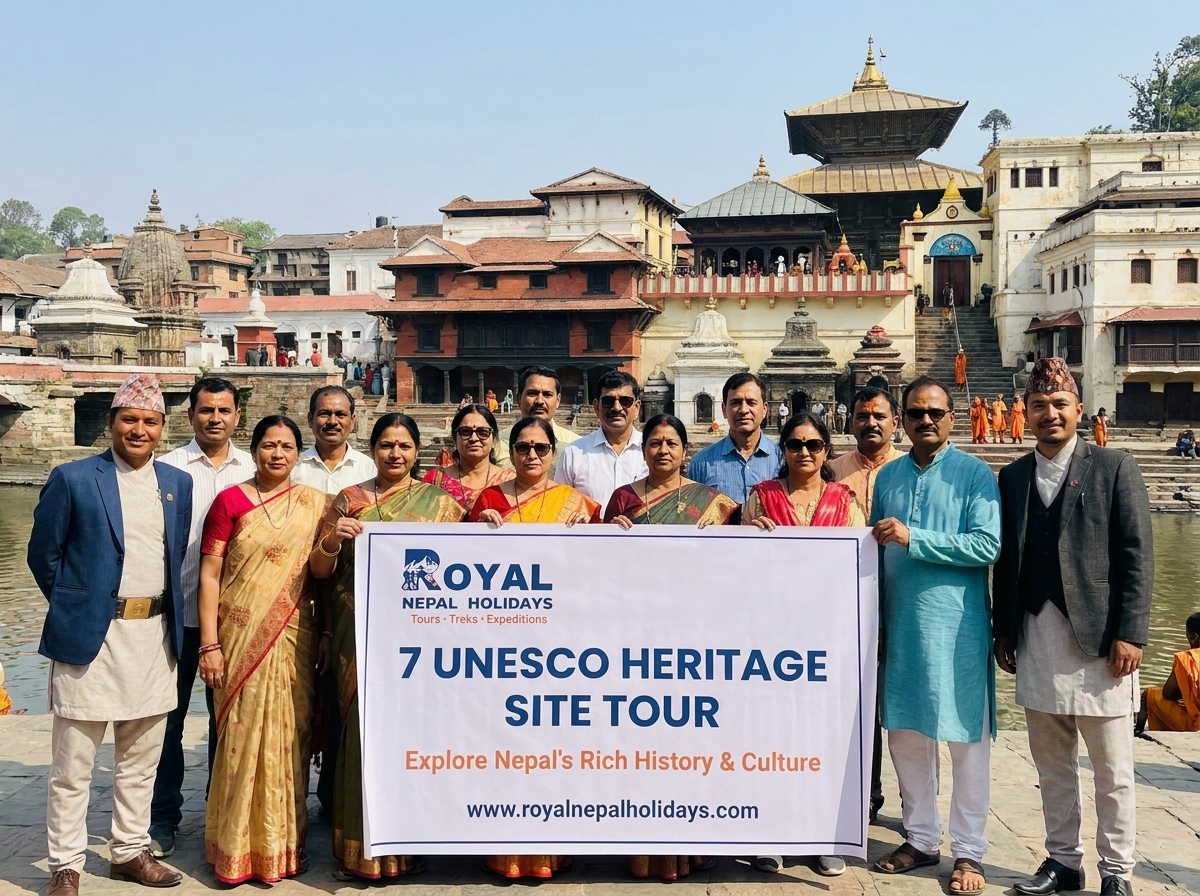
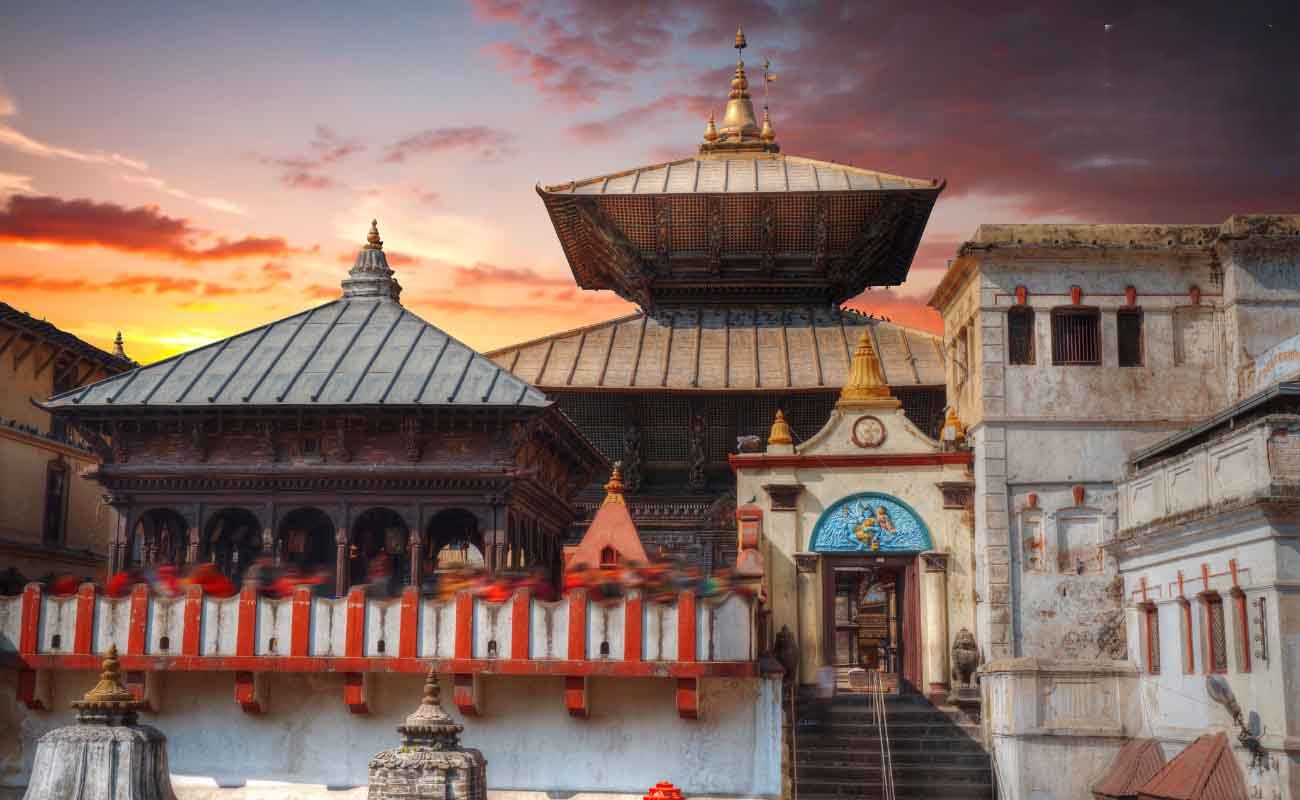
Pashupatinath Temple is the most important Hindu temple in Nepal and one of the most significant Shiva temples in all of Asia. Located on the banks of the sacred Bagmati River, which eventually flows into the Ganges in India, Pashupatinath is both a supreme pilgrimage destination and a functioning religious community that has operated continuously for at least 1,400 years. The temple's main pagoda, with its golden roofs and silver doors, is accessible only to Hindus, but the surrounding complex of more than 500 shrines, temples, and ashrams is open to all visitors and is extraordinarily rich in religious atmosphere and architectural detail.
The Kathmandu UNESCO World Heritage Day Tour would be incomplete without Pashupatinath. It is a place that confronts visitors with the full cycle of human existence – with birth, devotion, asceticism, and death all visible within the same few hundred meters of riverbank.
The stone cremation platforms, or ghats, on the banks of the Bagmati River are perhaps the most sobering and profound element of a visit to Pashupatinath. Hindus believe that cremation here and immersion of the ashes in the Bagmati River guarantees liberation from the cycle of rebirth. Families conduct cremation ceremonies daily, openly visible from the opposite bank, where visitors may stand respectfully. The ceremony is not a spectacle but a sacred ritual, and the guide will provide the cultural and religious context that allows it to be understood and honored appropriately.
Pashupatinath is dedicated to Pashupati, a manifestation of Lord Shiva as the lord and protector of animals and all living beings. The primary deity in the main temple is a four-faced Shiva lingam of black stone, believed to be one of the most powerful in South Asia. The temple attracts sadhus – Hindu holy men who have renounced worldly life – from all over South Asia. These ash-covered ascetics, draped in saffron cloth or near-naked and matted-haired, are a remarkable sight along the ghats and embody a tradition of spiritual renunciation that stretches back thousands of years.
The most spectacular festival at Pashupatinath is Maha Shivaratri, held in late February or early March, when hundreds of thousands of pilgrims from across Nepal and India converge on the temple to honor Lord Shiva through night-long devotional singing, prayer, and meditation. The daily morning and evening Aarti ceremonies, in which priests offer fire and prayer to the deity accompanied by conch shells and bells, are also deeply moving experiences for visitors.
Largest Stupa in Nepal
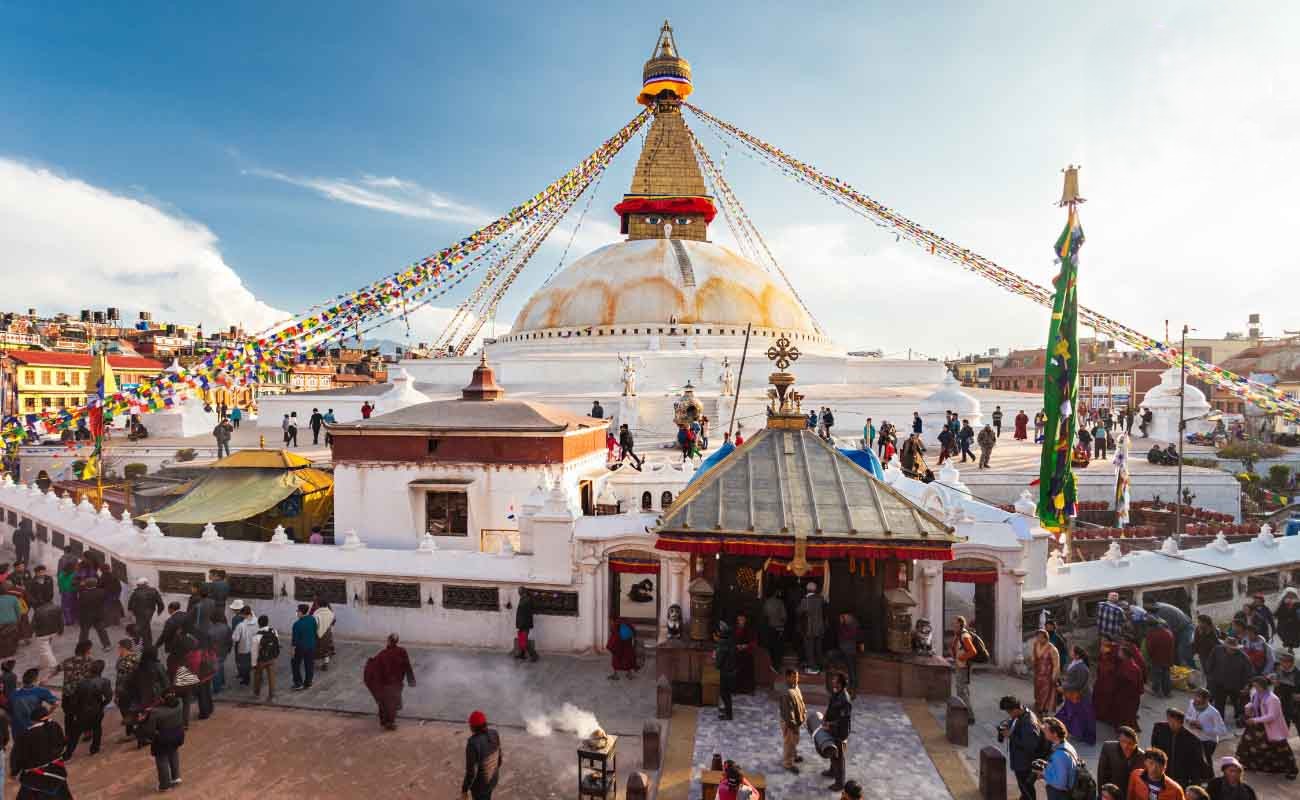
Boudhanath Stupa is the largest Buddhist stupa in Nepal and one of the largest in the world. Rising to a height of 36 meters, the stupa dominates the flat landscape east of Kathmandu city and can be seen from several kilometers away. It is built on an ancient trade route that once carried pilgrims and merchants from Tibet down into the Kathmandu Valley, and Tibetan traders have worshipped here for many centuries.
The stupa was built in the 5th or 6th century CE, though its exact founding is associated with multiple legends. One account credits its construction to a pious woman named Kangma, who requested land from the king to build a stupa and was granted an area equal to the size of a buffalo hide. The woman cut the hide into thin strips and joined them together to encircle a much larger area than the king had anticipated, and on that land she built Boudhanath.
Following the Chinese annexation of Tibet in 1959, many Tibetan refugees settled around Boudhanath, and the area has become the most important center of Tibetan Buddhism outside Tibet. Today, more than 50 Tibetan Buddhist monasteries surround the stupa, representing all four major schools of Tibetan Buddhism. The Heritage Sites Tour in Kathmandu Nepal includes time at Boudhanath to explore these monasteries, observe monks in debate or prayer, and purchase traditional Tibetan Buddhist art, thangka paintings, and ritual objects from the surrounding market.
Walking the outer kora, or circumambulation circuit, around the base of the stupa is one of the most powerful spiritual experiences available in Nepal. In the early morning and again at dusk, hundreds of pilgrims circle the stupa in a clockwise direction, spinning the massive prayer wheels set into the outer wall, counting mantras on prayer beads, and murmuring the Om Mani Padme Hum mantra that echoes continuously around the circuit. The atmosphere is dense with incense, the glow of butter lamps, and the sound of devotion.
The monasteries surrounding Boudhanath each have their own shrines, libraries, and meditation halls. Many are open to respectful visitors and offer a glimpse into the living tradition of Tibetan Buddhist scholarship and practice. The Shechen Tennyi Dargyeling Monastery, with its magnificent wall paintings, is particularly notable. During Losar, the Tibetan New Year, Boudhanath becomes the center of elaborate ceremonies, mask dances, and community celebrations that attract visitors from around the world.
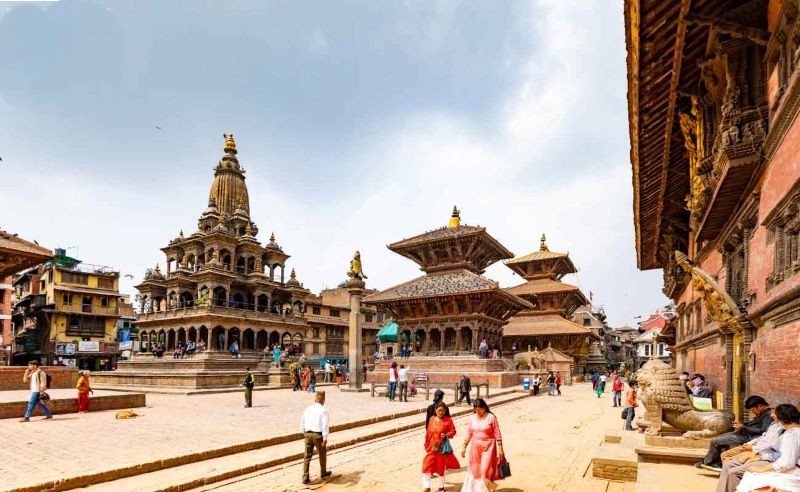
Patan, also known as Lalitpur, meaning "City of Beauty" or "City of Fine Arts," is separated from Kathmandu city proper by the Bagmati River. It is the oldest of the valley's three royal cities and has a history of artistic achievement that stretches back at least 1,500 years. The Kathmandu Cultural Tour Package is enriched enormously by including Patan Durbar Square, which many visitors consider the most beautiful and best-preserved of the valley's three royal squares.
The square is dominated by a row of magnificent temples along its western side, set against the backdrop of the old royal palace on the east. The proportions are harmonious, the stonework is exquisite, and the wooden carvings that adorn every gateway, window, and bracket are the finest surviving examples of Newari wood carving in the world.
The Krishna Mandir, built in 1637 CE by King Siddhi Narsingh Malla, is one of the most beautiful temples in Nepal and the centerpiece of Patan Durbar Square. Unlike most temples in the valley, which follow the tiered pagoda style, the Krishna Mandir is built in the Shikhara style, with 21 golden pinnacles rising from carved stone tiers. The ground floor colonnade is decorated with scenes from the Mahabharata and Ramayana carved in stone bas-relief, a remarkable artistic achievement. Thousands of devotees crowd the temple on Krishna Janmashtami, the festival celebrating Lord Krishna's birth.
The Patan Museum, located within the former royal palace, is widely considered the finest museum in Nepal and one of the best museums of Asian sacred art in the world. Its collection of bronze and gilt copper sculptures, stone carvings, and religious objects tells the story of the valley's artistic and religious heritage with exceptional scholarship and presentation. An hour in this museum transforms everything else you see in the valley because it explains the iconographic context of the images that appear in every temple.
Patan remains the center of Newari bronze-casting and metalwork traditions. The narrow streets around the square are lined with workshops where craftspeople use techniques unchanged for centuries to produce the detailed bronze statues, ritual bells, singing bowls, and decorative metalwork that Nepal is famous for worldwide. A visit to Patan is an opportunity to observe these living craft traditions and, if desired, purchase directly from the artisans who create them.
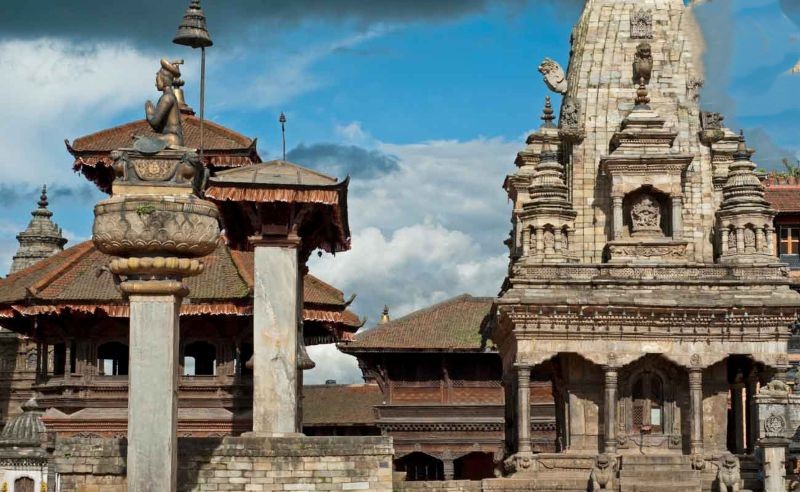
Bhaktapur, the "City of Devotees," is located 13 kilometers east of Kathmandu and is the most completely preserved medieval city in Nepal. Unlike Kathmandu and Patan, which have experienced rapid urbanization, Bhaktapur has maintained much of its traditional Newari character, with brick-paved lanes, terracotta-roofed houses, and community courtyards that look much as they did several centuries ago. The Full Day UNESCO Heritage Tour Kathmandu reaches its architectural climax here, in a city that seems to have been paused in time.
Bhaktapur Durbar Square is the smallest of the valley's three royal squares but arguably the most dramatic. The earthquake of 2015 caused damage here as elsewhere, but the square has been extensively restored with international support and retains most of its essential grandeur. The entry fee for non-Nepali visitors to Bhaktapur city helps fund ongoing preservation and restoration work.
The Nyatapola Temple is the tallest temple in Nepal, rising five tiers to a height of approximately 30 meters. Built in just five months in 1702 CE by King Bhupatindra Malla, the Nyatapola is an extraordinary engineering and artistic achievement. The broad staircase leading to the temple entrance is flanked by five pairs of guardians on five levels: two famous wrestlers, two elephants, two lions, two griffins, and two goddesses. Each pair is believed to be ten times more powerful than the pair below, culminating in the goddess Siddhi Lakshmi enshrined within, who is said to be 100,000 times more powerful than a human being. The temple has survived every major earthquake in its 320-year history without significant structural damage.
Just a short walk from the main durbar square, the traditional pottery neighborhood known as Talako Tole or Pottery Square is one of the most evocative traditional craft sites in the valley. Potters from the Prajapati caste work here as their ancestors did for centuries, shaping clay on foot-powered wheels and drying the finished pieces in the sun on bamboo frames. The red clay pots, water vessels, and ritual objects produced here are sold throughout Nepal. Watching a skilled potter transform a lump of clay into a perfectly symmetrical vessel in under two minutes is a quietly astonishing experience.
Bhaktapur offers the most authentic window into traditional Newari daily life of any site on the tour. The city's community courtyards, known as Twa:, are the social centers of Newari neighborhoods and are used for festivals, community gatherings, childhood ceremonies, and daily socializing. Walking through Bhaktapur's residential lanes, you pass doorways open to family shrines, elderly men playing cards in courtyards, women preparing mustard oil by hand, and children in school uniforms chasing each other between the temple platforms. The city is not performing tradition for tourists. It simply continues to live it.
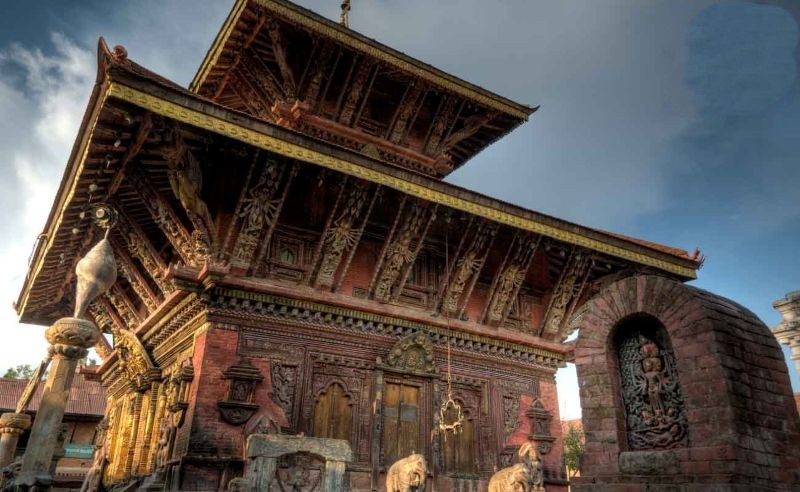
Changu Narayan Temple stands on a forested hilltop approximately 12 kilometers east of Kathmandu and is considered the oldest surviving temple in Nepal, with origins dating to the 4th century CE. The Kathmandu Valley UNESCO Tour finds its most ancient and perhaps most spiritually undisturbed stop here, on a hilltop surrounded by trees, with views across the valley and beyond to the Himalayan peaks on clear days.
The temple is dedicated to Lord Vishnu and is one of the four most sacred Vishnu shrines in the Kathmandu Valley, known collectively as the Char Narayan. The hilltop setting, the ancient stone carvings that surround the temple, and the relative quietness of the site compared to the bustle of the valley floor make Changu Narayan feel like a genuinely sacred space removed from the modern world.
The temple courtyard contains some of the most important historical artifacts in Nepal, including an inscribed stone pillar erected by the Licchavi King Mandeva in 464 CE – the earliest dated stone inscription discovered in Nepal and one of the most important historical documents for the entire Licchavi period. The courtyard is essentially an open-air museum of stone sculpture, with images of Vishnu in various forms, mythological scenes, and royal inscriptions accumulated over fifteen centuries.
The main temple is a two-tiered pagoda structure with gilded roofs and doors, densely decorated with the most exquisite metal repoussé work in Nepal. The main gateway features a magnificent image of Garuda, the divine eagle who serves as Vishnu's vehicle, kneeling in devotion before his lord. The temple doors are carved with intricate panels depicting the ten avatars of Vishnu and scenes from the Puranas, and the gilded metal roof finials are among the finest surviving examples of Newari metalwork.
The village of Changu surrounds the temple and offers an experience of traditional rural Newari life quite different from the urban heritage sites of the valley floor. Local artisans sell hand-painted thangkas and traditional crafts in small shops along the approach to the temple. The walk from the parking area to the temple through the village is itself a gentle cultural experience. The panoramic views from the hilltop are magnificent, particularly looking south and west across the patchwork of rice fields, forests, and brick settlements of the valley toward the distant Mahabharat Range.
| Entry Fees for Sites in Kathmandu Valley | |||||
| Site | Foreign Nationals | SAARC Nationals | Chinese | Nepalese | Remarks |
| Kathmandu Durbar Square including Tribhuvan Museum | NPR 1000 | NPR 500 (BIMSTEC) |
NPR 1000 | Free | Below 10 years free |
| Patan Durbar Square including Patan Museum | NPR 1,000 | NPR 500 (BIMSTEC) |
NPR 500 | Students with letter from school : NPR 10; Student Card Discount: NPR15; Others: NPR30 | Entry fees for Nepalese are applicable only for Patan Museum |
| Bhaktapur Durbar Square | US$ 18 or NPR 1,800 | NPR 500 | NPR 500 | Free | Below 10 years free. For groups from 11-20, one tour leader can enter free. |
| Swayambhu Stupa | NPR 200 | NPR 50 | NPR 200 | Free | Below 10 years free. |
| Boudha Stupa | NPR 400 | NPR 100 | NPR 400 | Free | Below 10 years free. |
| Pashupatinath Temple | NPR 1,000 per day per entry | NPR 1,000. Free for Indian Nationals | NPR 1,000 | Free | Tourists can view the temple from the back premises. |
| Changunarayan Temple | NPR 300 | NPR 100 | NPR 300 | Free | |
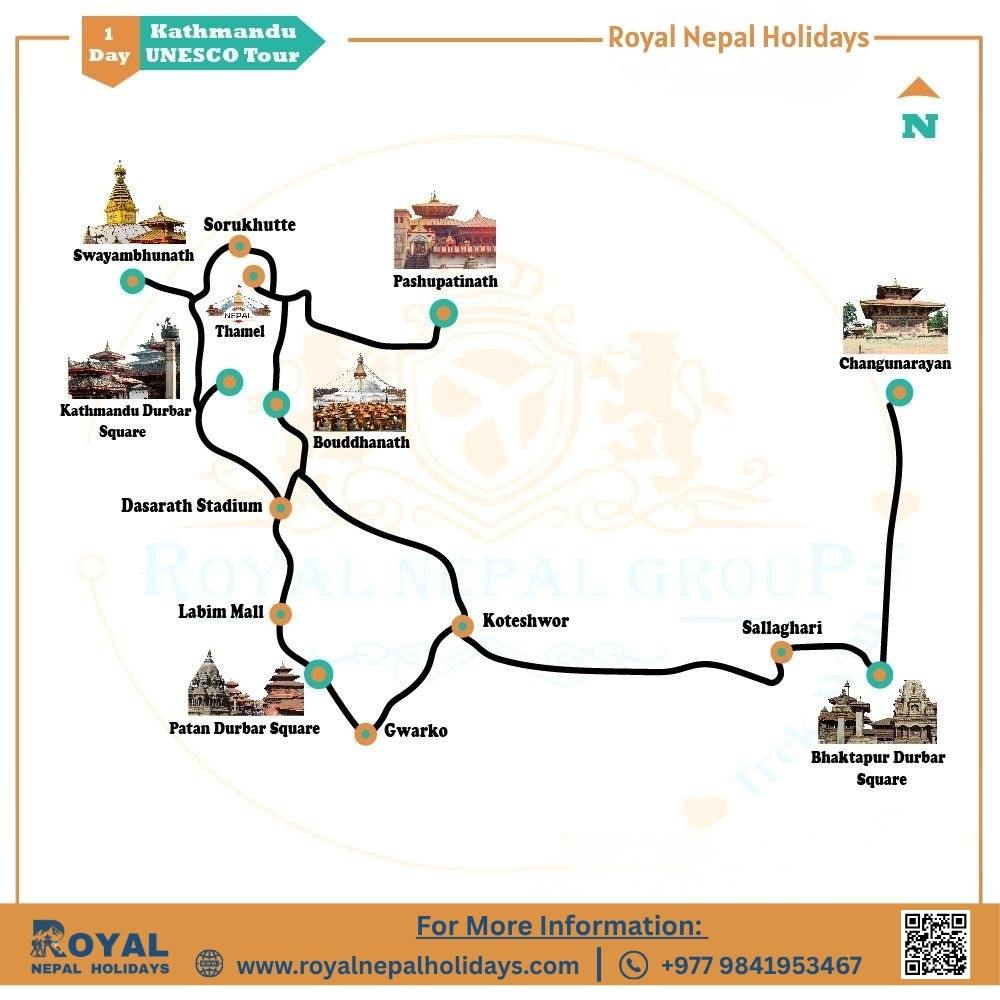
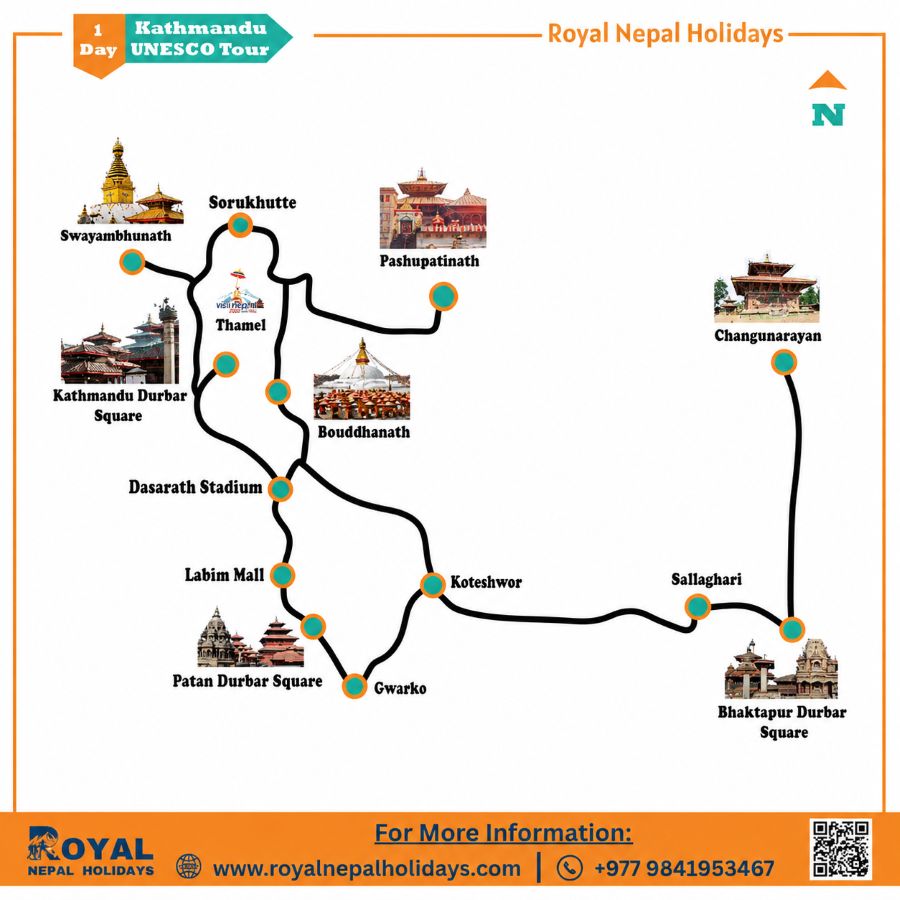
Your guide and private vehicle will collect you from your hotel in Kathmandu's tourist district. Starting early is essential to make the most of the day, to avoid the heat of midday at outdoor sites, and to experience the morning atmosphere at Swayambhunath and Pashupatinath, which are both particularly atmospheric in the early hours of devotional activity.
The first stop takes you to the Monkey Temple for approximately 90 minutes. The morning light on the stupa dome is beautiful, and the morning prayers are underway. Your guide will explain the Buddhist cosmology embedded in the architecture and the history of Kathmandu Valley from its legendary origins to the present. You will have time to explore the smaller shrines, spin the prayer wheels, and enjoy the panoramic views.
The royal square of the old capital city is a 15-minute drive from Swayambhunath. The guide will walk you through the major temples and the palace complex, explain the history of the Malla Kings, and point out the Kumari Ghar. If the living goddess is appearing that morning, you may be fortunate enough to receive her blessing. Allow approximately 90 minutes here.
The most spiritually intense stop on the itinerary. Your guide will prepare you for what you will see at the cremation ghats and provide the religious and philosophical context that allows the experience to be understood rather than simply observed. The complex is large and active, and there is much to see beyond the ghats, including numerous shrines, the Pancha Dewal temple cluster, and the ashrams of resident sadhus. Allow approximately 90 minutes.
From the intensity of Pashupatinath, the tour moves to the expansive calm of Boudhanath. Walking the circumambulation circuit and perhaps entering one of the surrounding monasteries takes approximately 60 minutes. The area around the stupa is excellent for lunch, with numerous good restaurants offering views of the stupa from their rooftop terraces.
Enjoy lunch at a recommended restaurant near Boudhanath or en route to Patan. The guide can suggest options for Nepali, Tibetan, or international cuisine.
The afternoon begins in the City of Fine Arts, with its magnificent temples, the extraordinary Krishna Mandir, and the Patan Museum. The square is approximately 30 minutes from Boudhanath by private vehicle. Allow approximately 90 minutes here, including a brief visit to the Patan Museum if time permits.
Bhaktapur is approximately 25 minutes from Patan. The late afternoon light is particularly beautiful on the brick and terracotta of the medieval city, and the Nyatapola Temple is dramatic against the late sky. Allow approximately 90 minutes to explore the main square and walk to Pottery Square.
The final site of the day is approximately 20 minutes from Bhaktapur. The hilltop light at dusk is magnificent, and the site is typically quiet in the early evening. Allow approximately 45 minutes to visit the temple and walk through the village.
Your driver will return you to your hotel in Kathmandu, typically arriving between 7:30 and 8:00 PM depending on traffic. You will return with a day's worth of extraordinary experiences, photographs, and memories that will last a lifetime.
Are you interested on planning custom trip? It only takes 2 minutes.
All transportation throughout the day is provided in a comfortable private vehicle. This means you travel on your own schedule without the compromises and delays of shared group transport. The vehicle is air-conditioned and driven by an experienced local driver familiar with Kathmandu's complex traffic patterns. The private vehicle also allows the guide to make flexible adjustments to the itinerary based on traffic, site conditions, or your personal interests.
Your guide is a licensed professional with deep expertise in the history, religion, architecture, and cultural life of the Kathmandu Valley. All Royal Nepal Holidays guides hold Nepal Tourism Board certification and speak fluent English. They are trained to make the experience educational without being lecturing, to answer questions at any depth, and to ensure that every visitor leaves with a genuine understanding of what they have seen.
The tour begins and ends at your hotel in Kathmandu's main tourist areas, including Thamel, Lazimpat, Durbar Marg, and surrounding neighborhoods. Hotels in other areas of the city can be accommodated with advance notice. The door-to-door service means you never have to navigate Kathmandu's streets, traffic, or transport systems on your own.
Drinking water is provided throughout the day. Staying well hydrated is important when walking significant distances at altitude, and complimentary bottled water ensures you are comfortable throughout the tour.
While the suggested itinerary is designed for optimal experience, Royal Nepal Holidays understands that every traveler is different. If you want to spend longer at Boudhanath or skip the Patan Museum in favor of more time at Bhaktapur, the guide and driver will accommodate your preferences. The private format of the tour means you are never hurried by the needs of other tour participants.
| Included Services |
|---|
| Private Transportation |
| Hotel Pickup & Drop-off |
| Professional English-Speaking Guide |
| Guided Sightseeing at All UNESCO Sites |
| Government Taxes |
|
Tour Coordination by Royal Nepal Holidays |
| Excluded Services |
|---|
| UNESCO Entrance Fees |
| Lunch and Personal Meals |
| Travel Insurance |
| Personal Expenses |
| Tips for Guide and Driver |
| Additional Activities Not Mentioned |
Response Time 0-2 Hours , Response Rate 100%
Nepal is a conservative country with deeply held religious traditions, and appropriate dress is essential when visiting temples and sacred sites. Both men and women should cover their shoulders and knees. Lightweight trousers or skirts and shirts or blouses that cover the upper arms are ideal. Scarves or sarongs are useful to carry as they can be quickly wrapped around the lower body if needed. Overly revealing clothing is disrespectful and will prevent you from entering certain temple areas.
Photography is generally permitted in the open courtyards and around the exterior of temples, but you should always confirm with your guide before photographing specific shrines, deities, or religious ceremonies. Photography inside the main sanctuaries of temples is usually prohibited. Photographing cremation ceremonies at Pashupatinath is a sensitive matter; your guide will advise you on the appropriate protocol, which generally means no close-up or intrusive photography of grieving families.
Remove your shoes before entering temple buildings and some courtyard areas. Your guide will indicate when this is required. Step over, never on, the threshold of temple doorways. Walk in a clockwise direction around stupas and most temple structures. Avoid pointing your feet toward altars or sacred images. Do not touch or lean on carved stonework or statues. Accept offerings or blessings from priests with both hands or your right hand only. When attending religious ceremonies, observe quietly and follow the lead of your guide.
Nepali people greet each other with the word Namaste accompanied by a slight bow and the hands pressed together in a prayer gesture. Using this greeting is warmly appreciated by local people. Bargaining is expected in craft markets but should be conducted with good humor and mutual respect. Tipping is not mandatory but is appreciated by guides, drivers, and restaurant servers.
Kathmandu's UNESCO heritage sites can be visited year-round, but visiting conditions vary significantly by season. The general consensus among experienced travelers is that October to November and March to April offer the best combination of weather, visibility, and festival activity.
| Essential Items |
|---|
| Comfortable Walking Shoes |
| Passport Copy |
| Sunscreen |
| Sunglasses |
| Hat or Cap |
| Reusable Water Bottle |
| Camera or Smartphone |
| Light Jacket (Winter Months) |
| Cash for Entrance Fees & Lunch |
Spring is one of the two peak seasons for visiting Kathmandu. The weather is warm and pleasant, mountain views are frequently clear, and the valley's rhododendrons are in bloom on the surrounding hillsides. Several major festivals fall in this period, including Holi in March, the spectacular chariot festival of Bisket Jatra in Bhaktapur during April (Nepali New Year), and Buddha Jayanti, the celebration of the Buddha's birth, in May. Spring temperatures range from 10°C to 28°C, with increasing humidity toward the end of the season.
Autumn is considered the best season for visiting Kathmandu and Nepal in general. The monsoon rains end in late September, leaving the air crystal-clear and the mountains vividly visible. Temperatures are ideal – warm in the day, cool at night. The great festival of Dashain, Nepal's largest Hindu festival, falls in October, followed by Tihar, the Festival of Lights, in late October or November. Visiting during these festivals adds extraordinary color, ceremony, and cultural depth to the heritage tour.
Winter in Kathmandu is cool and sometimes cold, particularly in the early morning and evening. Daytime temperatures typically range from 2°C to 20°C. Mountain views are often exceptionally clear in winter. Tourist crowds are smaller, meaning the heritage sites are less busy and the atmosphere at sacred sites is more contemplative. Maha Shivaratri at Pashupatinath, typically in February, is one of the most spectacular festivals in the Kathmandu Valley and falls within this season.
The monsoon season brings heavy rainfall, high humidity, and reduced mountain visibility. The heritage sites remain open and fully operational, and the valley is lush and dramatically green. However, the heat and humidity can be challenging, and some outdoor sites are slippery when wet. The advantage of the monsoon season is that tourist numbers are at their lowest, prices are reduced, and the sites have an atmospheric quality quite different from the dry seasons. For travelers who don't mind the rain and heat, monsoon can be a fascinating time to experience Kathmandu.
Royal Nepal Holidays is a Nepal-based tour operator with deep roots in the Kathmandu Valley. The company was founded by Nepali travel professionals with decades of experience designing and delivering cultural and adventure tours across Nepal. Every member of the team – from the management to the guides to the drivers – is local, knowledgeable, and personally invested in ensuring that visitors to Nepal have extraordinary experiences.
All guides employed by Royal Nepal Holidays hold Nepal Tourism Board certification and undergo regular training in cultural heritage, first aid, and customer service. They are selected not just for their knowledge but for their warmth, communication skills, and genuine passion for Nepal's history and culture. Many have been guiding for Royal Nepal Holidays for many years and have accompanied thousands of international travelers through the valley's heritage sites.
Royal Nepal Holidays has built its reputation through the experience it delivers and the reviews those experiences generate. Travelers from across the world – from Australia and the United States to Germany, Japan, and South Africa – have rated the company's tours among the best available in Nepal on major review platforms. These reviews consistently highlight the quality of the guides, the thoughtfulness of the itinerary, and the professionalism of the service.
Unlike large group tours that follow a rigid schedule and cater to the average participant, Royal Nepal Holidays specializes in private and semi-private tours that can be tailored to the interests, physical abilities, and schedule of each client. Families with young children, older travelers with mobility considerations, photography enthusiasts who need extra time at specific sites, and academic researchers wanting detailed scholarly commentary – all are catered to with the same quality of personalized service.
The price quoted for the 7 UNESCO Heritage Sites Tour Kathmandu includes all transportation and guide services. Site entrance fees are additional and vary by nationality; your guide will advise you on the current fees for each site and accompany you through the entry process. There are no hidden charges, no surprise additions, and no commissions on shopping – Royal Nepal Holidays does not take guests to shops.
From the moment you make an inquiry to the moment you return to your hotel on the last day of your tour, the Royal Nepal Holidays team provides responsive, attentive service. Pre-tour questions are answered promptly by staff who actually know the sites and the valley. Post-tour inquiries are handled with equal care. The company's goal is not just to sell a tour but to ensure that every traveler's experience of Nepal is the best it can possibly be.
The Kathmandu Valley is a place that changes people. Travelers who arrive knowing little of Nepal leave with a deep sense of having encountered something genuinely extraordinary – a civilization that has preserved its sacred art, its living religious traditions, and its community life through centuries of change, natural disaster, and political upheaval, and that continues to create beauty and meaning in the present day.
The 7 UNESCO Heritage Sites Tour Kathmandu with Royal Nepal Holidays gives you the finest possible introduction to this civilization. In a single day, with expert guidance, private transport, and a thoughtfully sequenced itinerary, you will experience the full range of the valley's cultural heritage – from the oldest Hindu temple in Nepal to the largest stupa in the country, from medieval royal squares to living craft traditions, from riverside cremation ceremonies to hilltop Buddhist pilgrimage sites.
This is not a tour that you will forget. The eyes of the Buddha at Swayambhunath, the sound of monks chanting at Boudhanath, the sight of the Nyatapola Temple rising above Bhaktapur in the late afternoon light, the smell of incense and marigold offerings at Pashupatinath – these are experiences that stay with you long after you have returned home.
Do not leave Nepal without experiencing this UNESCO World Heritage Day Tour. Spaces are limited on any given day, particularly during the autumn and spring peak seasons, so early booking is strongly recommended.
Contact Royal Nepal Holidays today to inquire about available dates, current pricing, and customization options. Whether you are arriving in Kathmandu in one week or in six months, the team is ready to answer your questions, confirm your booking, and ensure that your day among Nepal's living heritage is everything you are hoping for and more.
Location: Thamel, Kathmandu, Nepal
Phone / WhatsApp: +9779841953467
Email: info@royalnepalholidays.com
Website: www.royalnepalholidays.com
Facebook: Royal Nepal Holidays
Send us an inquiry through the contact form on this page or email us directly. We respond to all inquiries within 24 hours and look forward to welcoming you to the extraordinary world of Kathmandu's UNESCO World Heritage Sites.
For those planning a longer Nepal itinerary, this tour pairs beautifully with the Nagarkot Sunrise Tour, the Bhaktapur Day Tour, the Everest Base Camp Trek, and our full range of Nepal Cultural Tours and Nepal Tour Packages. The Royal Nepal Holidays team is here to help you design the perfect Nepal journey, from arrival to departure.
Namaste. We look forward to sharing Nepal's living heritage with you.
Excellent
There are seven UNESCO World Heritage Sites in Kathmandu Valley: Swayambhunath Stupa, Kathmandu Durbar Square, Pashupatinath Temple, Boudhanath Stupa, Patan Durbar Square, Bhaktapur Durbar Square, and Changu Narayan Temple. The Kathmandu Valley as a whole was inscribed on the UNESCO World Heritage List in 1979 under the category of Cultural Heritage, recognizing its exceptional cultural, religious, and architectural significance.
Yes. The 7 UNESCO Heritage Sites Tour Kathmandu is specifically designed to cover all seven sites in a single full day. The tour typically begins around 7:00 AM and concludes between 7:30 PM and 8:00 PM. Since all seven sites are located within the Kathmandu Valley, private transportation makes it possible to travel efficiently between destinations while allowing enough time to explore and appreciate each site.
The full-day tour usually lasts between 8 and 9 hours, including hotel pickup and drop-off. This duration covers transportation between sites, sightseeing time at each UNESCO monument, a lunch break, and short refreshment stops. The exact timing may vary depending on traffic conditions and any customized arrangements requested by travelers.
Lunch is not included in the standard tour package. During the tour, your guide will recommend quality restaurants, often near Boudhanath Stupa, where you can enjoy a meal at your own expense. Various dining options are available, including vegetarian, vegan, and international cuisine choices.
Entrance fees to the UNESCO World Heritage Sites are not included in the standard tour cost and must be paid separately. Fees vary according to the site and the visitor's nationality. Your guide will assist with ticket purchases and provide information about the current entrance fees. These fees contribute directly to the preservation and maintenance of Nepal's cultural heritage sites.
Yes, the 7 UNESCO Heritage Sites Tour Kathmandu is an excellent choice for families. Children, students, and adults alike can enjoy exploring Nepal's rich history, culture, and architecture. As a private tour, the pace can be adjusted according to the family's needs, and guides can provide engaging explanations suitable for younger travelers. Families with very young children or specific mobility requirements are encouraged to discuss their needs with Royal Nepal Holidays before booking.
Comfortable walking shoes are highly recommended, as the tour involves walking through heritage sites and climbing stairs, particularly at Swayambhunath Stupa. Visitors should dress modestly, covering shoulders and knees, out of respect for the religious and cultural significance of the sites. Lightweight clothing, sunscreen, sunglasses, and a small daypack are also recommended for a comfortable experience.
Yes. Royal Nepal Holidays offers flexible and fully customizable private tours. Travelers can request additional time at specific heritage sites, include extra attractions, adjust the tour schedule, or tailor the experience according to their interests. It is recommended to discuss customization requests during the booking process so the guide and driver can make the necessary arrangements.
Response Time 0-2 Hours , Response Rate 100%
You may also like
Explore Kathmandu's Top UNESCO World Heritage Sites Including Pashupatinath, Boudhanath, Swayambhunath, And Kathmandu Durbar Square On A Guided Kathmandu City Tour With Royal Nepal Holidays. View Details →
Join The Best Kathmandu Food Tour Through Thamel And Kathmandu Durbar Square. Taste Authentic Nepali And Newari Dishes With A Local Guide. View Details →
Book The Best Nagarkot Sunrise Tour From Kathmandu With Royal Nepal Holidays. Enjoy Himalayan Panorama Views, Mount Everest Sightings, Private Transport & Expert Guides. Book Your Nagarkot Day Tour Today. View Details →
 30 Minutes










A Perfect Introduction To Kathmandu's Rich Heritage
I Booked The 7 UNESCO Heritage Sites Tour Kathmandu With Royal Nepal Holidays And It Turned Out To Be One Of The Highlights Of My Nepal Trip. The Booking Process Was Simple, And Mr. Sushil Was Very Responsive Before The Tour. Our Guide, Ramesh, Was Knowledgeable And Explained The History Behind Each Temple, Palace, And Stupa In A Way That Was Easy To Understand.
Seeing The Sunrise Over Swayambhunath And Later Walking Around The Peaceful Boudhanath Stupa Were Unforgettable Moments. I Also Loved Exploring The Narrow Alleys And Traditional Architecture Of Bhaktapur. The Private Vehicle Was Comfortable, And The Entire Day Was Well Organized Despite Kathmandu's Busy Traffic.
This Tour Gave Me A Deeper Appreciation Of Nepalese Culture And Religion. I Would Highly Recommend Royal Nepal Holidays To Anyone Planning A Trip To Nepal.
Incredible Culture, History And Hospitality
As Someone Interested In History, This Tour Exceeded My Expectations. Visiting All Seven UNESCO World Heritage Sites In One Day Sounded Ambitious, But Royal Nepal Holidays Managed Everything Perfectly. Our Driver Was Punctual, And The Guide Shared Fascinating Stories About The Ancient Kingdoms Of Kathmandu Valley.
Pashupatinath Was Particularly Moving. Watching The Religious Ceremonies Along The Bagmati River Offered A Genuine Glimpse Into Local Traditions. Patan Durbar Square Was Another Favorite, With Its Beautiful Temples And Incredible Craftsmanship.
The Weather Was Warm, But The Guide Made Sure We Had Enough Breaks And Time To Enjoy Each Location. Communication With Mr. Sushil Was Excellent From Start To Finish.
The Entire Experience Felt Authentic Rather Than Rushed. If I Return To Nepal, I Will Definitely Travel With Royal Nepal Holidays Again.
Much More Than A Sightseeing Tour
I Visited Kathmandu With My Family And Booked The 7 UNESCO Heritage Sites Tour Through Royal Nepal Holidays. What Impressed Me Most Was How Well The Entire Day Was Planned. We Covered All Seven UNESCO Sites Without Feeling Rushed.
Our Guide, Rameshwor, Was Excellent. He Didn't Just Explain Facts; He Shared Stories About Kings, Temples, Local Traditions, And Daily Life In Nepal. His Insights Made Every Site Come Alive. I Especially Enjoyed Pashupatinath Temple And Bhaktapur Durbar Square, Where The Traditional Architecture Is Simply Stunning.
The Vehicle Was Clean And Comfortable, And The Driver Handled Kathmandu Traffic Professionally. Communication With Mr. Sushil Before The Tour Was Smooth And Reassuring.
This Was One Of The Most Educational And Enjoyable Cultural Tours I Have Experienced. I Would Highly Recommend Royal Nepal Holidays To Anyone Planning A Trip To Nepal.
Excellent Guide And Seamless Organization
This Tour Was One Of The Highlights Of My Nepal Visit. I Had Read About Kathmandu's UNESCO Sites Before Arriving, But Seeing Them In Person Was Completely Different. Every Location Had Its Own Unique Character And Atmosphere.
Guide Rameshwor Was The Star Of The Day. His Passion For Nepalese Culture Was Obvious From The Start. Whether We Were Standing In Front Of Ancient Temples Or Exploring Palace Courtyards, He Always Had Interesting Stories And Historical Details To Share.
The Schedule Was Well Balanced, Giving Us Enough Time To Explore While Still Covering All Seven Sites. I Particularly Loved Swayambhunath For Its Panoramic City Views And Changu Narayan For Its Peaceful Setting Away From The Crowds.
Royal Nepal Holidays Provided Excellent Service From Booking To Completion. I Would Highly Recommend Royal Nepal Holidays To Anyone Planning A Trip To Nepal.
The Best Day Tour In Kathmandu
I Only Had Two Days In Kathmandu And Wanted To See As Much As Possible. Choosing The 7 UNESCO Heritage Sites Tour With Royal Nepal Holidays Was The Best Decision I Made.
The Guide, Deepak, Was Professional, Friendly, And Passionate About Nepal's History. Every Site Offered Something Unique, From The Spiritual Atmosphere At Boudhanath To The Medieval Charm Of Bhaktapur Durbar Square. Changu Narayan Was A Pleasant Surprise, With Fewer Crowds And Beautiful Views Of The Surrounding Hills.
Transportation Was Comfortable Throughout The Day, And I Always Felt Safe. Lunch Near Boudhanath Was Delicious And Gave Me A Chance To Try Authentic Nepali Food.
The Tour Was Informative Without Being Overwhelming. I Left With A Much Deeper Understanding Of Nepal's Culture And Traditions. I Would Highly Recommend Royal Nepal Holidays To Anyone Planning A Trip To Nepal.