Trip Durations
18 Days

Quick Contact
4.9  | 18 Days | Kathmandu - Island Peak / Imja Tse, Everest Region - Kathmandu
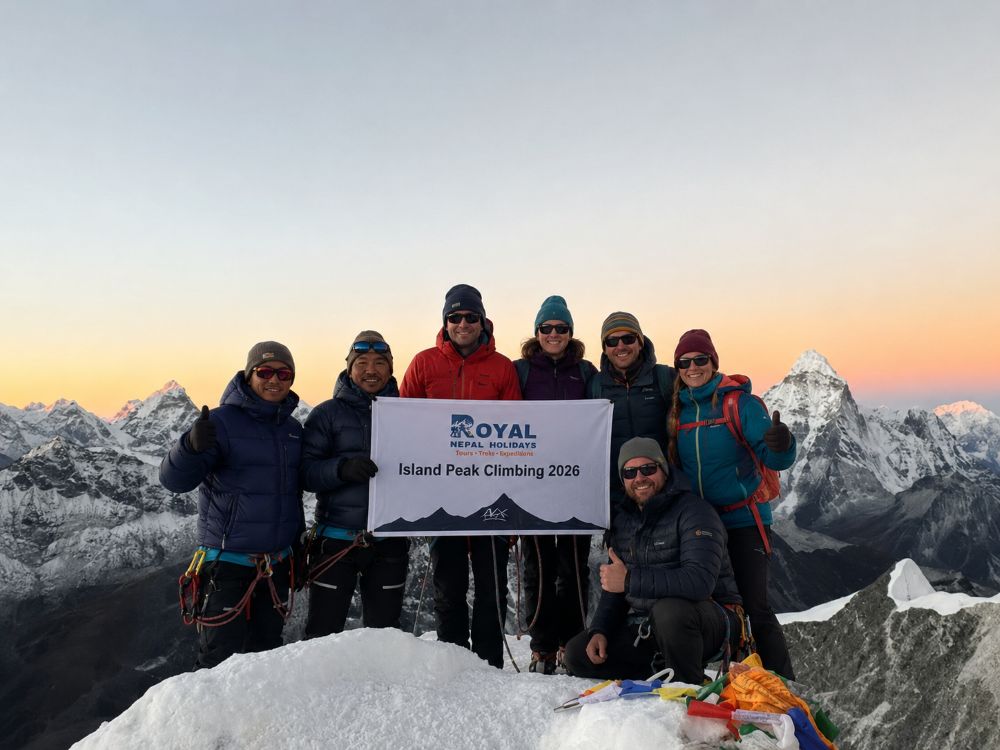
Island Peak Climbing, known locally as Imja Tse, takes you to the summit of one of the most iconic trekking peaks in the Everest region at 6,189m (20,305 feet). This 18-day expedition combines the classic trail toward Everest Base Camp with a technical glacier and fixed-rope climb to a genuine Himalayan summit, guided by experienced local climbing Sherpas.
Unlike a standard teahouse trek, Island Peak Climbing asks you to cross a glacier, use crampons and an ice axe, ascend fixed ropes with a jumar, and negotiate a steep summit headwall before standing on a ridge with Lhotse, Nuptse, Makalu and Ama Dablam rising around you. Royal Nepal Holidays builds this itinerary with acclimatization and safety as the priority, not simply the shortest possible schedule.
This page covers everything you need before booking: cost, day-by-day itinerary, route, difficulty, summit day timeline, acclimatization strategy, permits, best season, training, gear, safety planning, and answers to the most common questions climbers ask.
| Trip Fact | Details |
|---|---|
| Trip Name | Island Peak Climbing |
| Duration | 18 Days |
| Maximum Altitude | 6,189m (Island Peak / Imja Tse Summit) |
| Region | Everest / Khumbu Region |
| Peak | Island Peak (Imja Tse) |
| Difficulty | Strenuous / Technical |
| Best Season | Spring (March–May) & Autumn (September–November) |
| Accommodation | Hotel in Kathmandu, Teahouse & Base Camp Tented Camping |
| Transportation | Domestic Flight (Kathmandu/Ramechhap–Lukla) & Private Vehicle |
| Group Size | 1–12 (Private departures available) |
| Starts / Ends | Kathmandu |
| Climbing Style | Guided Expedition |
| Minimum Age | 16 years (with guardian consent under 18) |
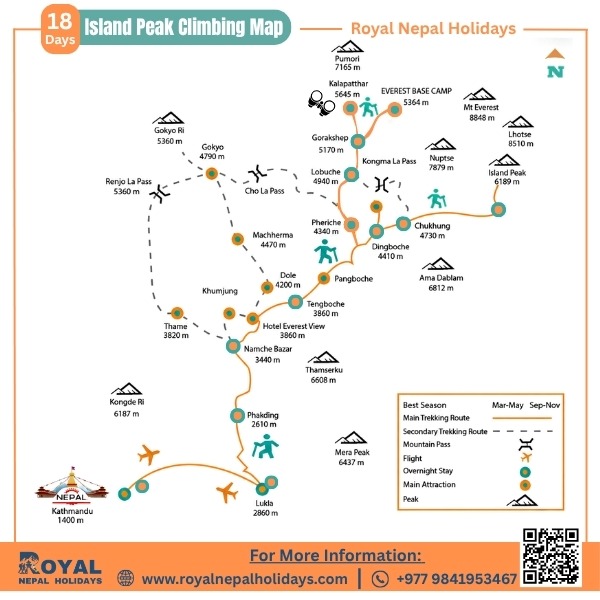
Kathmandu → Lukla → Phakding → Namche Bazaar → Tengboche → Dingboche → Lobuche → Everest Base Camp → Kala Patthar → Chhukung → Island Peak Base Camp → High Camp → Island Peak Summit → Chhukung → Namche → Lukla → Kathmandu
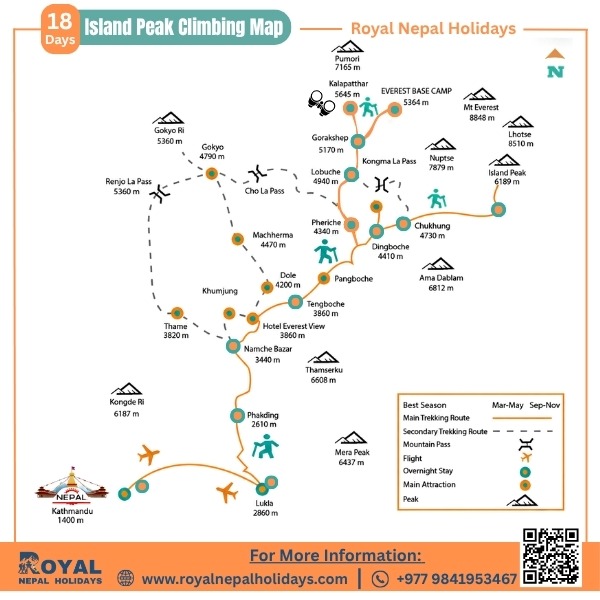
| Location | Approx. Altitude |
|---|---|
| Kathmandu | 1,400m |
| Lukla | 2,860m |
| Phakding | 2,610m |
| Namche Bazaar | 3,440m |
| Tengboche | 3,860m |
| Dingboche | 4,410m |
| Lobuche | 4,910m |
| Everest Base Camp | 5,364m |
| Kala Patthar | 5,545m |
| Chhukung | 4,730m |
| Island Peak Base Camp | ~5,200m |
| Island Peak High Camp | ~5,600m |
| Island Peak Summit | 6,189m |
Accommodation: Hotel
Meals: Welcome Dinner
Your Island Peak adventure begins with your arrival at Tribhuvan International Airport in Kathmandu. A representative from Royal Nepal Holidays will meet you at the airport and transfer you to your hotel.
After checking in and taking some time to rest, you can explore the surrounding area if your arrival time permits.
In the evening, your guide will organize a welcome dinner and trip briefing. The climbing team will explain the itinerary, trekking conditions, altitude considerations, equipment requirements and important safety procedures.
You will also have an opportunity to check your climbing equipment before departure for the Everest region.
Highlights:
Overnight: Kathmandu
Altitude: 1,400m
Accommodation: Hotel
Meals: Breakfast
Today is dedicated to final preparation for the Island Peak expedition.
After breakfast, your guide will help you complete any remaining preparations and check your personal climbing equipment. If you need to rent or purchase equipment in Kathmandu, today is the ideal opportunity.
Depending on your schedule, you can also explore Kathmandu's cultural attractions or enjoy some free time.
Your climbing team will conduct a final briefing covering:
Overnight: Kathmandu
Lukla: 2,860m
Phakding: 2,610m
Flight: Approximately 30–40 minutes
Trek: Approximately 3–4 hours
Accommodation: Teahouse
Meals: Breakfast, Lunch & Dinner
Early in the morning, you take a scenic flight toward Lukla. Depending on seasonal airport operations and flight conditions, flights may operate from Kathmandu or Ramechhap.
After landing at Lukla, you meet the rest of your trekking team and begin walking toward Phakding.
The trail passes through small Sherpa settlements, forests and cultivated fields before reaching Phakding.
The relatively short first trekking day allows your body to begin adapting to the altitude.
Overnight: Phakding
Trek: Approximately 5–6 hours
Accommodation: Teahouse
Meals: Breakfast, Lunch & Dinner
After breakfast, you follow the Dudh Koshi River toward the entrance of Sagarmatha National Park.
The trail crosses several suspension bridges decorated with prayer flags before gradually climbing toward Namche Bazaar.
You pass through villages such as Monjo and Jorsale before beginning the steep ascent toward Namche.
With clear weather, you may get your first views of Everest, Lhotse, Nuptse and other Himalayan peaks.
Namche Bazaar is the major commercial and cultural center of the Khumbu region.
Overnight: Namche Bazaar
Accommodation: Teahouse
Meals: Breakfast, Lunch & Dinner
Today is an important acclimatization day.
Rather than staying completely inactive, you take a short acclimatization hike around Namche.
Depending on weather and group condition, you may hike toward the Everest View Hotel and nearby viewpoints.
From the surrounding hills, you can enjoy impressive views of:
You then return to Namche for rest and overnight accommodation.
Your guide will also monitor your condition for symptoms of altitude sickness.
Overnight: Namche Bazaar
Trek: Approximately 5–6 hours
Accommodation: Teahouse
Meals: Breakfast, Lunch & Dinner
The trail climbs gradually above the Dudh Koshi Valley before descending toward the river.
You continue through beautiful rhododendron, pine and fir forests.
The spectacular peak of Ama Dablam becomes increasingly prominent as you approach Tengboche.
Tengboche is famous for its historic Buddhist monastery and panoramic Himalayan views.
If the monastery is open and the schedule permits, you can visit the monastery and experience the spiritual atmosphere of the Khumbu region.
Overnight: Tengboche
Trek: Approximately 5–6 hours
Accommodation: Teahouse
Meals: Breakfast, Lunch & Dinner
After breakfast, you descend toward the Imja Khola and continue through beautiful alpine landscapes.
The vegetation becomes increasingly sparse as you gain altitude.
The trail passes through Pangboche and gradually enters the Imja Valley.
You continue toward Dingboche, one of the major acclimatization settlements on the Island Peak route.
From Dingboche, you can enjoy excellent views of:
Overnight: Dingboche
Accommodation: Teahouse
Meals: Breakfast, Lunch & Dinner
Another important acclimatization day is spent in Dingboche.
You take a gradual hike to a higher viewpoint before returning to the village.
The purpose is not to exhaust yourself but to allow your body to adapt to increasing altitude.
Your guide will also assess:
This is also a good opportunity to discuss the upcoming technical climbing section.
Your guide can introduce or review:
Overnight: Dingboche
Trek: Approximately 5–6 hours
Accommodation: Teahouse
Meals: Breakfast, Lunch & Dinner
You leave Dingboche and climb gradually toward the higher Khumbu Valley.
The landscape becomes more rugged and barren as you approach the Everest region's higher elevations.
The trail passes through the area around Duglha/Thukla, where you encounter memorials dedicated to climbers and mountaineers who lost their lives in the Himalayas.
From here, the trail climbs toward the terminal moraine of the Khumbu Glacier before reaching Lobuche.
The evening is spent resting and preparing for the following day's trek toward Everest Base Camp.
Overnight: Lobuche
Trek: Approximately 7–9 hours
Accommodation: Teahouse
Meals: Breakfast, Lunch & Dinner
Today is one of the most memorable days of the expedition.
You trek toward Gorak Shep and continue along the rocky trail toward Everest Base Camp.
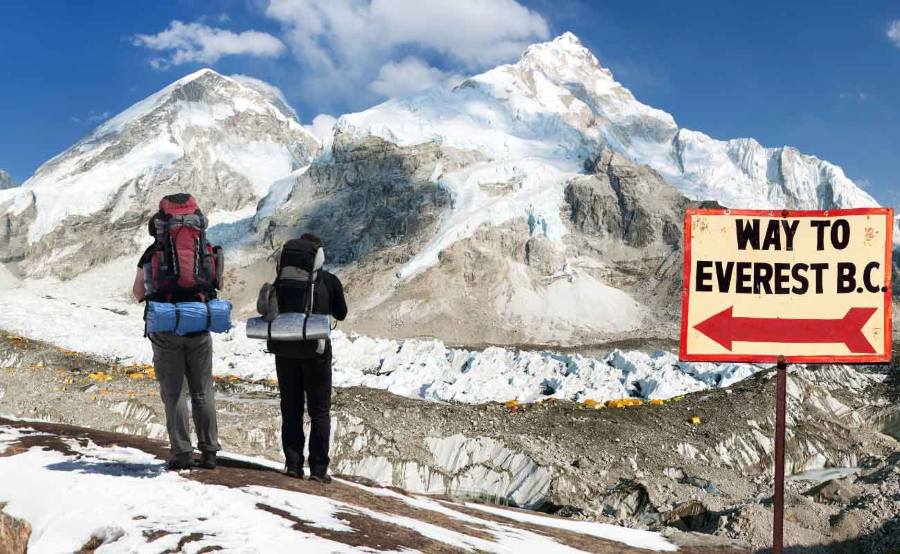
The route follows the Khumbu Glacier and provides spectacular views of the surrounding mountains and glacier landscape.
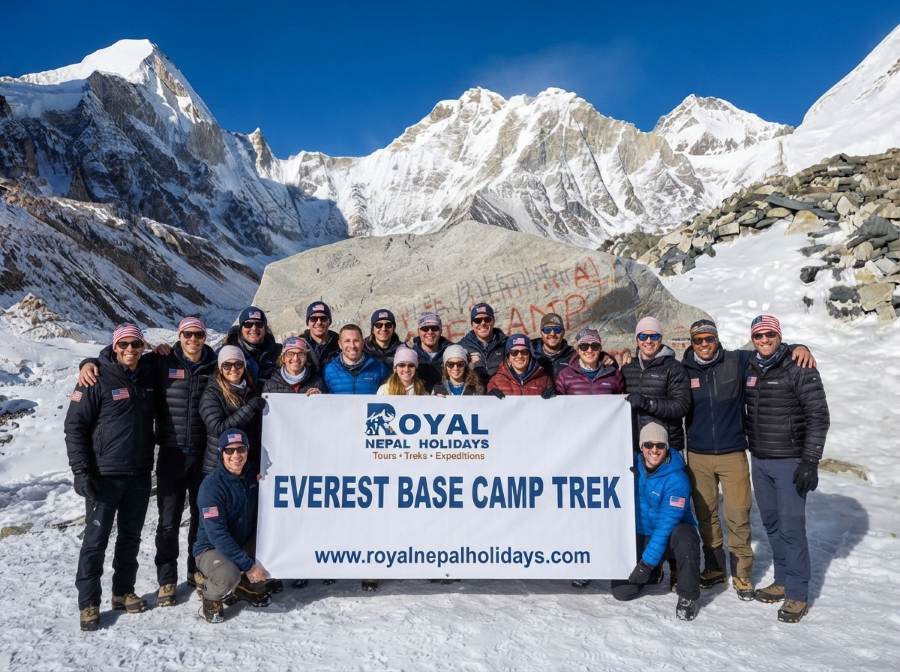
At Everest Base Camp, you have time to explore the area and appreciate the environment used by mountaineers preparing for Everest expeditions.
After spending time at Base Camp, you return to Gorak Shep for the night.
Overnight: Gorak Shep
Trek: Approximately 7–9 hours
Accommodation: Teahouse
Meals: Breakfast, Lunch & Dinner
Early in the morning, you hike toward Kala Patthar, one of the best viewpoints in the Everest region.
From the summit area, you can enjoy magnificent views of:
After returning to Gorak Shep, you continue toward the Imja Valley.
You retrace part of the route toward Lobuche and then take the trail toward Chhukung.
Chhukung is the gateway to Island Peak and provides an important transition from trekking to climbing.
Overnight: Chhukung
Trek: Approximately 4–5 hours
Accommodation: Tent/Camp
Meals: Breakfast, Lunch & Dinner
Today you officially enter the Island Peak climbing section.
The trail follows the Imja Valley toward the Island Peak Base Camp.
As you approach the mountain, the landscape becomes increasingly glacial and rugged.
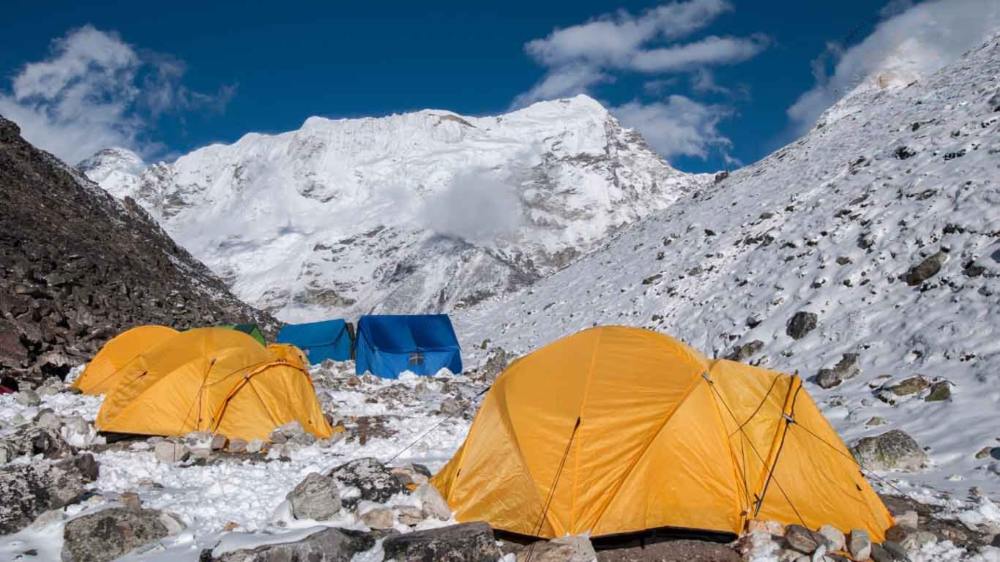
After reaching Base Camp, your climbing team establishes camp and prepares equipment for the summit attempt.
Your climbing guide will provide a technical climbing briefing and training session.
You may practice:
An early dinner and rest are important because the summit attempt is approaching.
Overnight: Island Peak Base Camp
Trek/Climb: Approximately 4–5 hours
Accommodation: Tent/Camp
Meals: Breakfast, Lunch & Dinner
Today you climb from Base Camp toward Island Peak High Camp, depending on current route and climbing conditions.
The terrain becomes more technical and requires careful movement.
Your climbing Sherpa/guide will set the pace and provide technical assistance.
At High Camp, the team prepares equipment for the summit attempt.
The guide will check:
You will have an early dinner and try to rest as much as possible.
Overnight: Island Peak High Camp
Summit Altitude: 6,189m / 20,305ft
Climbing: Approximately 10–12+ hours depending on conditions
Accommodation: Teahouse
Meals: Breakfast, Lunch & Dinner
This is the most challenging and rewarding day of your expedition.
You start very early, usually before sunrise, depending on weather, route conditions and the climbing team's assessment.
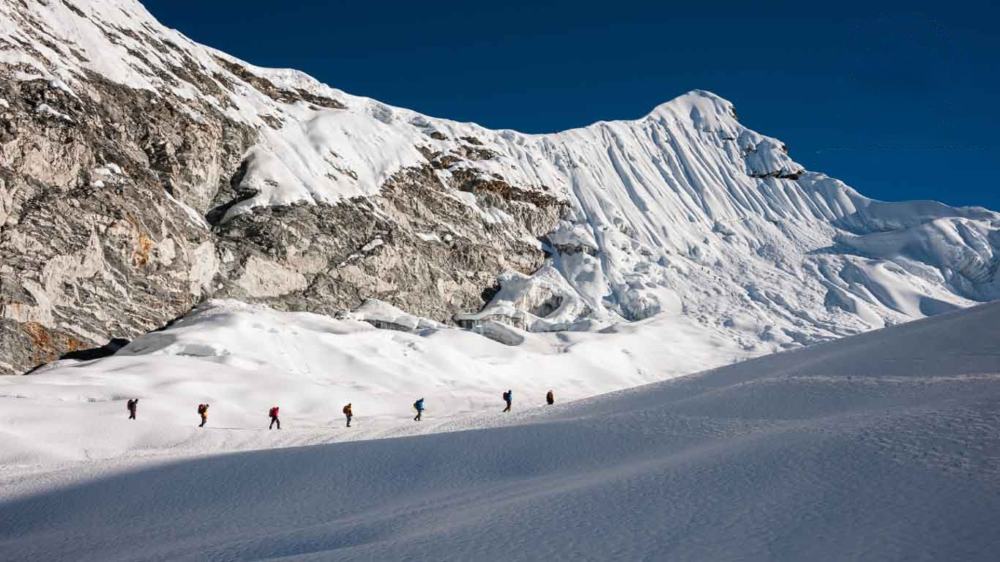
After leaving High Camp, you gradually climb toward the glacier section.
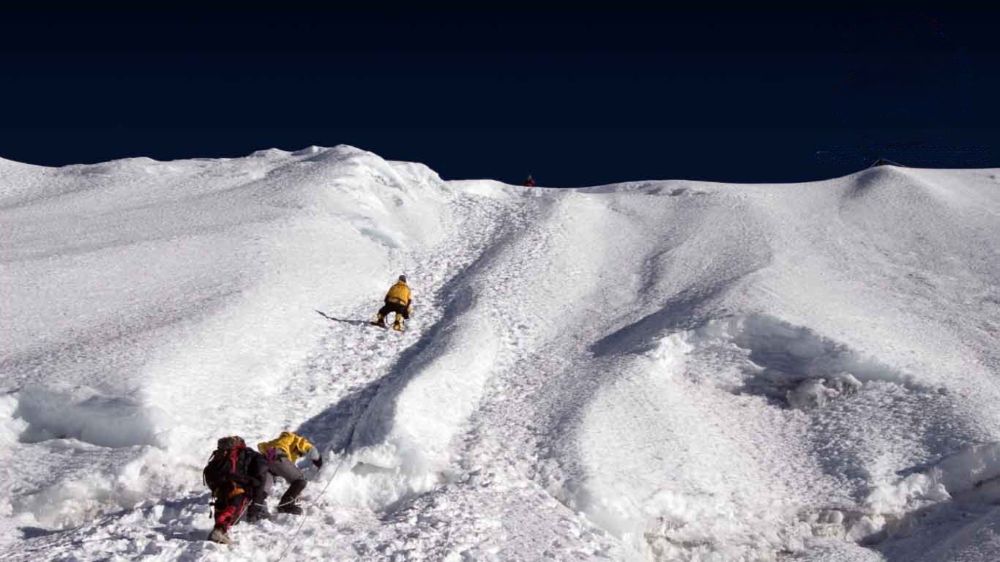
Your climbing team will assist you with technical sections and fixed ropes where required.
You may encounter:
The final ascent requires concentration, physical endurance and careful rope technique.
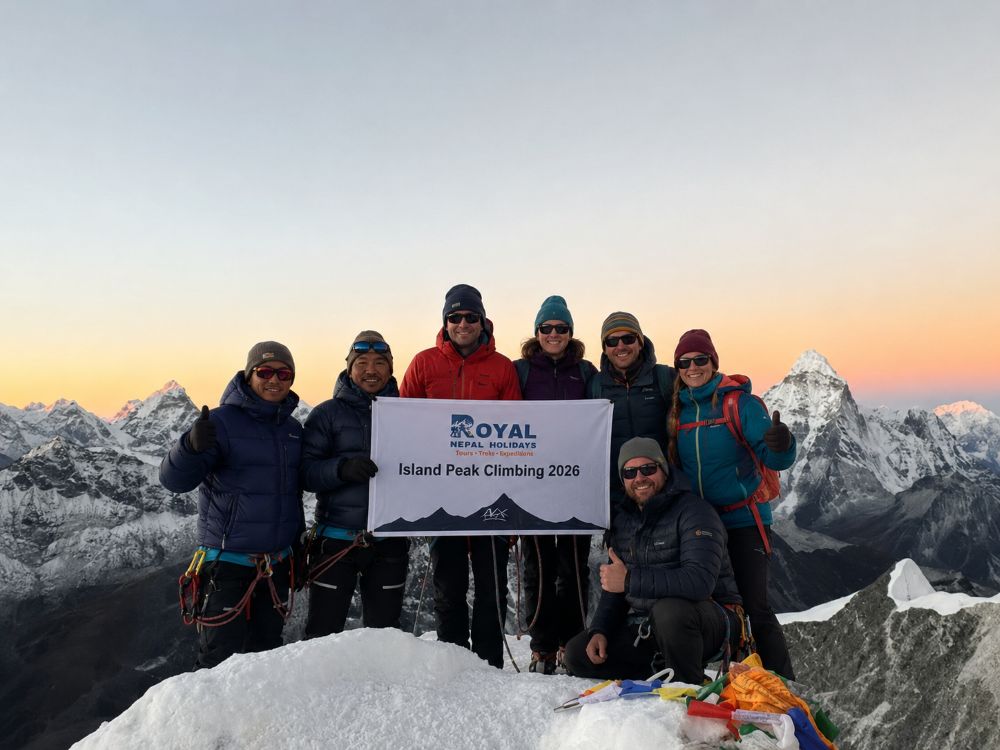
If conditions are favorable, you reach the 6,189m summit of Island Peak (Imja Tse).
From the summit, you can enjoy spectacular views of the surrounding Himalayan peaks, including the Lhotse–Nuptse range and Ama Dablam.
After celebrating your achievement and taking photographs, you begin the descent.
Descending safely is just as important as reaching the summit.
You return toward Base Camp and continue down to Chhukung if conditions and group strength allow.
Overnight: Chhukung
Trek: Approximately 6–7 hours
Accommodation: Teahouse
Meals: Breakfast, Lunch & Dinner
After the demanding summit day, you begin your descent toward Namche Bazaar.
Walking at lower altitude feels noticeably easier as you leave the high alpine environment.
The trail follows the Imja Valley and reconnects with the main Everest trekking route.
You pass through familiar Sherpa villages before reaching Namche.
The evening provides an opportunity to relax and celebrate the successful expedition with your team.
Overnight: Namche Bazaar
Trek: Approximately 6–7 hours
Accommodation: Teahouse
Meals: Breakfast, Lunch & Dinner
Your final trekking day takes you from Namche back toward Lukla.
You descend through forests and cross several suspension bridges.
The trail follows the Dudh Koshi Valley before gradually climbing toward Lukla.
After arriving in Lukla, you check into your accommodation and enjoy your final evening in the Khumbu region.
This is also an opportunity to thank the guides, climbing Sherpa and support staff who helped during your expedition.
Overnight: Lukla
Flight: Approximately 30–40 minutes
Accommodation: Hotel
Meals: Breakfast
After breakfast, you take your scheduled flight from Lukla toward Kathmandu or Ramechhap, depending on seasonal flight operations.
After reaching Kathmandu, you transfer to your hotel and have the remainder of the day free.
You can relax, explore Thamel, shop for souvenirs or simply recover after the expedition.
If the flight is delayed because of weather or operational conditions, your itinerary may need to be adjusted accordingly.
Overnight: Kathmandu
Meals: Breakfast
Your Island Peak adventure officially concludes today.
Depending on your flight schedule, you can enjoy your final breakfast in Kathmandu before your representative transfers you to Tribhuvan International Airport for your onward journey.
We hope you leave Nepal with unforgettable memories of the Himalayas, the Sherpa culture and your 6,189m Island Peak summit experience.
Trip Ends: Kathmandu
Are you interested on planning custom trip? It only takes 2 minutes.
| Group Size | Recommended Price / Person |
|---|---|
| 1 Pax | USD 2699 |
| 2 Pax | USD 2499 |
| 3–6 Pax | USD 2,199 |
| 7–10 Pax | USD 2,099 |
Private and customized Island Peak expeditions are available on request, including tailored departure dates, faster or slower acclimatization schedules, and combination itineraries with Everest Base Camp.
Budget approximately USD 15–25 per day in the Khumbu for WiFi, charging, hot showers, bottled or boiled water and snacks, increasing at higher elevations. Gear rental in Kathmandu typically runs USD 150–300 for a full technical package depending on quality and duration.
Response Time 0-2 Hours , Response Rate 100%
Kathmandu → Lukla → Phakding → Namche Bazaar → Tengboche → Dingboche → Lobuche → Gorak Shep / Everest Base Camp → Kala Patthar → Chhukung → Island Peak Base Camp → High Camp → Summit (6,189m) → Chhukung → Tengboche → Lukla → Kathmandu
This route deliberately routes through Everest Base Camp and Kala Patthar en route to Island Peak, both for acclimatization value and because it gives climbers the complete Everest region experience rather than a direct approach that skips these landmarks.
Difficulty Rating: Strenuous / Technical
Island Peak is not simply a high-altitude trek. The final summit push involves glacier travel, fixed-rope climbing, and a steep snow-and-ice headwall just below the summit ridge. It is widely regarded as an accessible introduction to Himalayan mountaineering, but it should not be underestimated.
What the climb actually demands:
Royal Nepal Holidays does not market Island Peak as "easy for beginners." It is more accurate to say: Island Peak is suitable for fit trekkers with little or no previous summit experience, provided they complete appropriate physical preparation and receive professional climbing instruction from a qualified guide before and during the expedition. A dedicated training day at Base Camp (Day 13) is built into this itinerary specifically to prepare first-time climbers for the technical sections.
Summit day is the physical and technical core of the entire expedition. Here is a realistic hour-by-hour outline:
Island Peak Climbing follows a structured acclimatization strategy built around one core principle: climb high, sleep lower, and give the body time to adapt.
This itinerary deliberately does not promise a specific summit-success percentage. Success depends on weather, individual fitness, acclimatization response and route conditions on the day, and figures published by other operators vary widely and are difficult to compare without a consistent methodology.
Climbing Island Peak requires the following permits and fees:
Permit costs vary by season (spring, autumn, winter/summer) and can change from year to year. Because current published figures for 2026–2027 vary across sources, Royal Nepal Holidays confirms exact permit costs directly with the Nepal Mountaineering Association before each climbing season rather than publishing a fixed figure that may go out of date. All permit costs referenced in your package price are confirmed and included at the time of booking.
| Season | Conditions | Recommendation |
|---|---|---|
| Spring (March–May) | Stable weather window, moderate temperatures, good visibility | Excellent |
| Autumn (September–November) | Clear skies, stable post-monsoon conditions, best overall visibility | Excellent |
| Winter (December–February) | Very cold, high winds at altitude, fewer climbers | Experienced climbers only |
| Monsoon (June–August) | Rain, cloud cover, higher avalanche/rockfall risk, flight disruption | Generally avoid |
Spring and autumn are favored because the jet stream typically lifts away from the summit ridge during these windows, reducing extreme wind exposure on summit day and improving the odds of clear conditions on the headwall and glacier.
Preparation significantly increases both safety and summit success. We recommend the following 8–12 week training structure before departure.
Cardiovascular Base (throughout)
Strength Training (2–3 sessions per week)
Mountain-Specific Preparation
Technical Preparation
Royal Nepal Holidays also runs a full technical refresher at Island Peak Base Camp (Day 13) with your climbing Sherpa, so prior technical experience is helpful but not mandatory for a well-prepared, physically fit trekker.
Provided by Royal Nepal Holidays
| Equipment | Royal Nepal Holidays | Guest |
|---|---|---|
| Climbing rope (fixed and main rope) | Provided | — |
| Crampons | Rental available | Optional to bring own |
| Ice axe | Rental available | Optional to bring own |
| Climbing harness | Rental available | — |
| Mountaineering boots | — | Required (bring own or rent locally) |
| Down suit / down jacket | Rental available | Required |
| Helmet | Rental available | Optional to bring own |
| Ascender / jumar | Rental available | Optional to bring own |
| Carabiners, prusik cord | Provided (group) | — |
Personal Equipment Checklist
Many climbers choose to combine Island Peak with a full Everest Base Camp itinerary, since the approach route already passes directly through Base Camp and Kala Patthar. This 18-day itinerary already includes both, giving you the complete Everest region experience in a single expedition without needing a separate trip.
If you would like a longer, more relaxed version of this combination with additional acclimatization days and a slower pace, ask about our dedicated Everest Base Camp with Island Peak Climbing – 19/20 Days itinerary, which follows the same route with extra buffer time built in.
| Factor | Island Peak | Mera Peak | Lobuche East |
|---|---|---|---|
| Height | 6,189m | 6,476m | 6,119m |
| Technical demand | Higher (headwall, fixed ropes) | Generally lower technically | Moderate to high |
| Altitude challenge | Lower relative to technical demand | Higher altitude, less technical | Moderate |
| Region | Everest | Everest / Makalu-Barun approach | Everest |
| EBC combination | Excellent, natural route overlap | Possible but less natural | Good route overlap |
| Best suited for | First technical Himalayan climb | High-altitude trekking with a summit | Climbers wanting a technical step up |
Island Peak is generally considered the more technical of the three due to its glacier crossing and steep summit headwall, while Mera Peak is typically viewed as a higher but less technical trekking peak. Lobuche East sits in between and is often chosen by climbers seeking a further technical progression after Island Peak.
Island Peak Is Suitable For
Island Peak Is Not Ideal For
Insurance requirement: All climbers must carry travel insurance that explicitly covers high-altitude trekking and climbing up to at least 6,500m, including emergency helicopter evacuation. Please confirm your policy's altitude limit and activity coverage before booking, as standard travel insurance frequently excludes mountaineering activities.
Royal Nepal Holidays' Island Peak departures are supported by our senior guiding team, including Bashu, Chandra and Uttam, and Tashi; who has climber Mt Everest 4 times in 15 Days and make world record each with extensive Everest region trekking and high-altitude support experience, under the direction of company owner Sushil Tiwari. Technical climbing sections are led by certified climbing Sherpas experienced specifically on Island Peak's glacier and headwall terrain. Full guide profiles, including certifications and language skills, are available on request during booking.
Make the process extremely simple:
Tell us your preferred travel dates, number of climbers and country of residence.
Our travel consultant prepares your itinerary, price, inclusions and recommended preparation.
Once you approve the itinerary, we proceed with the booking and required documentation.
Our team provides pre-trip information about equipment, fitness, altitude and travel preparation.
Your Royal Nepal Holidays team assists you from your arrival in Kathmandu through the expedition.
Trek through the Khumbu, complete your acclimatization and make your summit attempt with your climbing team.
Stand at 6,189m on the summit of Island Peak (Imja Tse) in Nepal's Everest region with a professionally organized climbing team. Royal Nepal Holidays handles the major logistics of your expedition, from airport arrival and trekking arrangements to climbing permits, acclimatization and summit support.
Whether you are planning a private expedition, traveling with friends, or joining a small group, we can customize the itinerary according to your experience, preferred dates and travel requirements.
Send us your preferred dates and group size, and our travel consultant will prepare a detailed Island Peak Climbing proposal for you.
Excellent
Typically between 1:00 and 2:00 AM, so the headwall and descent are completed before afternoon weather deterioration.
Generally 10–14 hours door-to-door from High Camp back to Chhukung.
Your guide will assess conditions continuously. If conditions deteriorate significantly, the team may delay the summit attempt by a day if a contingency day is available, or descend for safety.
Guides continuously monitor pace, oxygen saturation and decision-making ability. A climber who is struggling may be turned back with an assistant guide well before reaching technical terrain.
Approximately 5,600m, roughly 3–4 hours above Base Camp, used as the final staging point for the summit push.
Approximately 589m from High Camp to the summit, followed by a full descent of over 1,000m back to Chhukung.
Time on the summit is kept brief (15–30 minutes) due to limited space, exposure and the long descent still ahead.
Island Peak stands at 6,189m (20,305 feet) in the Everest region of Nepal.
Island Peak is also known by its original name, Imja Tse.
It is rated strenuous and technical, involving glacier travel, fixed-rope climbing and a steep summit headwall, though it is considered an accessible introduction to Himalayan mountaineering for well-prepared climbers.
Yes, with proper physical preparation and professional climbing instruction. It is not recommended for anyone with zero trekking background or unwillingness to complete basic technical training.
Pricing starts at USD 2,699 per person for solo climbers and decreases with group size, down to USD 2,099 per person for groups of 11 or more. See the full pricing table above.
Spring (March–May) and autumn (September–November) offer the most stable weather and best summit conditions.
This itinerary is 18 days from arrival in Kathmandu to departure, including the Everest Base Camp approach and full acclimatization schedule.
Prior mountaineering experience is helpful but not mandatory. Multi-day trekking experience and a genuine fitness base are strongly recommended, and a technical training day is included at Base Camp.
Yes. The Island Peak climbing permit, Sagarmatha National Park entry permit and Khumbu Pasang Lhamu Rural Municipality fee are all required and included in your package price.
A full technical and trekking kit is required, including mountaineering boots, crampons, ice axe, harness, helmet, ascender, down suit and standard trekking gear. See the full gear list above; rental is available in Kathmandu.
Island Peak is generally considered more technically demanding due to its glacier crossing and steep headwall, while Mera Peak is higher but technically easier.
Yes. This 18-day itinerary already routes through Everest Base Camp and Kala Patthar. An extended 19/20-day version is also available with additional acclimatization time.
Typically 10–14 hours round trip from High Camp back down to Chhukung.
Your guide will assess the situation and may adjust pace, assign an assistant guide, or arrange a safe descent, depending on the cause (fitness, weather, acclimatization or technical difficulty).
Flight delays are common in the Everest region. We recommend building at least one to two buffer days into your travel schedule; our team manages rebooking and, if necessary, helicopter alternatives.
Yes. Insurance covering high-altitude trekking and climbing to at least 6,500m, including helicopter evacuation, is mandatory for this expedition.
Yes. A full technical gear rental package, including boots, crampons, ice axe, harness and down suit, is available in Kathmandu and can be arranged through Royal Nepal Holidays.
The minimum age is 16, with guardian consent required for climbers under 18.
Yes. Private and fully customized departures are available, including tailored dates, pacing and guide ratios.
Contact our team directly through the website or by email/phone with your preferred dates and group size, and we will confirm availability, permits and a customized quote.
Response Time 0-2 Hours , Response Rate 100%
You may also like
Join The Everest Base Camp Trek 14 Days With Everest Helicopter Service. Explore Sherpa Villages, Stunning Himalayan Views, Kala Patthar, And Everest Base Camp. Expert Guides, Fixed Departures, And Best Price From USD 1,400 Per Person. View Details →
Experience The 10 Days Everest Base Camp Trek In Nepal With Expert Local Guides. Explore Namche Bazaar, Tengboche, Kala Patthar, And Everest Base Camp. View Itinerary, Cost, Permits, Best Time, And Book Your Unforgettable Himalayan Adventure Today. View Details →
Trek All Three Everest Passes In 17 Days With Royal Nepal Holidays. Cross Kongma La, Cho La & Renjo La, Visit EBC, Kala Patthar & Gokyo Lakes. Book Now. View Details →
 30 Minutes Drive
 Hotel in Kathmandu
 Welcome Dinner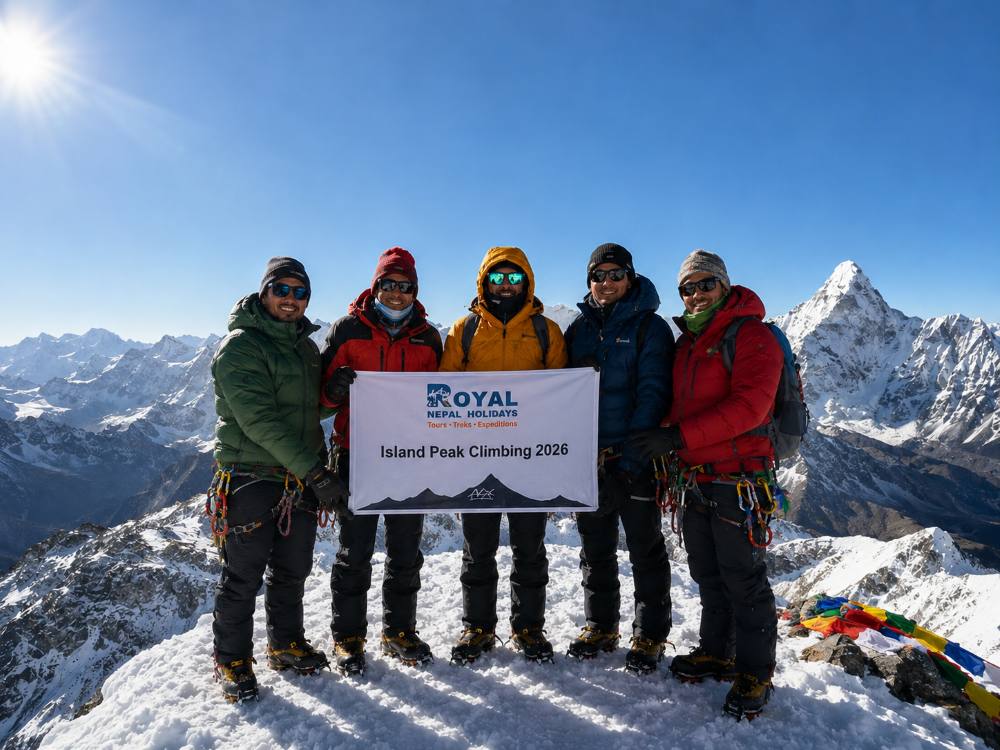




A True Himalayan Climbing Adventure
Island Peak Was Exactly The Kind Of Adventure I Had Hoped For When I Started Planning My Trip To Nepal. The Journey From The Busy Streets Of Kathmandu Into The Khumbu Was Incredible, And Every Day Seemed To Bring A Completely Different Landscape. By The Time We Reached Island Peak Base Camp, I Was Excited But Also A Little Nervous About What Was Ahead.
Tashi Gyalzen Sherpa Was Excellent Throughout The Climbing Section. He Explained The Use Of The Climbing Equipment Clearly And Made Sure We Understood How To Move Safely On The Ropes And Glacier Sections. Summit Day Was Tough, Especially With The Cold And Altitude, But His Calm Approach Helped Me Stay Focused. Reaching 6,189m After Such A Demanding Morning Was An Unforgettable Moment.
Sushil Also Made The Organization Of The Trip Very Smooth From The Beginning. The Whole Experience Felt Professionally Managed While Still Retaining The Feeling Of A Genuine Himalayan Adventure. I Would Definitely Recommend Royal Nepal Holidays To Anyone Looking For A Serious But Well-supported First Himalayan Climbing Experience.
Excellent Organization From Kathmandu To The Summit
What Impressed Me Most About Our Island Peak Expedition Was The Organization. Before Arriving In Nepal, Sushil Tiwari Was Clear About The Itinerary, Preparation And Arrangements, Which Gave Me Confidence Before Starting Such A Demanding Trip. From Our Arrival In Kathmandu To The Trekking Days, Accommodation And Arrangements For The Climbing Section, Everything Was Handled Efficiently.
I Particularly Appreciated The Acclimatization Schedule. The Days Around Namche Bazaar And Dingboche Gave Us Time To Adjust To The Increasing Altitude Instead Of Rushing Toward The Mountain. Phurbu Sherpa Was Also Very Attentive To How Everyone Was Feeling. He Explained The Climbing Equipment Patiently And Never Encouraged Us To Push Beyond What Was Sensible.
The Summit Day Was Physically Demanding, But I Felt Well Prepared For It. The Combination Of Professional Organization, Local Knowledge And Careful Mountain Guidance Made A Huge Difference. For Me, Royal Nepal Holidays Provided Exactly The Kind Of Structure And Support I Wanted For A Technical Himalayan Climb.
The Summit Moment I Will Never Forget
Standing On Island Peak At 6,189m Was One Of The Most Emotional Moments Of My Life. I Had Dreamed About Reaching A Himalayan Summit For Years, But Nothing Could Really Prepare Me For How It Would Feel When The Dream Became Real.
The Days Before The Summit Were A Mixture Of Excitement And Uncertainty. At Base Camp I Remember Looking Up At The Mountain And Wondering Whether I Was Really Ready. The Summit Morning Was Cold, Dark And Exhausting. Every Step Seemed To Require Concentration, But Pasang Sherpa Was Incredibly Patient And Encouraging. He Never Made The Experience Feel Rushed And Kept Reminding Us To Focus On One Section At A Time.
Sushil Tiwari Was Also Wonderful During The Trip And Regularly Made Sure Everything Was Going Smoothly. I Will Always Remember The Sunrise, The Prayer Flags And The Enormous Mountains Surrounding Us When We Finally Reached The Summit. Island Peak Gave Me Much More Than A Photograph At The Top—it Gave Me A Memory That I Know I Will Carry For The Rest Of My Life.
Challenging, Well Managed And Absolutely Worth It
I Normally Prefer Arranging Adventure Trips Independently, So I Wasn't Sure How Much I Would Actually Need A Trekking Company For Island Peak. In The End, Having A Good Local Team Made The Whole Experience Considerably Easier.
Sushil Tiwari Was Straightforward And Responsive While We Were Planning The Trip, And There Was No Pressure To Choose Unnecessary Extras. Once We Were In The Mountains, Tashi Gyalzen Sherpa Was The Person Who Really Stood Out. He Was Relaxed And Approachable But Took The Technical Sections And Safety Very Seriously.
The Trip Was Definitely Challenging. There Were Long Walking Days, Cold Mornings And The Altitude Was Something You Couldn't Ignore. We Also Had To Adjust Part Of The Schedule Because Of Mountain Conditions, But The Team Handled It Without Making The Situation Stressful. Summit Day Was Exhausting, But Reaching The Top Made Every Difficult Section Worthwhile.
If You're Looking For A Well-organized Island Peak Expedition Without Losing The Adventurous Side Of The Experience, I'd Happily Recommend Royal Nepal Holidays.
More Than Just A Mountain Climb
Before Coming To Nepal, I Thought Of Island Peak Mainly As A Climbing Objective. By The End Of The Trip, I Realized That The Mountain Was Only One Part Of The Experience.
The Journey Through The Khumbu Was Unforgettable. Walking Through Sherpa Villages, Seeing Buddhist Prayer Flags Moving In The Wind, Crossing Suspension Bridges And Visiting Monasteries Gave The Trek A Depth I Hadn't Expected. As We Climbed Higher, The Landscape Changed Dramatically, Eventually Becoming A World Of Glaciers, Snow And Enormous Himalayan Peaks.
Phurbu Sherpa Added A Lot To The Experience. He Was Not Only Careful And Professional On The Mountain But Also Happy To Explain Aspects Of Local Life And The Surrounding Landscape. The High-altitude Sections Were Physically Demanding, And The Acclimatization Days Proved Extremely Valuable.
Sushil Tiwari And The Royal Nepal Holidays Team Kept The Overall Trip Well Organized From Kathmandu Onward. Reaching The 6,189m Summit Was An Incredible Achievement, But What I Remember Most Is The Combination Of The People, Culture And Mountains. Island Peak Gave Me A Completely Different Appreciation For Nepal, And I Would Love To Return One Day.