Trip Durations
4-5 Hours

Quick Contact
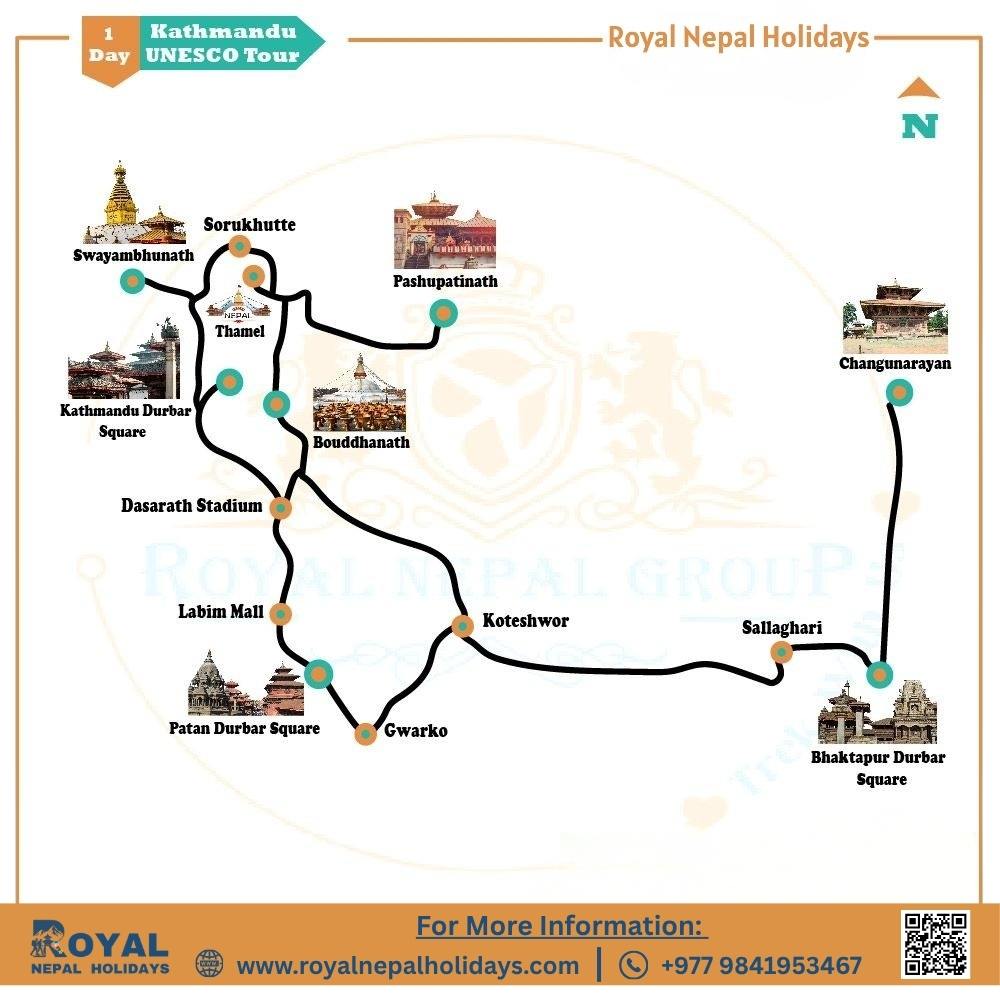
4.9  | 4-5 Hours | Kathmandu Hotel - Pashupatinath, Boudhanath, Swayambhunath, Kathmandu Durbar Square - Kathmandu Hotel
Kathmandu is a city unlike any other on earth. Nestled in a valley surrounded by terraced hills and framed by the distant snow-capped peaks of the Himalayas, Nepal's capital is a place where ancient civilisation and living tradition exist side by side in extraordinary harmony. For centuries, travellers, pilgrims, scholars, and adventurers have made their way to this remarkable city — and every single one of them has left transformed by what they found here.
The story of Kathmandu stretches back more than two thousand years. Long before it became the capital of modern Nepal, the valley was a thriving hub of art, commerce, and religion, positioned at the crossroads of ancient trade routes connecting the Indian subcontinent with Tibet and China. The Newar civilisation that grew here produced a culture of staggering sophistication, expressed in its architecture, sculpture, metalwork, painting, music, and philosophy. Nowhere is this more visible than in the city's temples, palaces, and sacred squares — many of which have been recognised by UNESCO as World Heritage Sites of outstanding universal value.
A Kathmandu City Tour is the most complete and rewarding way to experience everything this remarkable city has to offer. In a single full day, you can stand at the edge of the Bagmati River and witness Hindu rituals that have taken place on the same spot for millennia. You can climb the steps of an ancient Buddhist stupa and look out over a valley that has been sacred ground since before recorded history. You can walk through a royal palace courtyard and catch a glimpse of a young girl worshipped as a living goddess. You can spin prayer wheels with Tibetan pilgrims, share a meal in a centuries-old Newari neighbourhood, and watch the city go about its daily life in ways that have barely changed across generations.
This is the essence of a Kathmandu Sightseeing Tour — not a passive observation of historical monuments, but an active, immersive encounter with a living, breathing, deeply spiritual culture. Every street corner tells a story. Every temple bell carries centuries of devotion. Every courtyard is a stage on which the drama of Nepali life plays out every single day.
Royal Nepal Holidays has been crafting exceptional travel experiences in Nepal for years, and our Kathmandu Cultural Tour is among our most celebrated offerings. We believe that a great tour is not just about visiting the right places — it is about understanding them deeply, experiencing them authentically, and carrying their meaning with you long after you return home. Our licensed local guides bring the Kathmandu Heritage Tour to life with knowledge, passion, and personal insight that no guidebook can replicate.
Whether you are arriving in Nepal for the first time or returning to deepen your connection with this extraordinary country, a guided Kathmandu City Tour with Royal Nepal Holidays is an experience you will treasure for a lifetime.
Our Kathmandu Day Tour is designed to be the definitive introduction to the cultural and spiritual landscape of Nepal's capital. It is a full-day experience, typically running between six and eight hours depending on your pace and interests, that takes you to the city's most significant historical and religious landmarks with maximum comfort and minimum stress.
| Detail | Information |
|---|---|
| Tour Name | Kathmandu City Tour |
| Duration | 6 to 8 Hours (Full Day) |
| Tour Type | Private / Guided |
| Starting Point | Hotel Pickup – Kathmandu |
| Ending Point | Hotel Drop-off – Kathmandu |
| UNESCO Sites Covered | 4 (Pashupatinath, Boudhanath, Swayambhunath, Kathmandu Durbar Square) |
| Transportation | Private Air-Conditioned Vehicle |
| Guide | Professional Licensed English-Speaking Guide |
| Difficulty | Easy |
| Best Time | Year-Round (Best: March–May and September–November) |
| Departure Time | Flexible (Typically 8:00 AM – 9:00 AM) |
| Minimum Age | No Restriction |
| Group Size | Private or Small Group |
The tour operates as a Kathmandu Private Tour, which means that your vehicle, your guide, and your itinerary are entirely dedicated to you and your group. There are no shared buses, no waiting for other travellers, and no rigid timetables that rush you past a site before you are ready to leave. You set the pace. You decide how long to spend at each stop. You ask the questions that interest you and follow the threads that capture your imagination.
Your Kathmandu Guided Tour begins with a hotel pick-up at a time that suits you, usually in the morning between 8:00 and 9:00 AM. Your guide will meet you at your hotel, brief you on the day's itinerary, and answer any questions before you set off in your private vehicle. Transportation throughout the day is provided in a comfortable, air-conditioned private car or minivan depending on the size of your group.
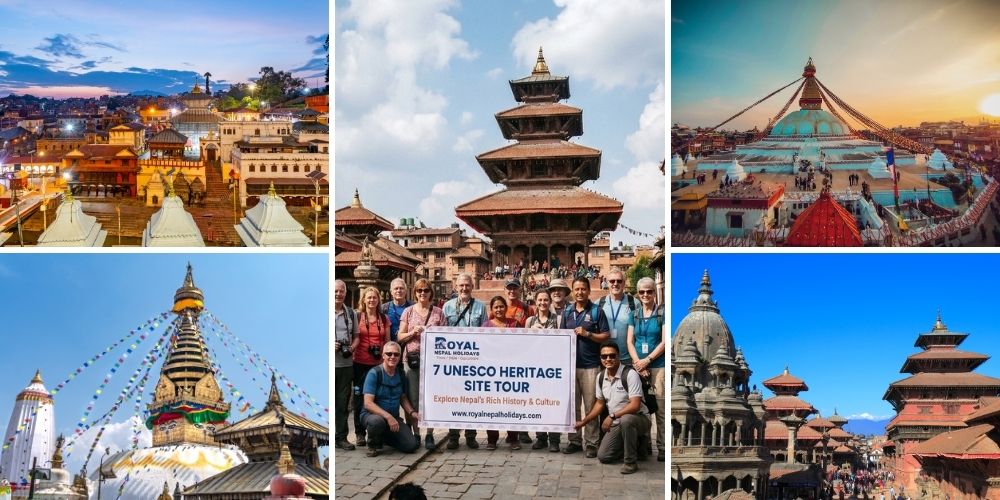
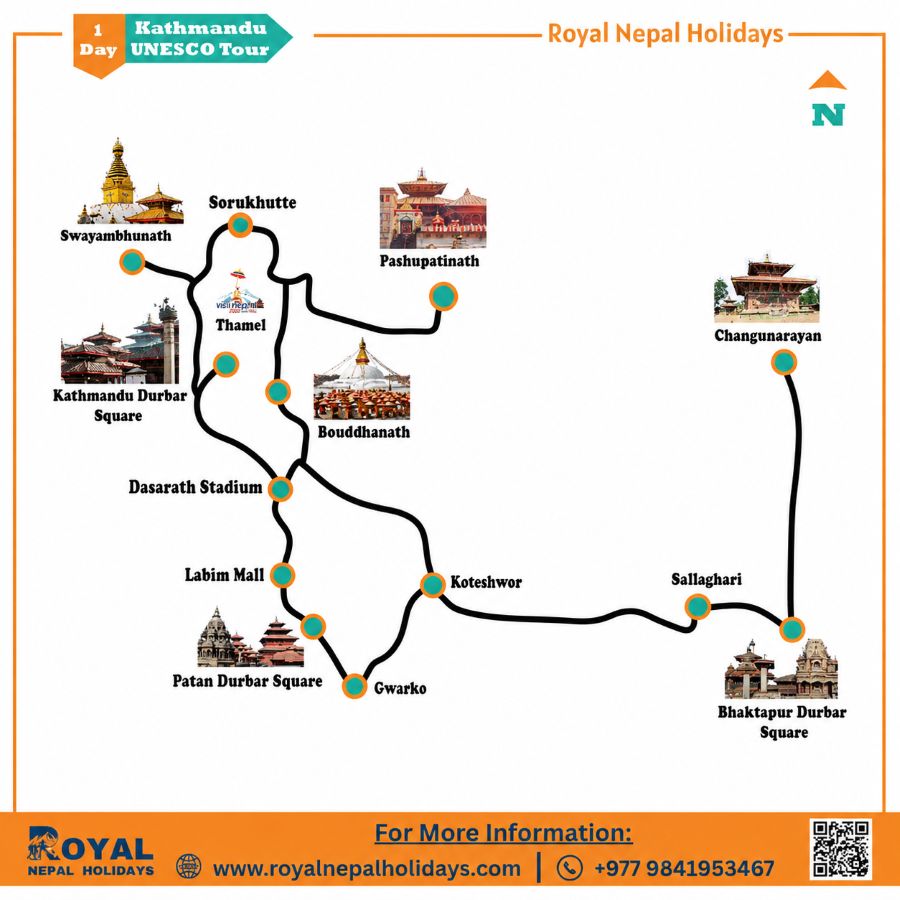
The Kathmandu Tour Package covers four UNESCO World Heritage Sites — Pashupatinath Temple, Boudhanath Stupa, Swayambhunath Stupa, and Kathmandu Durbar Square — along with other culturally significant locations chosen to give you the broadest and most meaningful experience of the city in a single day. The itinerary is flexible and can be adjusted to include additional sites such as Patan Durbar Square, Bhaktapur, or Nagarkot if you wish to extend your time or explore different aspects of the valley.
A single day in Kathmandu with Royal Nepal Holidays gives you access to an extraordinary range of experiences. Here is a summary of what you can expect on your tour.
You will visit four UNESCO World Heritage Sites, each of which represents a different facet of Kathmandu's rich religious and architectural heritage. You will explore sacred Hindu and Buddhist monuments that have been active centres of worship for centuries and continue to draw millions of pilgrims every year. You will learn about Nepalese history and culture from a licensed local expert who can trace the stories behind every statue, every temple, and every carved doorway you encounter.
You will witness centuries-old architecture in the form of intricately carved wooden windows and struts, gilded spires, stone courtyards, and pagoda-roofed temples that represent the pinnacle of Newari craftsmanship. You will experience local traditions and daily rituals firsthand — the morning puja at the temple ghats, the circumambulation of the great stupas, the offerings of marigold garlands and red vermilion powder that colour every sacred site in Kathmandu. You will enjoy panoramic views of the Kathmandu Valley from hilltop vantage points, and on clear days you may catch a glimpse of the Himalayan peaks on the northern horizon. And throughout all of it, you will travel with expert local guides whose knowledge, warmth, and passion for their homeland make every moment richer.
For first-time visitors to Nepal, the sheer density and diversity of Kathmandu's cultural heritage can feel overwhelming. The city has dozens of historically significant sites, and without a clear plan and expert guidance, it is easy to spend hours navigating unfamiliar streets without finding the most rewarding experiences. A guided One Day Kathmandu Tour solves this problem elegantly, packing the very best of the city into a single well-structured day that leaves you feeling deeply satisfied rather than exhausted and bewildered.
The Best Kathmandu City Tour is fundamentally about time efficiency. Kathmandu's major heritage sites are spread across different neighbourhoods, and travelling between them without private transport can consume a significant portion of your day. With a private vehicle and a guide who knows the city intimately, you move smoothly from site to site, avoiding traffic bottlenecks and arriving at each location at the ideal time of day.
Beyond logistics, the greatest value of a guided cultural tour lies in depth of understanding. The monuments of Kathmandu are not self-explanatory. Without context, a carved stone figure is just a carved stone figure. With the right guide beside you, it becomes a window into a living mythology, a political history, a set of philosophical ideas about the nature of the cosmos and the human soul. The stories your guide tells — of the kings who built these places, the gods they honoured, the battles and dramas and miracles the legends record — transform your experience from sightseeing into genuine cultural immersion.
A Kathmandu City Tour is also ideal for travellers with limited time. Many visitors to Nepal arrive in Kathmandu for just a day or two before heading into the mountains, or they stop over on the way to or from another destination. A full-day city tour is the most efficient way to make those hours count, ensuring that you see the essential highlights of one of Asia's great heritage cities without missing anything important.
For families with children, the tour offers a combination of visual spectacle, living tradition, and interactive experience that holds the attention of younger travellers far more effectively than a conventional museum visit. The monkeys at Swayambhunath, the sadhus at Pashupatinath, the enormous dome of Boudhanath, the living goddess Kumari — these are experiences that children remember for years.
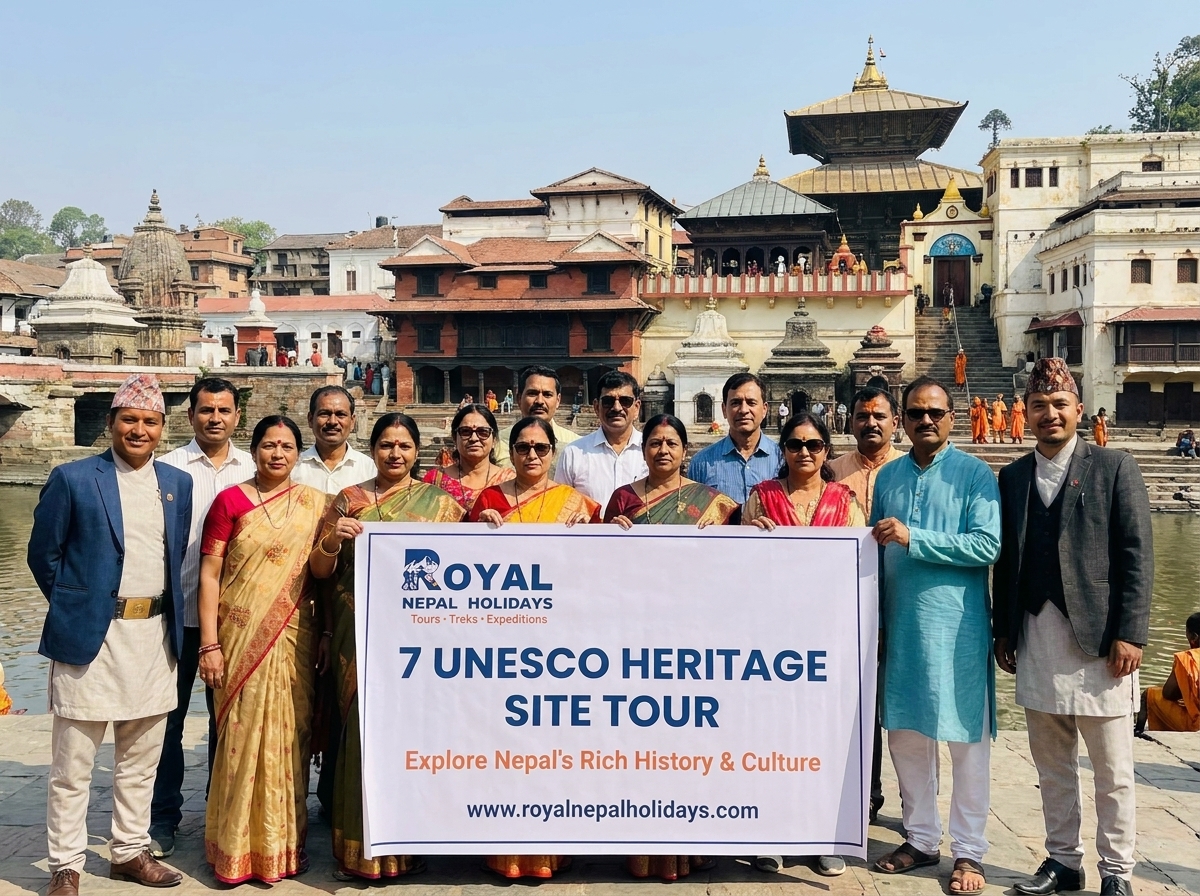
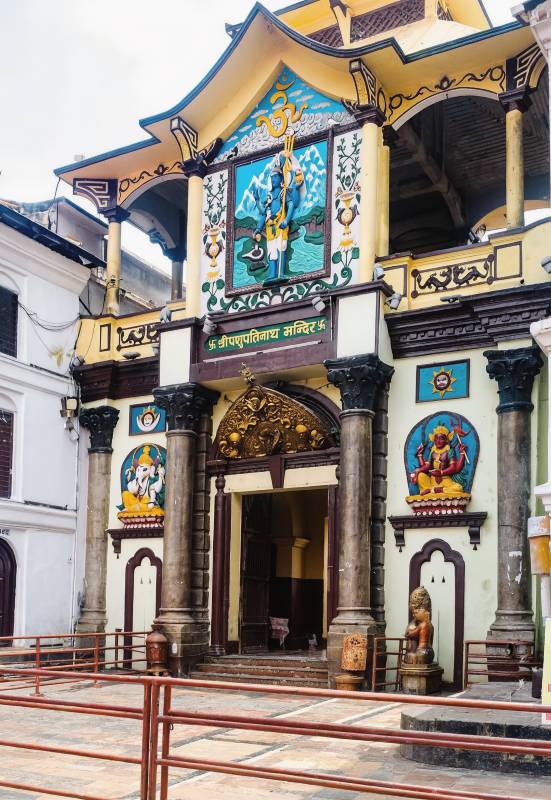
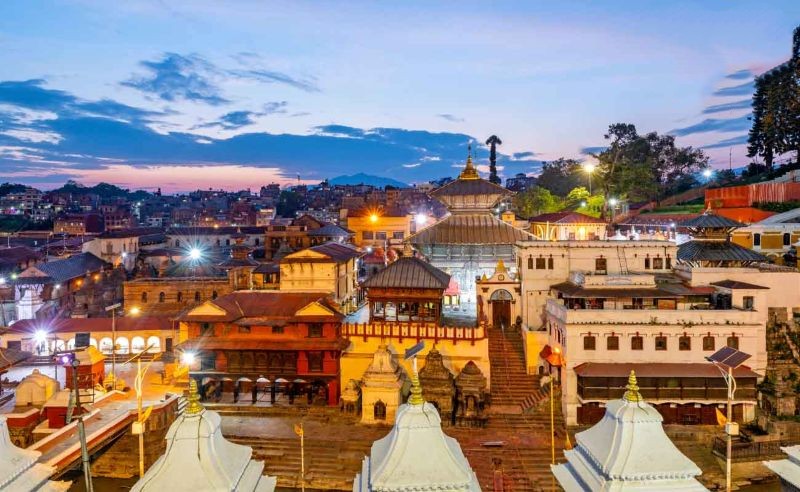
No visit to Kathmandu is complete without time spent at Pashupatinath Temple, one of the most sacred Hindu sites in the entire world and the holiest temple in Nepal. Dedicated to Lord Shiva in his manifestation as Pashupati — the Lord of All Living Creatures — this ancient complex sits on the banks of the Bagmati River on the eastern edge of the city and has been drawing pilgrims, scholars, and seekers for well over a thousand years. In 1979, it was inscribed as a UNESCO World Heritage Site, a recognition of its exceptional universal value as a place of religious, architectural, and cultural significance.
The origins of Pashupatinath are lost in the mists of legend. According to one of the most beloved myths, Lord Shiva and his consort Parvati came to the forest on the banks of the Bagmati in the form of deer and rested there for a time. When the gods came to reclaim Shiva and bring him back to his heavenly abode, he resisted, and in the struggle his horn broke off and became the sacred lingam — the aniconic symbol of Shiva's divine power — that is now enshrined in the innermost sanctum of the main temple. Historical records confirm a major temple on this site as early as the fifth century CE, and inscriptions suggest religious activity here going back even further.
The main temple, a two-tiered pagoda with a gilded roof that glints magnificently in the morning sun, sits at the centre of a sprawling complex of shrines, platforms, and sacred spaces that extends along both banks of the Bagmati. The inner sanctum of the main temple is accessible only to Hindus, but the compound and the outer areas are open to all visitors, and there is an enormous amount to experience and observe even without entering the most sacred precinct.
The burning ghats — the cremation platforms on the western bank of the Bagmati — are among the most thought-provoking and spiritually charged places in all of Nepal. Hindus believe that to be cremated at Pashupatinath and have one's ashes scattered into the Bagmati — which flows eventually into the sacred Ganges — is to achieve moksha, liberation from the cycle of death and rebirth. The ghats are in use throughout the day, and witnessing a cremation here, conducted with dignity and ceremony according to ancient rites, is a profound encounter with the Hindu understanding of life, death, and the journey of the soul.
On the eastern bank of the river, a long row of stone lingam shrines stretches along the hillside, each one tended by a caretaker and visited by a constant stream of worshippers. Above them, in small recesses carved into the hillside, groups of sadhus — Hindu holy men who have renounced the material world in pursuit of spiritual liberation — sit in meditation or conversation, their bodies smeared with ash, their long matted hair coiled atop their heads, their eyes reflecting a life devoted entirely to the divine. Many of these sadhus are extraordinarily approachable and are accustomed to the presence of respectful visitors. With your guide as an intermediary, a conversation with a sadhu can be one of the most memorable encounters of your entire trip.
Every morning and evening, the Aarati ceremony fills the temple complex with the golden light of oil lamps, the deep resonance of temple bells, the scent of incense and marigolds, and the voices of priests chanting ancient Sanskrit hymns in praise of Lord Shiva. If your timing allows, attending the Aarati is an experience of rare beauty and power — a moment when the boundary between the everyday world and the sacred seems to dissolve entirely.
Your guide will walk you through the symbolism of every shrine and statue in the outer complex, explain the significance of the different forms in which Shiva is worshipped here, and give you the historical and mythological context that transforms what you see from a collection of old stones into a living, breathing expression of one of humanity's oldest and most sophisticated religious traditions.
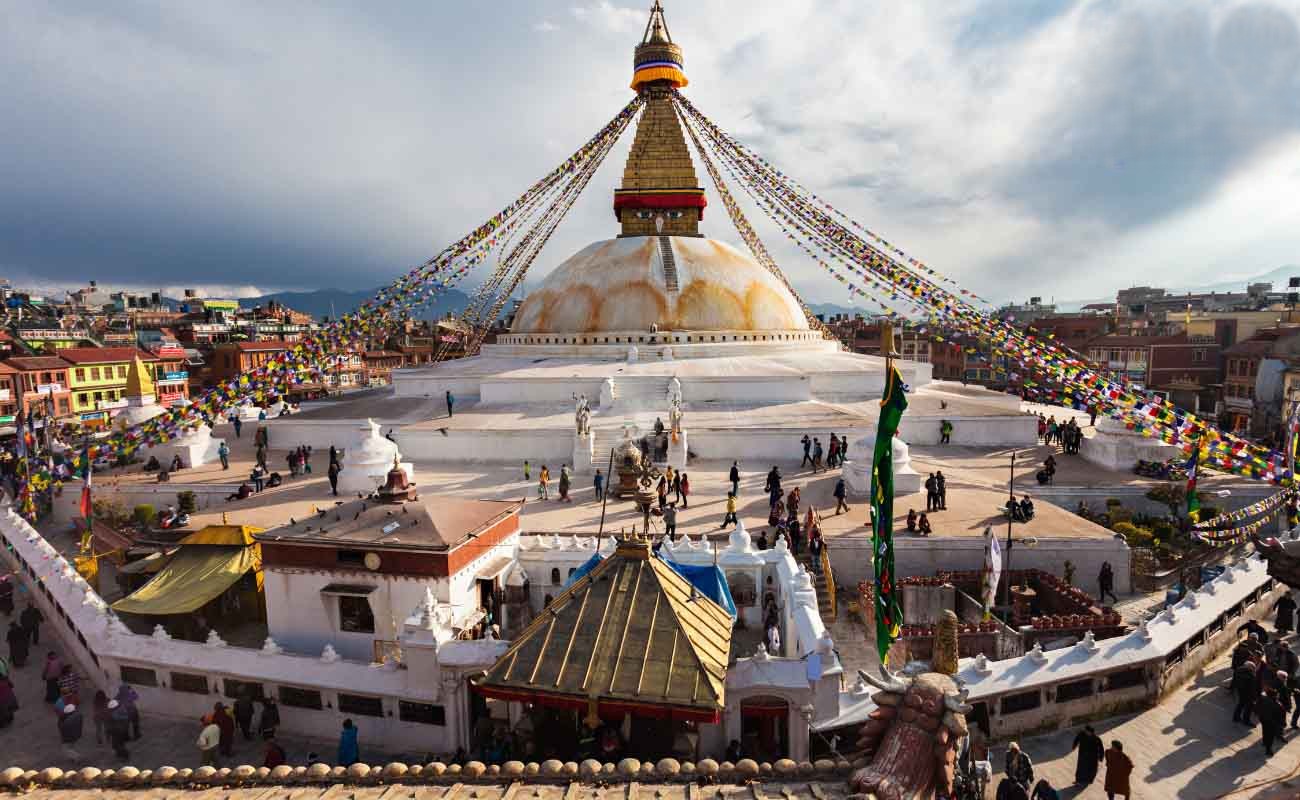
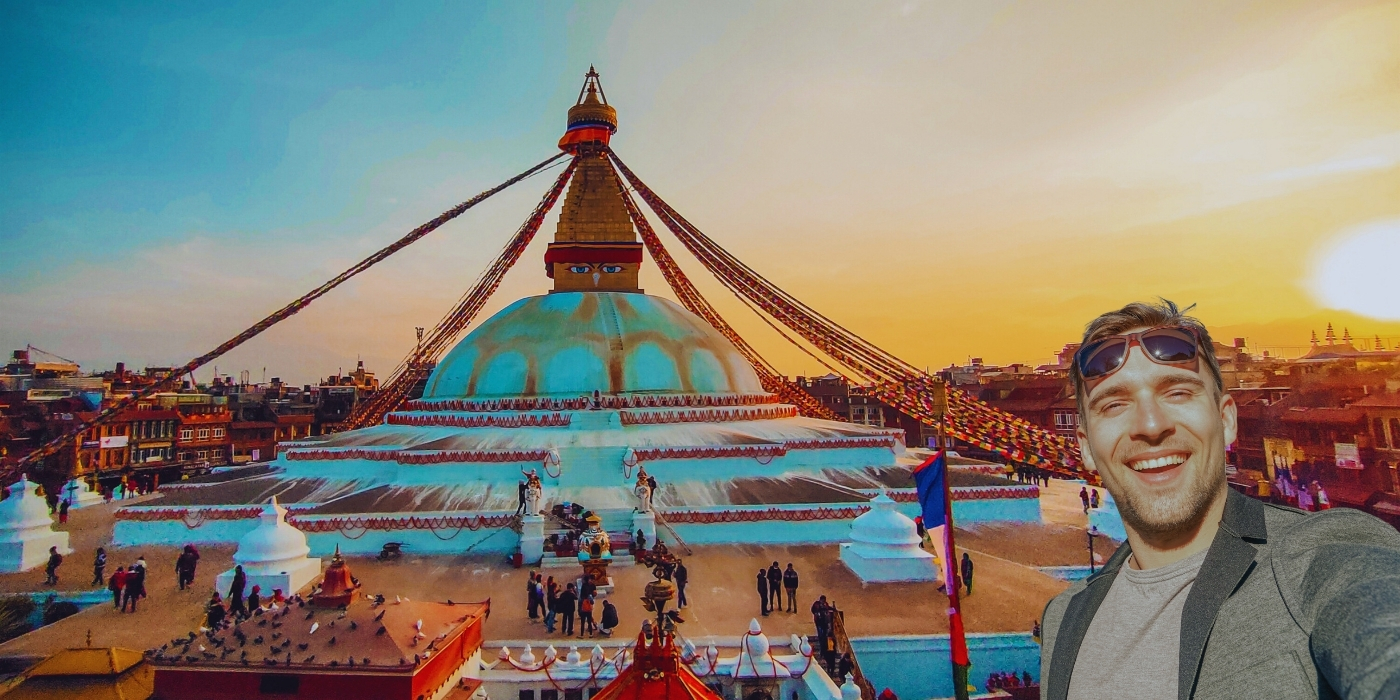
From the sacred world of Shiva and the Hindu tradition, your tour moves to one of the greatest monuments of Tibetan Buddhism anywhere in the world. Boudhanath Stupa — known in Tibetan as Jyarung Khashor, and in Nepali as Bauddha — is a structure of such overwhelming scale and beauty that it stops visitors in their tracks even before they have begun to understand its meaning. Its enormous white dome, rising from a series of tiered platforms and topped with a gilded spire, is one of the most recognisable images in all of Asia. The all-seeing eyes of the Buddha painted on each face of the tower gaze out with serene omniscience in the four cardinal directions, watching over the valley and all who live and travel within it.
Boudhanath's origins, like those of so many of Kathmandu's great monuments, are wrapped in layers of legend. One legend tells of a poor woman who asked the king for land on which to build a stupa. The king granted her as much land as could be covered by a single buffalo hide. The woman, showing great ingenuity, cut the hide into thin strips and used them to encircle a vast area of ground — the area on which the stupa now stands. Another legend connects the stupa to a great cosmic bird, and yet another links it to the burial site of an ancient sage. Whatever its true origins, the stupa is first mentioned in historical records from the fourteenth century, though it is almost certainly much older.
What is certain is that Boudhanath has been one of the most important pilgrimage sites in the Buddhist world for centuries, and its significance was immeasurably deepened after 1959, when the Chinese occupation of Tibet sent waves of Tibetan refugees into Nepal. Many of these refugees settled in the neighbourhood around Boudhanath, and over the decades they have created one of the most vibrant Tibetan Buddhist communities outside of Tibet itself. Today, the neighbourhood is ringed with more than fifty Tibetan Buddhist monasteries — gompas — belonging to all the major schools of Tibetan Buddhism, and the community that has grown up around the stupa is one of the living wonders of Kathmandu.
Walking the kora — the ritual circumambulation of the stupa — is one of the essential experiences of a visit to Boudhanath. The path encircles the great dome at the level of the base, and along it you will find a continuous row of prayer wheels, each one inscribed with the mantra Om Mane Padme Hum. Spinning each wheel as you pass sends the mantra spiralling out into the universe, accumulating merit for the spinner and blessings for all sentient beings. On any given morning, the kora path is populated with a continuous stream of devotees — elderly Tibetan women in traditional striped aprons and heavy jewellery, monks in saffron and maroon robes, younger Tibetans in modern dress, Nepali Buddhists, and visitors from around the world — all moving in the same clockwise direction, all participants in an act of devotion that has been performed here for generations beyond counting.
The symbolism embedded in the architecture of the stupa is extraordinarily rich. The white dome represents the element of earth and the world in its totality. The four-sided tower above it, with the Buddha's eyes on each face, represents the element of fire and the omniscience of the enlightened mind. The thirteen rings of the spire represent the thirteen steps of enlightenment. The gilded parasol at the very top represents sovereignty over the three realms of existence. The 108 images of the Buddha set into niches around the base represent the 108 volumes of the Tibetan Buddhist canon. Every element of the structure is a teaching in itself, and your guide will walk you through each one.
The cafes and restaurants that ring the stupa on the upper floors of the surrounding buildings offer an extraordinary vantage point from which to watch the life of the kora below, and a cup of Tibetan butter tea or a bowl of thukpa noodle soup here is one of the authentic pleasures of a visit to Kathmandu.
Swayambhunath Stupa (Monkey Temple)
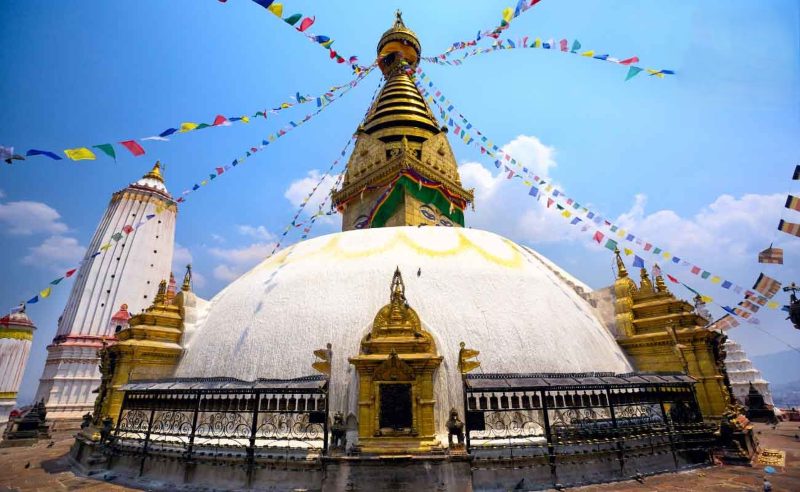
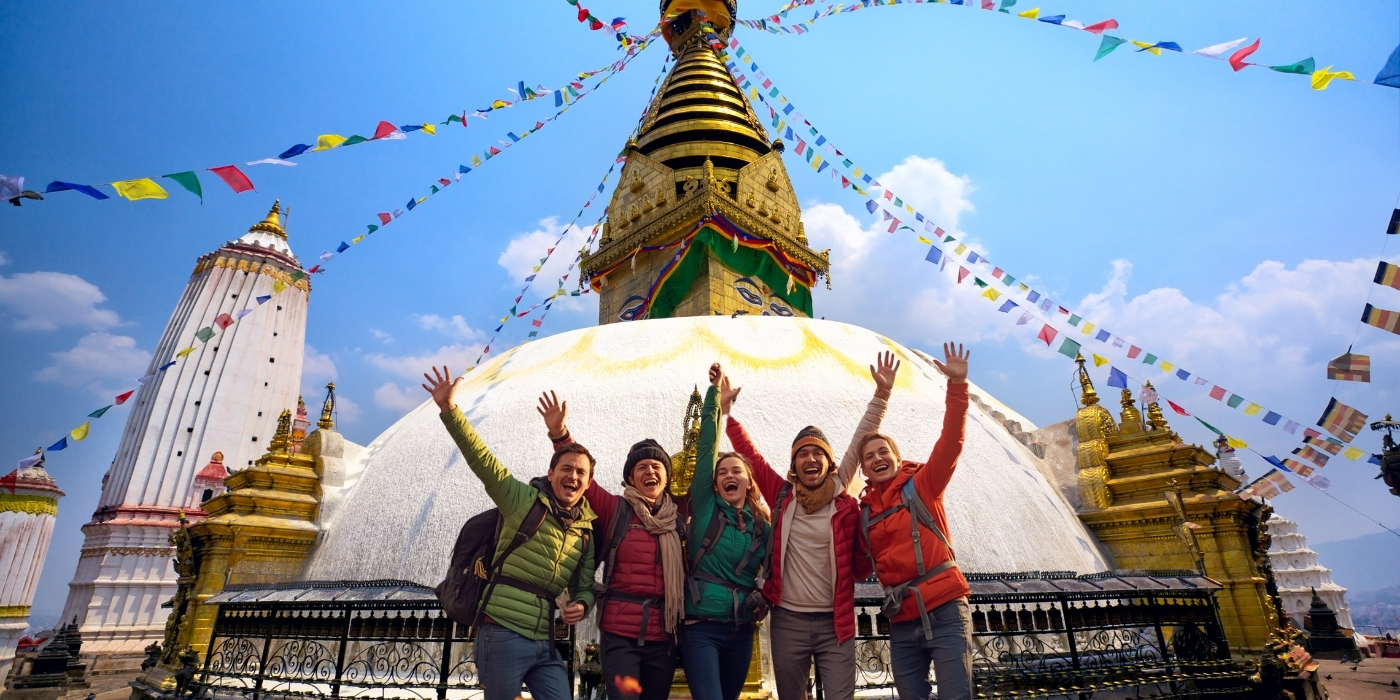
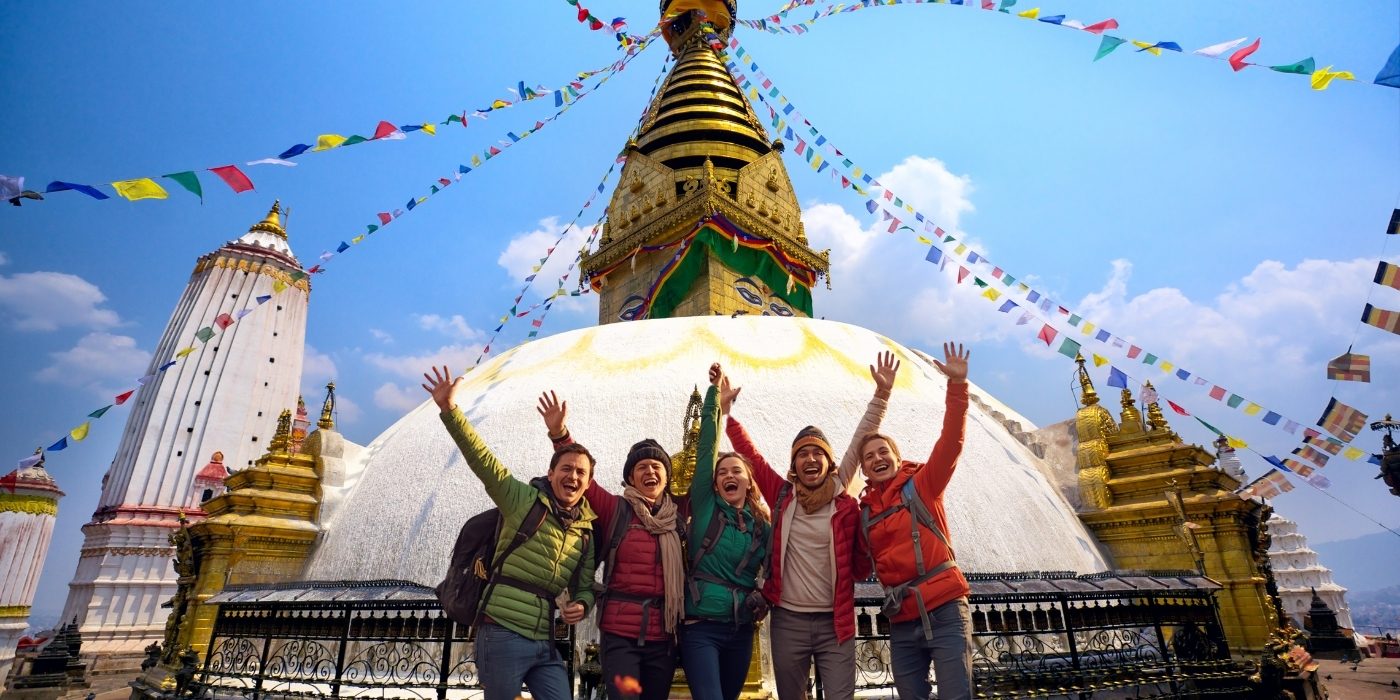
Crowning a wooded hilltop at the western edge of the Kathmandu Valley, Swayambhunath Stupa is perhaps the single most iconic image of Nepal — the great white dome with its gilded spire and watchful painted eyes rising above the trees, prayer flags fluttering in the breeze, the whole valley spread out below. It is one of the oldest religious sites in the valley, one of the holiest in the Buddhist world, and one of the most visually spectacular monuments in all of Asia.
The name Swayambhu means "self-arisen" or "self-created," and the legends of its origin reach back to the very beginning of the world. According to the Buddhist scripture Swayambhu Purana, the Kathmandu Valley was once a vast primordial lake. At the centre of the lake bloomed a miraculous lotus, and from that lotus blazed a self-arisen flame of divine light. The bodhisattva Manjushri, journeying from China, saw the flame shining from afar, came to the valley, and with a great stroke of his sword of wisdom cut open the hills to the south, draining the lake and making the valley habitable for human beings. The flame, now resting on solid ground, became the sacred hill of Swayambhunath, and the stupa was built to enshrine and honour it. Even today, devotees believe that the great diamond-shaped Vajra at the base of the stupa marks the precise spot where that primordial flame descended to earth.
The historical record, which begins somewhat later than the mythological one, confirms that Swayambhunath was already an established and venerated site by the fifth century CE, when a stone inscription records a visit by King Manadeva. The site has been continuously maintained, expanded, and embellished by successive dynasties of Nepali kings, each of whom sought the blessing of the self-arisen deity and left their mark in the form of shrines, statues, and donations.
The approach to the stupa from the eastern side is via a grand stone stairway of 365 steps, flanked by a double row of Buddhas and bodhisattvas in stone, by ancient trees hung with prayer flags, and by the monkeys that have given Swayambhunath its popular nickname. These rhesus macaques are considered sacred descendants of the lice that Manjushri's head produced when he allowed his hair to grow long — a charming if somewhat unusual origin story. They are bold, curious, and numerous, and watching them go about their business on the steps and rooftops of the complex is one of the unexpected delights of a visit here. They are accustomed to people and will sometimes approach quite closely, particularly if they think you might be carrying food.
The stupa at the top commands breathtaking views in every direction — the valley below with its patchwork of brick buildings and green fields, the circling hills, and on a clear day in autumn or spring, the extraordinary sight of the Himalayan range stretching across the northern horizon, Ganesh Himal and Langtang and, if the sky is very clear, the distant white peak of Everest itself.
The complex at the top of the hill is much larger and more diverse than a single stupa. Around the main dome and spire, dozens of smaller shrines and temples crowd together in a rich architectural tapestry that reflects Swayambhunath's remarkable quality of being simultaneously sacred to both Buddhists and Hindus. A Tibetan monastery, a Harati shrine, a great Vajra thunderbolt, statues of Anantapura and Pratapapura — the two white shikara-style towers that flank the main stupa — and dozens of smaller shrines to both Hindu deities and Buddhist figures create an atmosphere of extraordinary religious inclusivity that is characteristic of Kathmandu at its finest.
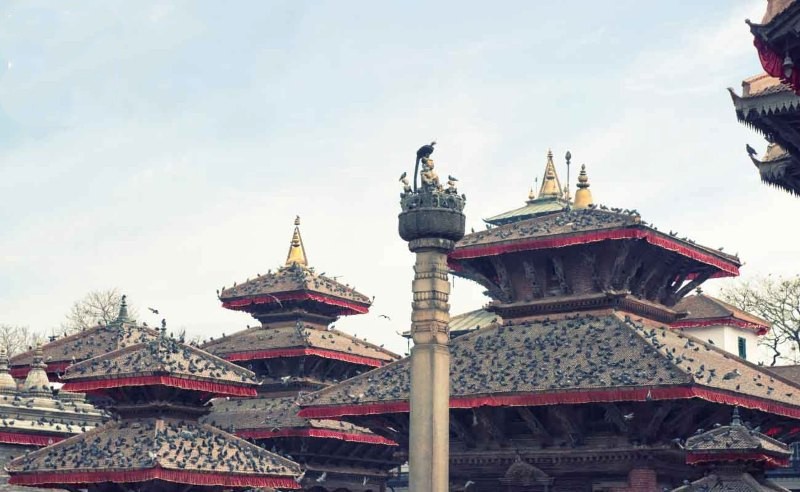
At the heart of the old city, where Kathmandu's historical identity was forged and where its most defining dramas played out across centuries of royal history, lies Kathmandu Durbar Square. This great open plaza, ringed on all sides by temples, palaces, courtyards, and monuments spanning more than five hundred years of Newar art and architecture, is the physical and symbolic centre of the city. It was here that the kings of Kathmandu were crowned and received the homage of their subjects. It was here that the great gods of the Hindu pantheon were worshipped with elaborate ceremony. It is here, still today, that the life of the old city flows most intensely and most visibly.
Kathmandu Durbar Square was inscribed as a UNESCO World Heritage Site in 1979 in recognition of its exceptional cultural and architectural significance. The site encompasses not just the open plaza but the surrounding complex of the Hanuman Dhoka Palace — the old royal palace that served as the seat of the Shah kings until the early twentieth century — as well as dozens of temples, water fountains, courtyards, and public spaces that together form one of the most remarkable urban heritage ensembles in Asia.
The name Hanuman Dhoka means "Gateway of Hanuman," after the great stone statue of the monkey god Hanuman that stands sentinel at the entrance to the palace complex, draped in a red cloth and shaded by a stone parasol. Hanuman, the devoted companion of Lord Rama in the Hindu epic Ramayana, is a beloved protective deity throughout Nepal, and his presence at the palace gate was intended to guard the royal household from evil. The statue dates to 1672 CE and has been the recipient of continuous devotional offerings ever since — so many layers of red paste and oil have been applied over the centuries that the original features of the carving are now almost entirely obscured.
Within the palace complex, a series of courtyards unfolds in sequence, each one reflecting a different aspect of the royal and religious life of the Malla and Shah kings who built and occupied this place. The Nasal Chowk is the largest and most ceremonially significant of these courtyards — it was here that the coronation ceremonies of Nepali kings were held, and the carved throne on its eastern side is one of the most important symbols of royal authority in Nepal. The courtyard is surrounded by galleries, towers, and shrines of great beauty, and the Pancha Mukhi Hanuman — a five-faced tower temple dedicated to Hanuman — rises dramatically from its centre.
The Kumari Ghar, or House of the Living Goddess, stands just off the main plaza and is one of the most culturally unique and emotionally powerful sites in Kathmandu. The Kumari — a young girl of the Newar Shakya caste selected through an elaborate ritual process to serve as the earthly embodiment of the goddess Taleju — lives within this ornately carved three-storey building from the time of her selection, usually around age three or four, until she reaches puberty, at which point she is considered to have returned to being fully human and a new Kumari is selected.
The tradition of the Living Goddess is one of the most remarkable and distinctive aspects of Newari culture, and it is without parallel anywhere else in the world. The Kumari appears at her intricately carved wooden window on certain auspicious days, and catching a glimpse of her face is believed to bring great luck and blessing. She is treated with extraordinary reverence — her feet never touch the ground outside the Kumari Ghar, she is carried whenever she must leave the building, and the ordinary rituals of childhood are largely replaced by a life of ceremonial function. It is a tradition that raises profound questions about childhood, religious authority, and the intersection of the divine and the human, and your guide will help you navigate these questions with sensitivity and depth.
The temples that fill the square represent the full range of Kathmandu's religious and architectural heritage. The Taleju Temple, rising nine storeys above the square, is the tallest and most sacred of them — it houses the tutelary deity of the Malla kings and is open to the general public only once a year, on the occasion of the Indra Jatra festival. The Trailokya Mohan Temple, dedicated to Vishnu, is celebrated for the extraordinary carved struts on its lower roof, which depict erotic scenes that serve a symbolic protective function according to the theological tradition of Tantra. The Kasthamandap — the ancient community pavilion from whose name the city of Kathmandu derives its own — originally served as a public rest house on the ancient trade route between India and Tibet and was built, according to legend, from the wood of a single enormous tree.
The earthquake of April 2015 caused significant damage to several of the structures in Kathmandu Durbar Square, including the Kasthamandap, which collapsed entirely. Reconstruction and restoration work has been ongoing since then, with support from international heritage organisations, and many of the square's most important monuments have been carefully restored. The process of rebuilding has itself become a testament to the resilience and commitment of the Newar community, who have poured enormous energy and resources into recovering their cultural inheritance.
Are you interested on planning custom trip? It only takes 2 minutes.
| Included | Details |
|---|---|
| Professional Guide | Licensed English-speaking local guide for the full tour duration |
| Private Transportation | Air-conditioned private vehicle throughout the day |
| Hotel Pickup | Collection from your hotel in Kathmandu at agreed time |
| Hotel Drop-off | Return to your hotel at the end of the tour |
| Tour Coordination | Full logistics planning and on-day management |
| Drinking Water | Complimentary bottled water during the tour |
| Excluded | Details |
|---|---|
| Monument Entrance Fees | Paid directly at each site in Nepali rupees or USD/EUR |
| Meals and Beverages | Lunch and all food are at your own expense and choice |
| Personal Expenses | Shopping, snacks, and personal purchases |
| Travel Insurance | Must be arranged independently before travel |
| Tips and Gratuities | Entirely discretionary but warmly appreciated |
| Optional Extensions | Additional sites such as Patan, Bhaktapur, or Nagarkot at extra cost |
Response Time 0-2 Hours , Response Rate 100%
The Kathmandu Valley contains seven UNESCO World Heritage Sites — all inscribed together in 1979 under a single nomination recognising the valley's exceptional cultural and architectural significance. Our standard Kathmandu City Tour covers four of the seven. Extended itineraries covering all seven are available on request.
| Heritage Site | Religion | UNESCO Status | Key Highlights |
|---|---|---|---|
| Pashupatinath Temple | Hinduism | World Heritage Site (1979) | Holiest Hindu temple in Nepal, cremation ghats, Bagmati River |
| Boudhanath Stupa | Tibetan Buddhism | World Heritage Site (1979) | Largest stupa in Nepal, Tibetan monasteries, kora path |
| Swayambhunath Stupa | Buddhism and Hinduism | World Heritage Site (1979) | Monkey Temple, panoramic valley views, 365 steps |
| Kathmandu Durbar Square | Hinduism | World Heritage Site (1979) | Royal palace, Kumari Ghar, Hanuman Dhoka, Taleju Temple |
| Patan Durbar Square | Hinduism and Buddhism | World Heritage Site (1979) | Finest Newari architecture, Krishna Temple, Patan Museum |
| Bhaktapur Durbar Square | Hinduism | World Heritage Site (1979) | Medieval city, Nyatapola Temple, traditional pottery |
| Changu Narayan Temple | Hinduism | World Heritage Site (1979) | Oldest temple in the valley, Vishnu carvings, ancient inscriptions |
One of the things that makes Kathmandu genuinely extraordinary among the world's great heritage cities is the way in which its two dominant religious traditions — Hinduism and Buddhism — have coexisted and intertwined for centuries, producing a syncretic culture unique to this valley.
In most parts of the world, the great religious traditions have tended towards exclusivity. In Kathmandu, the boundary between Hinduism and Buddhism has always been porous and fluid. The great stupa of Swayambhunath is venerated by both traditions. Many Newari families practise both simultaneously, observing Hindu and Buddhist festivals with equal devotion. Gods and goddesses move freely between the two pantheons.
This religious harmony is the product of the Newar civilisation, which developed in the Kathmandu Valley over millennia and created a culture sophisticated enough to hold both traditions in creative tension. The Newars — the original inhabitants of the valley — produced art, architecture, food, music, and social organisation that form the foundation on which everything you will see on your Kathmandu Cultural Tour has been built.
Kathmandu's position on the ancient trade routes between India and Tibet also shaped its cultural character profoundly. Merchants, pilgrims, scholars, and artists passed through the valley for centuries, carrying ideas and traditions in both directions. The result was a constant cultural conversation that enriched the valley's art and thought and gave it a cosmopolitan quality still perceptible today.
The city's festivals are perhaps the most vivid expression of its living heritage — Dashain, Tihar, Indra Jatra, Bisket Jatra, Holi, and dozens more. The Kathmandu Heritage Tour gives you the cultural context to understand all of these celebrations, whether you witness them directly or only in the stories your guide shares.
Kathmandu is not a dead city wearing the costume of its past. It is a living city in which the past is genuinely and actively present.
The temples are not museums. They are functioning places of worship where priests perform rituals at dawn and dusk, where worshippers bring offerings of flowers, fruit, and red powder every single day, where the smell of incense is not an atmospheric affectation but a genuine act of devotion.
The architectural traditions that produced the great monuments are still practised by Newari craftspeople who trace their skills in wood carving, stone sculpting, and metalwork back through generations of masters and apprentices. The festivals are not tourist shows — they are community events maintained by families who have observed the same rituals in the same places for centuries.
This quality of living heritage gives Kathmandu an atmosphere that cannot easily be replicated. You feel it in the narrow lanes of the old city where the scent of incense drifts from doorway shrines at every turn. You feel it in the early morning silence around Boudhanath when the first monks begin their circumambulation. You feel it at the burning ghats at Pashupatinath when the smoke rises from the pyres and the priests chant their ancient prayers.
Thousands of years of prayer, pilgrimage, and devotional practice have left their mark on this landscape in ways that are difficult to articulate but easy to feel. That accumulated intention is palpable, and it changes the quality of the experience in ways that go beyond the purely visual or intellectual.
| Heritage Site | Approximate Fee (USD) |
|---|---|
| Pashupatinath Temple | USD 15 per person (foreigners) |
| Boudhanath Stupa | USD 3 per person |
| Swayambhunath Stupa | USD 2 per person |
| Kathmandu Durbar Square | USD 15 per person |
Note: Fees are subject to change. Your guide will provide current figures before each visit. Carrying Nepali rupees is recommended.
| Season | Months | Weather | Suitability | Notes |
|---|---|---|---|---|
| Spring | March to May | Warm and sunny | Excellent | Rhododendrons blooming; Holi and Nepali New Year |
| Autumn | September to November | Clear and pleasant | Best Season | Post-monsoon clarity; Dashain and Tihar festivals |
| Winter | December to February | Cool to cold | Good | Clear skies; quieter sites; warm layers essential |
| Monsoon | June to August | Wet; rain mainly in afternoons | Moderate | Lush green valley; lower prices; thinner crowds |
Spring and autumn offer the finest overall conditions for a Kathmandu City Tour — warm days, clear skies, and the best chance of Himalayan views from the hilltop sites. Autumn is particularly recommended for those who wish to coincide with Nepal's two greatest festivals, Dashain and Tihar, which transform the entire city into a celebration of colour, light, and community.
| What We Offer | What It Means for You |
|---|---|
| Licensed Local Guides | Deep cultural knowledge from genuine experts who share their own heritage |
| Personalized Itineraries | Your pace, your interests, your journey — no rigid group schedules |
| Private Transportation | Comfortable air-conditioned vehicle dedicated entirely to your group |
| Hotel Pickup and Drop-off | Door-to-door convenience with no logistics stress |
| Trusted Reputation | Consistently excellent reviews from international travellers |
| Authentic Cultural Access | Hidden courtyards, neighbourhood shrines, and local insights beyond the surface |
| Responsive Support | Available before and throughout your tour for any questions or adjustments |
| Competitive Pricing | Outstanding value with no compromise on quality or experience |
Our Kathmandu Guided Tour is led by guides who speak English fluently, understand the questions that international visitors typically ask, and are skilled at tailoring the depth and focus of their commentary to the specific interests of each group.
Our Kathmandu Private Tour is specifically designed to be flexible. If you want to spend an extra hour at Pashupatinath watching the evening Aarati ceremony, we will make time. If you want to explore a local market, meet an artisan, or simply slow down and absorb the atmosphere, we will adjust without hesitation. This is your journey, and our job is to make it exactly what you want it to be.
Kathmandu has been welcoming travellers for centuries, and its power to move, inspire, and transform the people who visit it shows no sign of diminishing. The ancient temples still rise above the rooftops. The great stupas still watch over the valley with their serene, all-seeing eyes. The Living Goddess still appears at her carved window on auspicious days. The cremation fires still burn on the ghats of the Bagmati. The prayers of pilgrims still rise with the incense smoke into the clear Himalayan air.
A Kathmandu City Tour with Royal Nepal Holidays gives you the most direct and meaningful possible access to all of this — the UNESCO heritage, the spiritual landmarks, the historical depth, the living culture, and the extraordinary human stories that tie all of it together into one of the most rewarding travel experiences available anywhere in the world.
We take care of everything so that you can focus entirely on the experience itself. Expert guide. Comfortable private transport. Seamless logistics. Flexible itinerary. Personalised attention from start to finish. All you need to bring is curiosity, respect, and an open heart.
Book your Kathmandu City Tour with Royal Nepal Holidays today and discover for yourself why Kathmandu has captivated the hearts of travellers from around the world for generations. Your journey into the cultural heart of Nepal begins here.
Related Tours You May Also Like:
7 UNESCO Heritage Sites Tour | Bhaktapur Day Tour | Nagarkot Sunrise Tour | Nepal Cultural Tours | Everest Mountain Flight
Excellent
Absolutely. A guided city tour is the ideal introduction to Nepal for any first-time visitor. Kathmandu's heritage is rich and multilayered, and having an expert local guide beside you helps you absorb and appreciate everything you see far more deeply than you would on your own. The tour is designed to give you a comprehensive and meaningful overview of the city's most important sites in a single day.
The standard full-day Kathmandu City Tour includes four UNESCO World Heritage Sites: Pashupatinath Temple, Boudhanath Stupa, Swayambhunath Stupa, and Kathmandu Durbar Square. Extended itineraries covering all seven heritage sites in the valley are available on request.
Yes, absolutely. Our Kathmandu Private Tour is specifically designed to be flexible. If you have particular interests, want to spend more time at certain sites, or wish to include additional locations such as Patan Durbar Square, Bhaktapur, or Nagarkot, your guide will work with you to create a personalised itinerary.
Yes. Private air-conditioned transportation is included for the full duration of the tour, including hotel pick-up at the start of the day and hotel drop-off at the end. You will never need to arrange or negotiate your own transport between sites.
The standard Kathmandu City Tour runs between six and eight hours, depending on your pace, the number of sites visited, and how long you choose to spend at each location. Your guide will manage the day to ensure everything fits comfortably within the time available.
Entrance fees to the individual heritage sites are not included. They are collected directly at each site and are paid in cash. Your guide will advise you in advance of the expected fees so that you can carry the right amount.
Both shoulders and knees should be covered when entering Hindu and Buddhist temples. Lightweight, breathable clothing that meets this requirement is ideal. Comfortable closed-toed shoes are strongly recommended. Remove your footwear at the entrance to any temple as indicated.
While it is possible to visit the heritage sites independently, the experience with a knowledgeable local guide is incomparably richer. The monuments of Kathmandu are embedded in layers of mythology, history, and religious tradition that are not self-evident. A great guide transforms what you see from a collection of interesting old structures into a living, coherent, deeply meaningful cultural landscape.
Yes. The Kathmandu City Tour is entirely suitable for families with children of all ages. The combination of sacred monkeys at Swayambhunath, colourful sadhus at Pashupatinath, the enormous dome of Boudhanath, and the atmospheric lanes of Kathmandu Durbar Square provides plenty of visual excitement to engage younger travellers. Your guide will adjust their commentary style to suit all ages in the group.
Royal Nepal Holidays offers a combination of deep local expertise, genuinely personalised service, and authentic cultural connection that is rarely matched in Nepal. Our guides are not merely informative — they are ambassadors for their culture, sharing it with warmth, pride, and genuine enthusiasm. Our logistics are seamless and reliable, and our commitment to our guests does not end when the booking is confirmed — it continues through every step of the experience.
Response Time 0-2 Hours , Response Rate 100%
You may also like
Explore All 7 UNESCO World Heritage Sites Of Kathmandu Valley In One Day. Visit Pashupatinath, Boudhanath, Swayambhunath, Kathmandu Durbar Square, Patan, Bhaktapur And Changu Narayan With Expert Guides From Royal Nepal Holidays. View Details →
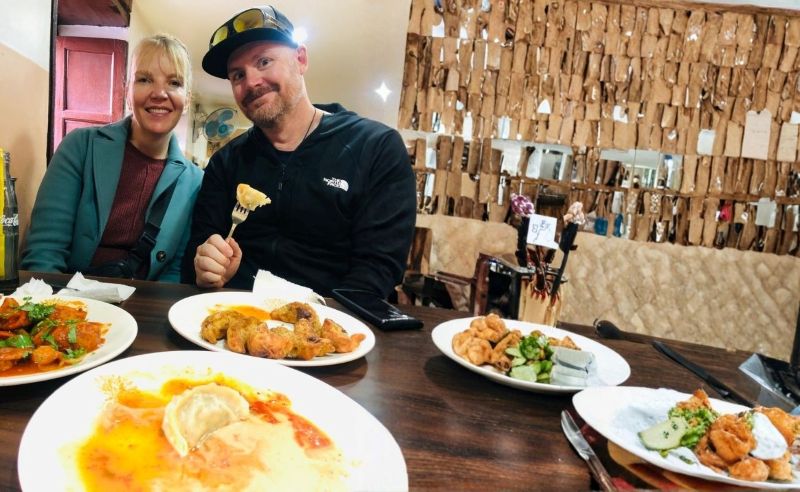
Join The Best Kathmandu Food Tour Through Thamel And Kathmandu Durbar Square. Taste Authentic Nepali And Newari Dishes With A Local Guide. View Details →
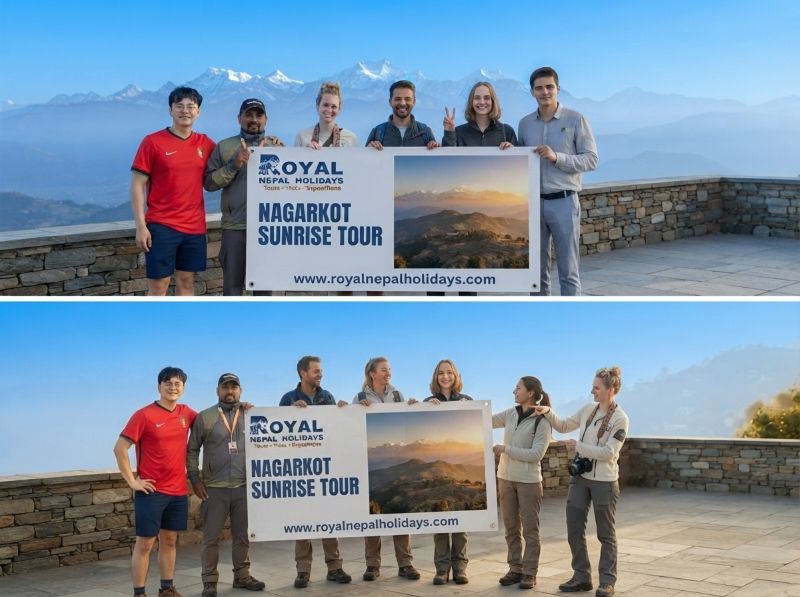
Book The Best Nagarkot Sunrise Tour From Kathmandu With Royal Nepal Holidays. Enjoy Himalayan Panorama Views, Mount Everest Sightings, Private Transport & Expert Guides. Book Your Nagarkot Day Tour Today. View Details →
 1 Hour

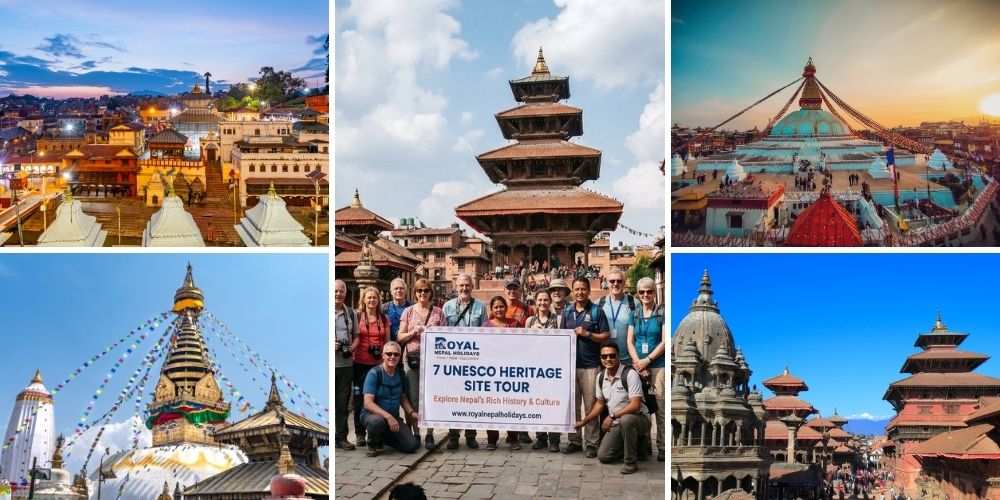
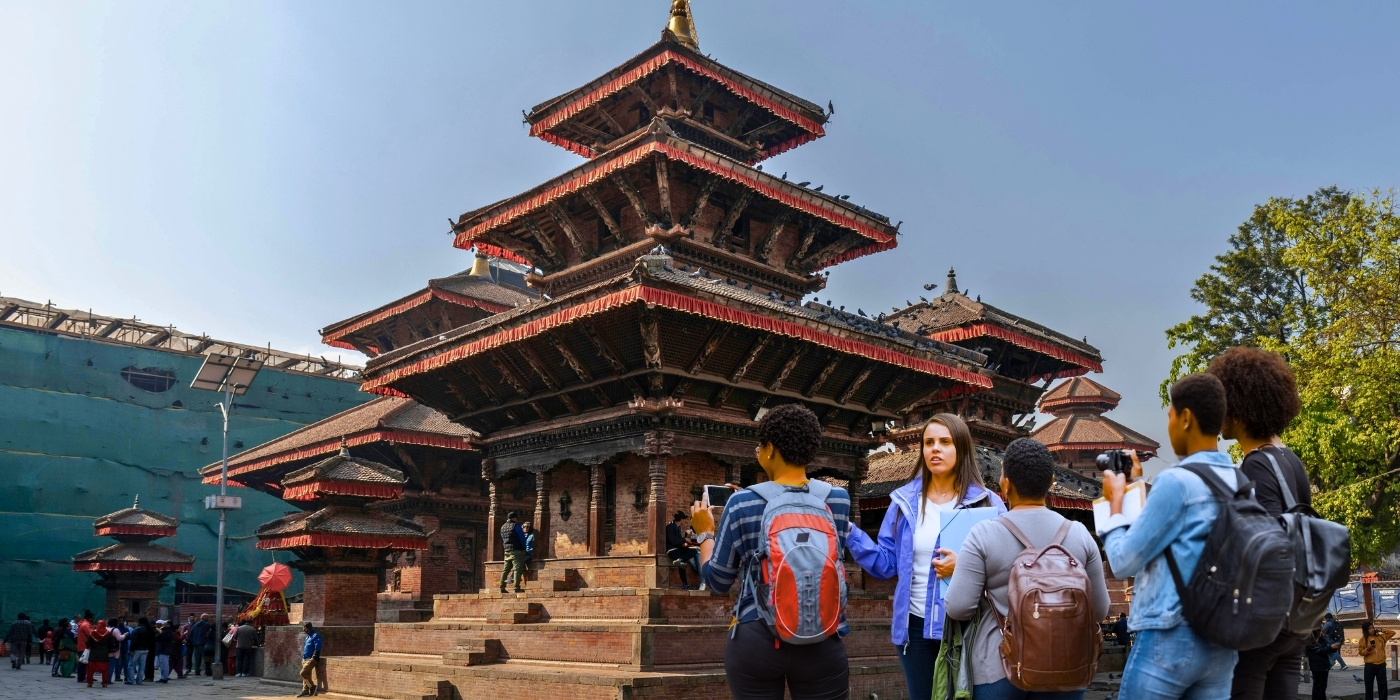




A Fascinating Journey Through Kathmandu's Living Heritage
I Booked The 4 UNESCO Kathmandu City Tour With Royal Nepal Holidays After Reading Positive Reviews, And It Turned Out To Be One Of The Highlights Of My Visit To Nepal. The Booking Process Was Simple, And Mr. Sushil Answered All My Questions Promptly Before The Trip. Our Guide, Rameshwor, Had An Impressive Knowledge Of Nepalese History And Explained The Stories Behind Every Monument In An Engaging Way.
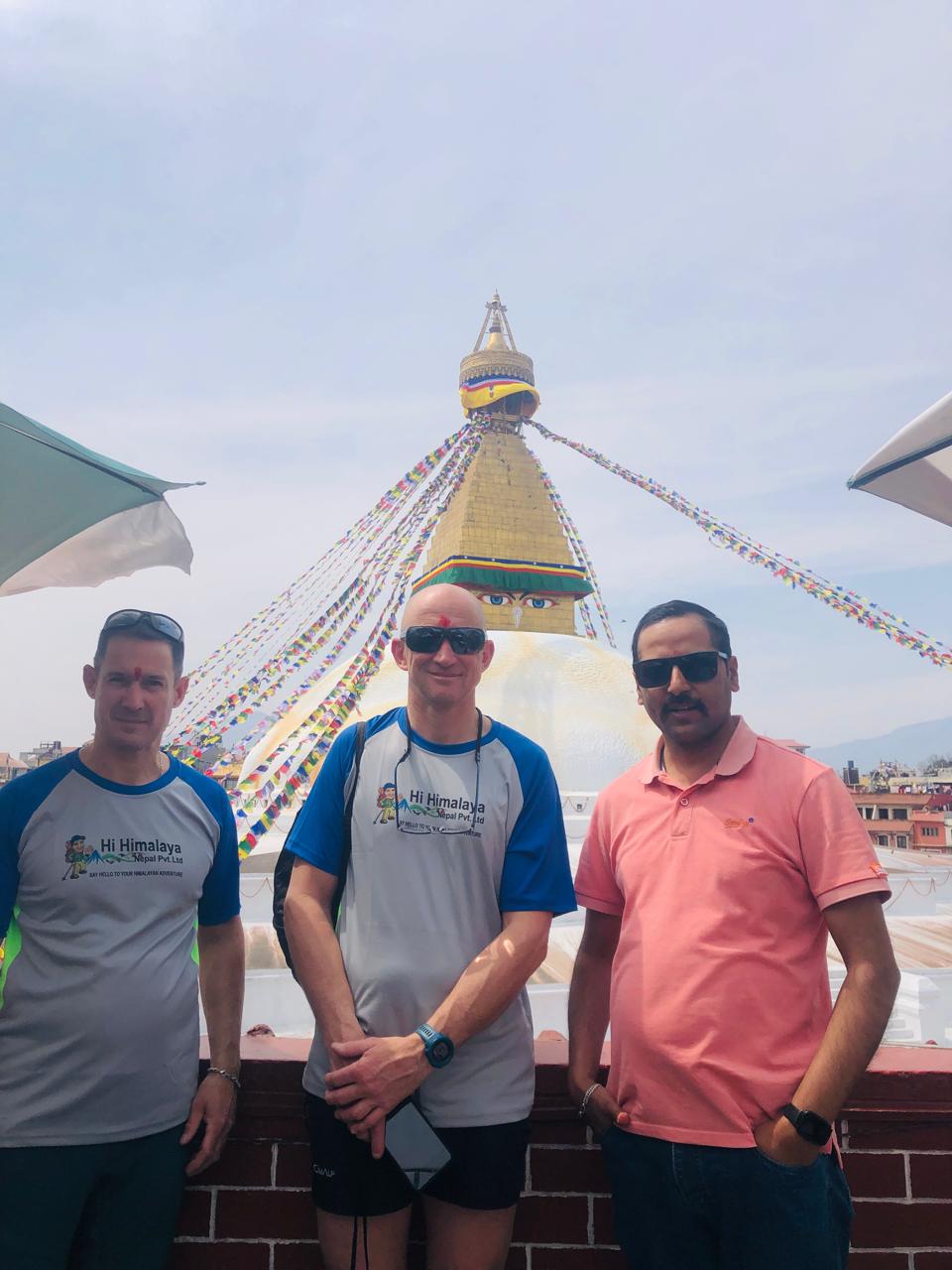
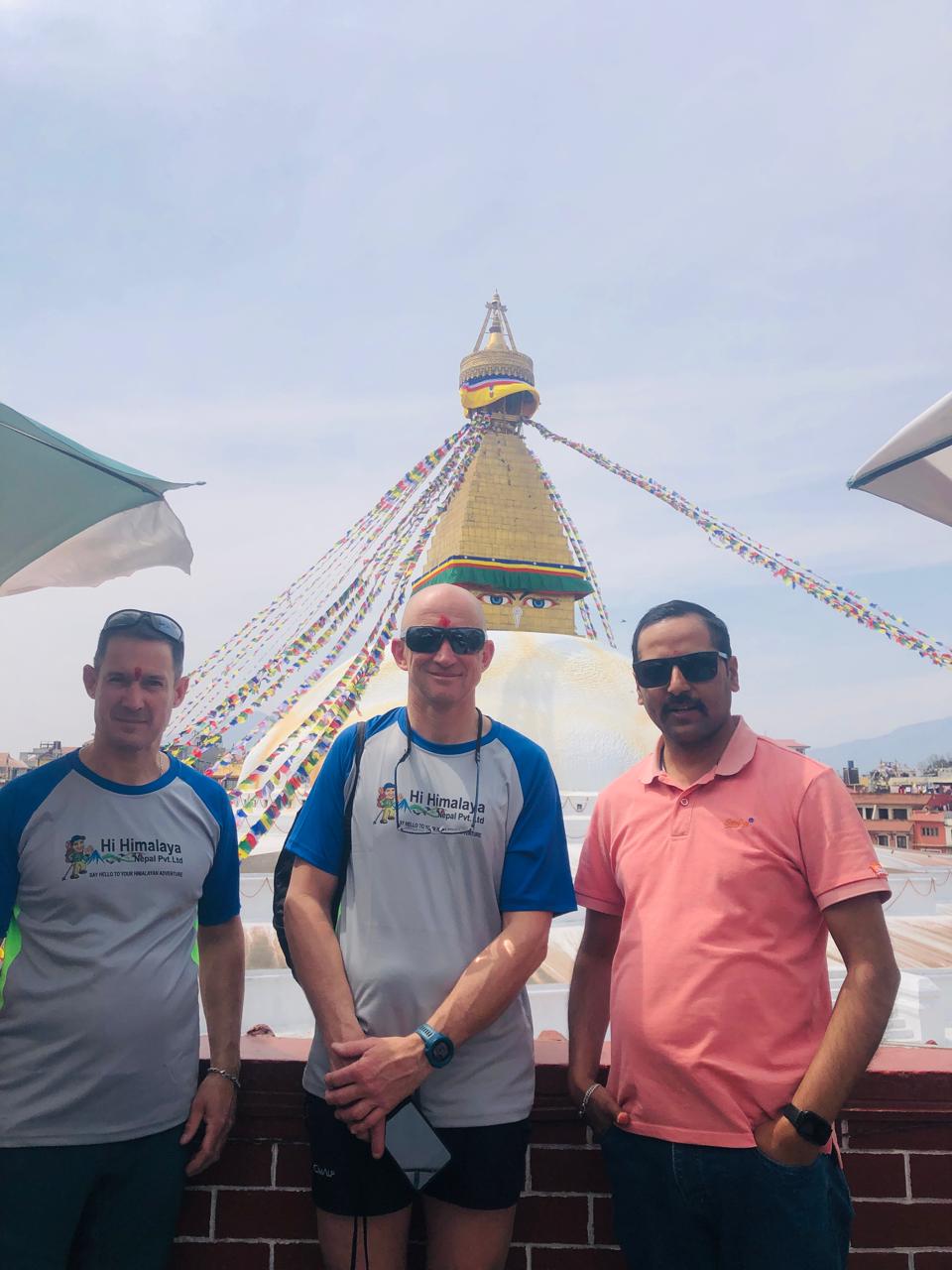
Walking Through Kathmandu Durbar Square Felt Like Stepping Into Another Era, While The Peaceful Atmosphere At Boudhanath Stupa Was Unforgettable. Watching Devotees Circle The Stupa With Prayer Wheels Created A Truly Special Experience. Pashupatinath Offered Deep Cultural Insights, Especially Along The Bagmati River, And The Panoramic Views From Swayambhunath Were Simply Beautiful Despite A Slightly Cloudy Afternoon.
Transportation Was Comfortable, Everything Ran On Schedule, And I Always Felt Safe Throughout The Day. Royal Nepal Holidays Delivered A Well-organized Experience That Perfectly Introduced Me To Nepal's Culture. I Would Highly Recommend Royal Nepal Holidays To Anyone Planning A Trip To Nepal.
The Perfect Introduction To Nepal's Culture And History
This City Tour Exceeded My Expectations From Beginning To End. I Only Had Two Days In Kathmandu, So Visiting Four UNESCO World Heritage Sites In One Day Was Exactly What I Needed. Our Guide, Uttam, Spoke Excellent English And Shared Fascinating Stories That Made Every Temple And Monument Come Alive.
My Favorite Stop Was Swayambhunath. Climbing The Steps Was Worth Every Bit Of Effort Because The View Over Kathmandu Valley Was Incredible. Boudhanath Was Peaceful And Filled With Monks, Colorful Prayer Flags, And Locals Going About Their Daily Rituals. At Pashupatinath, I Gained A Much Deeper Understanding Of Hindu Traditions Than I Ever Could From Reading Guidebooks.
The Private Vehicle Was Clean And Comfortable, Making It Easy To Move Between Sites Even With Busy City Traffic. Lunch At A Local Restaurant Introduced Me To Authentic Nepali Flavors, Which Was Another Pleasant Surprise. Royal Nepal Holidays Handled Every Detail Professionally, Making The Experience Stress-free And Enjoyable. If I Return To Nepal, I Will Definitely Travel With Royal Nepal Holidays Again.
A Day Filled With Incredible Stories And Sacred Places
I Enjoy Cultural Travel, And This Tour Became One Of The Most Rewarding Experiences Of My Holiday. Communication With Mr. Sushil Before Arrival Was Excellent, And He Arranged Everything Exactly As Promised. Our Guide Was Friendly, Patient, And Genuinely Passionate About Sharing Nepal's Traditions.
Kathmandu Durbar Square Impressed Me With Its Ancient Architecture And Lively Atmosphere. Boudhanath Felt Calm And Spiritual, While Pashupatinath Gave Me A Respectful Glimpse Into Important Hindu Ceremonies. My Favorite Memory, However, Was Standing At Swayambhunath As The Afternoon Sunlight Illuminated The City Below. It Was A Breathtaking Moment.
Although There Was Light Rain For A Short Time, The Team Adjusted The Itinerary Smoothly Without Rushing Us. The Driver Navigated Kathmandu's Busy Roads Confidently, And I Felt Comfortable Throughout The Day. Every Stop Offered Something Unique, Making The Tour Both Educational And Enjoyable. Royal Nepal Holidays Clearly Cares About Providing Quality Experiences. I Would Happily Recommend Them To Friends And Family Visiting Nepal.
Exceptional Guide And A Wonderful Cultural Experience
I Wanted More Than Sightseeing—I Wanted To Understand Nepal's Culture—and Royal Nepal Holidays Delivered Exactly That. From The First Email Until The End Of The Tour, Everything Was Handled Professionally. The Itinerary Was Well Paced, Giving Us Enough Time To Appreciate Each UNESCO Site Without Feeling Rushed.
Our Guide, Rameshwor, Explained The Symbolism Behind The Temples, Stupas, And Traditional Architecture In A Way That Was Easy To Follow. I Especially Enjoyed Learning About The Living Goddess Tradition At Kathmandu Durbar Square And Observing Pilgrims At Boudhanath. Watching The Sacred Rituals At Pashupatinath Was Both Moving And Unforgettable.
The Vehicle Was Spotless, Bottled Water Was Provided, And Our Driver Remained Courteous Throughout The Day. I Also Appreciated Stopping At A Local Restaurant Where I Tasted Delicious Nepali Dishes. This Tour Gave Me A Genuine Appreciation For Kathmandu's Heritage And People. I Would Highly Recommend Royal Nepal Holidays To Anyone Planning A Trip To Nepal.
Thoughtfully Organized And Rich In Cultural Discoveries
My Husband And I Joined The 4 UNESCO Kathmandu City Tour During Our Honeymoon, And It Was One Of The Most Memorable Days Of Our Trip. Royal Nepal Holidays Organized Everything Perfectly, From Hotel Pickup To The Final Drop-off. Their Communication Was Excellent, And We Immediately Felt We Were In Experienced Hands.
Each Heritage Site Offered Something Different. The Spiritual Atmosphere At Boudhanath Was Calming, While Pashupatinath Introduced Us To Traditions We Had Never Witnessed Before. Swayambhunath Rewarded Us With Spectacular Views Over The City, And Kathmandu Durbar Square Amazed Us With Its Centuries-old Temples And Intricate Wood Carvings.
Our Guide Shared Interesting Historical Facts Without Overwhelming Us, Making The Experience Enjoyable And Easy To Follow. Despite Warm Weather, The Schedule Included Enough Breaks To Stay Comfortable Throughout The Day. The Combination Of History, Religion, Architecture, And Local Life Made This Tour Truly Worthwhile. If I Return To Nepal, I Will Definitely Travel With Royal Nepal Holidays Again.